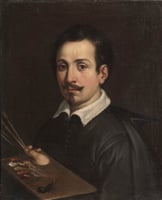
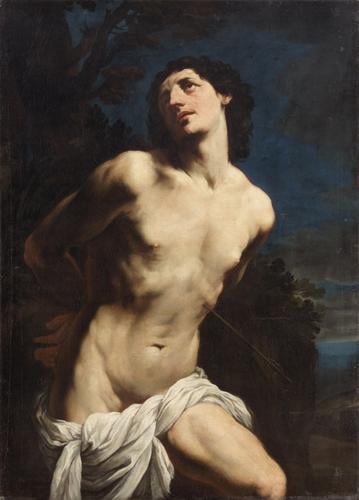
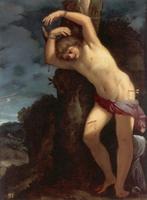
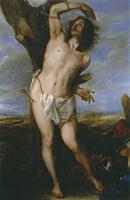
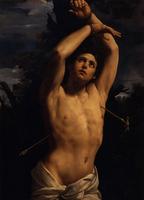
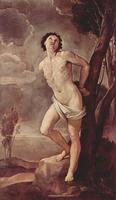
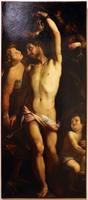
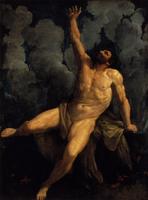
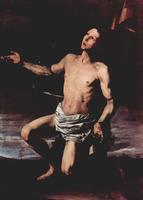
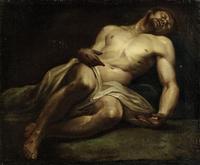
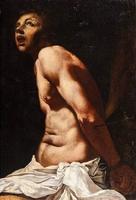
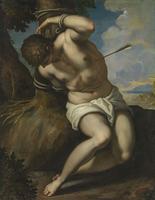
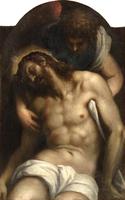
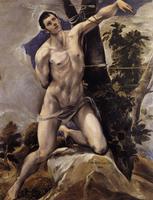
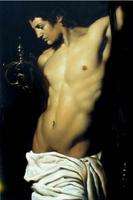
Guido Reni’s St. Sebastian stands as a masterful example of Baroque religious painting, distinguished by its fusion of dramatic naturalism with classical idealism. Within the Baroque period—characterized by emotional intensity, dynamic composition, and theatrical chiaroscuro—Reni achieves a remarkably serene and balanced treatment of a violent martyrdom. The saint’s upward gaze and graceful, contrapposto pose convey spiritual transcendence rather than physical agony, reflecting the Counter-Reformation’s emphasis on devotional beauty. Reni’s polished, smooth brushwork and cool, luminous palette—especially the subtle modeling of flesh and the soft, dramatic lighting—elevate the scene from mere suffering to a vision of divine grace. This work is significant for demonstrating how Baroque religious painting could inspire piety through refined elegance and idealized human form, setting Reni apart from the more overtly dramatic tendencies of his contemporaries.