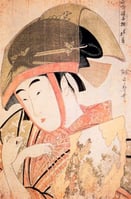
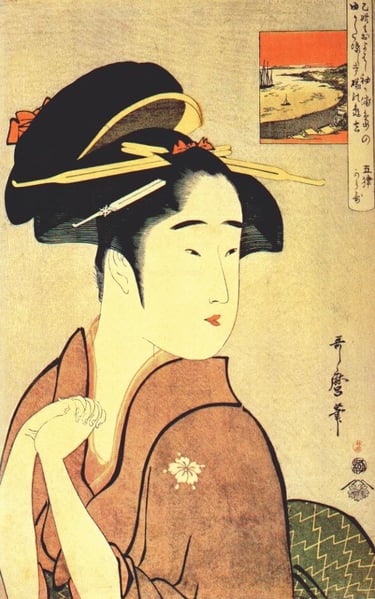
The geisha kamekichi
Analisi esperta di The geisha kamekichi di Kitagawa Utamaro
Stile: Ukiyo-e · Genere: portrait
Expert Analysis of "The Geisha Kamekichi" by Kitagawa Utamaro
Kitagawa Utamaro’s The Geisha Kamekichi is a masterwork of the Ukiyo-e school and a defining example of bijin-ga (pictures of beautiful women). Executed during the artist’s peak period in the late 18th century, this portrait stands out for its psychological depth and technical refinement, elevating the genre beyond mere decorative prints.
Significance within Ukiyo-e:
While many Ukiyo-e artists depicted idealized courtesans and geishas, Utamaro’s genius lies in his ability to capture individual personality and mood. In The Geisha Kamekichi, he focuses on the sitter’s subtle expression—a half-smile and averted gaze—conveying a sense of intimate thoughtfulness rather than conventional erotic allure. This shift from type to character was revolutionary for Ukiyo-e portraiture and influenced later artists such as Hokusai and even European Impressionists.
Stylistic Innovation:
Utamaro was renowned for his ōkubi-e (“large-head pictures”), a format that foregrounds the face and upper body, allowing nuanced detail in features, hair, and kimono patterns. Here, the delicate lines of the geisha’s hair, painted with meticulous sumi (ink) strokes, contrast with the soft gradations of color in her layered garments. The composition is balanced by asymmetrical elements—the tilt of her head, the slight downturn of her shoulder—which create a natural, unposed elegance. Utamaro also employs bokashi (gradation printing) to model the face subtly, lending a three-dimensional quality rare in woodblock prints.
Cultural and Artistic Context:
The portrait titles Kamekichi a specific geisha, indicating that Utamaro was among the first Ukiyo-e artists to treat real individuals with the same reverence as legendary beauties. This practice aligned with the rising popularity of ukiyo (“the floating world”) culture, where geishas and courtesans were icons of refined pleasure. Utamaro’s work, however, transcends mere celebrity portraiture by infusing Kamekichi with dignity and introspection, reflecting his often-overlooked empathy for his subjects.
In summary, The Geisha Kamekichi is significant for its humanistic portrayal, technical mastery of portrait conventions, and its role in redefining Ukiyo-e as an art of psychological nuance rather than simple decoration. It remains a testament to Utamaro’s enduring influence on both Eastern and Western portraiture.
Visivamente simili
20 opere con composizione e palette affini
Bijin holding a flower pot
Toyohara Chikanobu
Large Head and Bust Portrait of Beauty
Kitagawa Utamaro
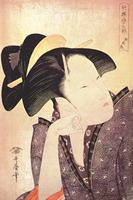
Pensive love
Kitagawa Utamaro
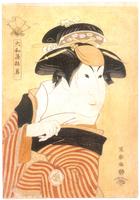
Iwai Hanshirō IV as San, the maid servant of Ukiyonosuke, actually Saeda, the younger sister of Sabanosuke
Tōshūsai Sharaku
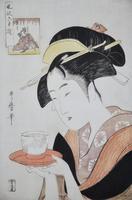
Portrait of Naniwaya Okita
Kitagawa Utamaro
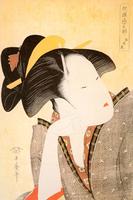
Geisha
Kitagawa Utamaro
Three Beauties of the Present Day
Kitagawa Utamaro
Kikunojō Segawa III as Nakai Ohama in Hana No Miyako Kuruwa No Nawabari
Tōshūsai Sharaku
Secret love
Kitagawa Utamaro
Bijin
Kiyokata Kaburagi
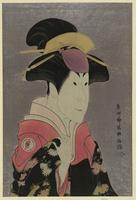
Segawa Tomisaburō as Yadorigi, Wife of Ogishi Kurando, by Tōshūsai Sharaku
Tōshūsai Sharaku
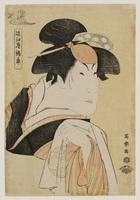
Kabuki Actor Nakayama Tomisaburō I as Ohisa, Wife of Sazanami Tatsugorō, Actually Teriha, the Younger Sister of Sadatō (aiban)
Tōshūsai Sharaku
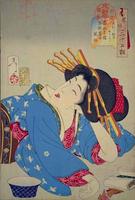
Looking relaxed - The appearance of a Kyoto geisha of the Kansei era
Tsukioka Yoshitoshi
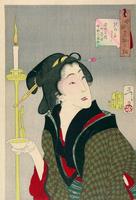
Looking thirsty - The Appearance of a Town Geisha, a Bargirl in the Ansei Era
Tsukioka Yoshitoshi
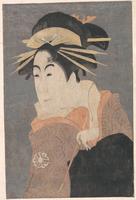
Matsumoto Yonesaburo as Kewaizaka no Shosho in the Play "Katakiuchi Noriyaibanashi"
Tōshūsai Sharaku
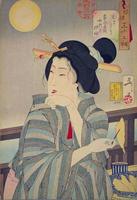
Looking tasty - The appearance of a courtesan during the Kaei era
Tsukioka Yoshitoshi
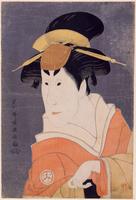
Kabuki Actor Osagawa Tsuneyo II, Possibly in the Rôle of Ippei's Sister Osan
Tōshūsai Sharaku
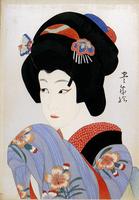
Ichikawa Shocho II as Oman
Yamamura Toyonari
Iwai Hanshirō IV as the wet nurse Shigenoi
Tōshūsai Sharaku
Segawa Tomisaburō II as Yadorigi in the Play "Hana Ayame Bunroku Soga"
Tōshūsai Sharaku