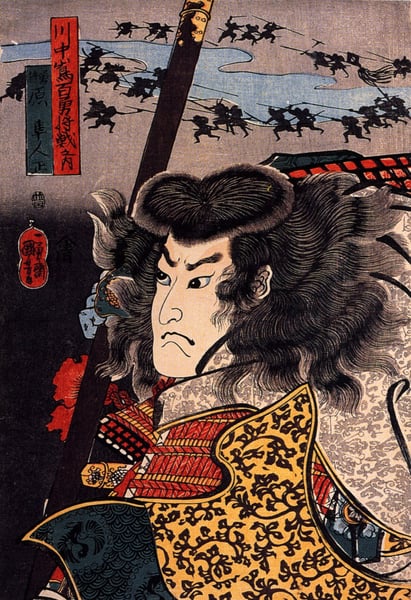
Hara Hayato no Sho holding a spear
Utagawa Kuniyoshi sanatçısının Hara Hayato no Sho holding a spear eseri hakkında uzman analizi
Tarz: Ukiyo-e · Tür: battle painting
Expert Analysis: "Hara Hayato no Sho holding a spear" by Utagawa Kuniyoshi
Utagawa Kuniyoshi (1797–1861) stands as one of the last great masters of the Ukiyo-e tradition, celebrated for his dynamic warrior prints (musha-e). This work, titled Hara Hayato no Sho holding a spear, exemplifies his revolutionary approach to battle painting within the Ukiyo-e style—a genre often rooted in historical chronicles, kabuki drama, and samurai legend.
Significance in Style and Period
Kuniyoshi transformed the conventional warrior print from static, heraldic portraiture into scenes of explosive energy and psychological tension. Here, the figure of Hara Hayato no Sho—likely a retainer or legendary warrior from Japan’s tumultuous medieval period—is isolated against a stark, often gradational background that emphasizes his dramatic posture. The spear, held diagonally across the composition, creates a sharp, off-balance vector that propels the viewer’s eye and suggests imminent action. Kuniyoshi’s use of bold, sweeping lines (a hallmark of Ukiyo-e carving) captures the muscular tension in the warrior’s arms and the flutter of his garments, as if caught mid-stride by a gust of wind or the energy of combat.
Visual and Thematic Elements
The artist employs a limited but intense color palette—deep indigos, vermillion, and black—to heighten the sense of danger and nobility. The warrior’s fierce expression, with furrowed brows and a piercing gaze, embodies bushidō (the way of the warrior) but also reflects Kuniyoshi’s fascination with the mujō (impermanence) of life in battle. Unlike earlier Ukiyo-e battle prints, which often depicted sprawling troop formations, Kuniyoshi focuses on a single, larger-than-life figure, akin to a close-up in kabuki theater. This innovation foreshadows modern cinematic framing and the Western fascination with Japanese woodblock prints, which later influenced artists like Van Gogh and Toulouse-Lautrec.
Cultural and Historical Context
Kuniyoshi created such prints during the late Edo period, a time of peace when samurai were bureaucrats rather than warriors. His images of fierce, historical combat served as nostalgic allegories for valor, often veiled critiques of political corruption or celebrations of loyalty. The spear, in particular, was a weapon of the common foot soldier (ashigaru) but also of elite strategists—a dual symbolism that Kuniyoshi leverages to elevate his subject.
In summary, Hara Hayato no Sho holding a spear is significant for its fusion of Ukiyo-e’s graphic precision with the raw dynamism of a battle scene. It redefines the genre by prioritizing individual heroism and kinetic tension over mere illustration of conflict, securing Kuniyoshi’s legacy as a master of the warrior print.
Görsel olarak benzer
İlişkili kompozisyon ve renk paletine sahip 20 eser
Amakasu Omi no Kami
Utagawa Kuniyoshi
Taira Tomomori and a sea dragon
Utagawa Kuniyoshi
Vesper bell at Todaiji
Utagawa Kuniyoshi
Eight Hundred Heroes of Our Country
Utagawa Kuniyoshi
Homing geese at the Northern capital
Utagawa Kuniyoshi
Minori - The mortally wounded Taira Tomomori with ahuge anchor
Utagawa Kuniyoshi
Kagehisa and Yoshitada wrestling
Utagawa Kuniyoshi
Hata Rokurozaemon with his dog
Utagawa Kuniyoshi
Kajiwara Genda Kagesue for Umegae
Utagawa Kuniyoshi
Soga Gorō and Gosho Gorōmaru
Tōshūsai Sharaku
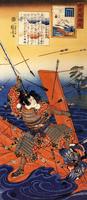
The death of Nitta Yoshioki at the Yaguchi ferry
Utagawa Kuniyoshi
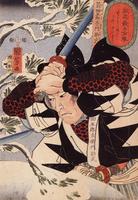
Tominomori
Utagawa Kuniyoshi
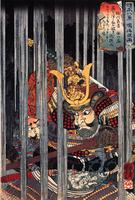
Night rain at Narumi
Utagawa Kuniyoshi
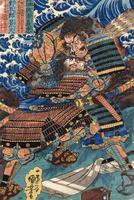
Design the Struggle
Utagawa Kuniyoshi
Saito Toshimoto and a warrior in a underwater struggle
Utagawa Kuniyoshi
Ichikawa Danjuro VII and Bando Mitsugoro III as Soga no Goro and Asaina no Saburo
Utagawa Kunisada
Beauty, Ghost and Hero
Toyohara Chikanobu
Hasebe Nobutsura during the taira attack on the takakura palace
Utagawa Kuniyoshi
The suicide of morozumi Masakiyo
Utagawa Kuniyoshi
Tiger
Utagawa Kuniyoshi