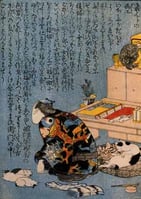
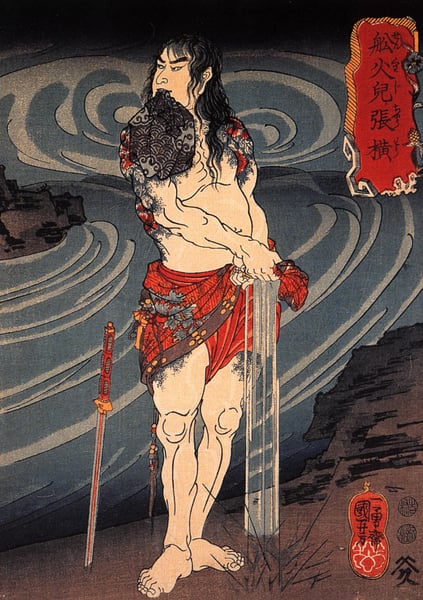
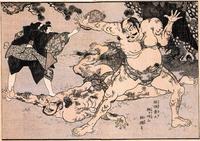
Senkaji Chao wringing out his loincloth
Expert analysis of Utagawa Kuniyoshi’s Senkaji Chao wringing out his loincloth
Style: Ukiyo-e · Genre: portrait
Expert Analysis of Utagawa Kuniyoshi's Senkaji Chao wringing out his loincloth
This work is a striking example of Utagawa Kuniyoshi’s revolutionary approach to the ukiyo-e portrait, particularly within the musha-e (warrior picture) subgenre. Kuniyoshi departed from the idealized, elegant figures of earlier ukiyo-e masters, instead infusing his subjects with dramatic physicality and psychological intensity.
Significance within Ukiyo-e and the Portrait Genre:
- Dynamic Physicality: The composition captures a fleeting, almost mundane action—wringing out a loincloth—yet transforms it into a display of raw power. Chao’s taut muscles, exaggerated proportions, and contorted pose reflect Kuniyoshi’s fascination with Western anatomical drawing. This emphasis on sinew and strain was highly innovative for ukiyo-e, traditionally more focused on graceful lines and decorative patterns.
- Narrative Tension: By choosing a moment of private exertion rather than a battle scene, Kuniyoshi humanizes the legendary warrior Senkaji Chao (a Chinese figure from the Water Margin tales, hugely popular in Edo-period Japan). The act suggests both vulnerability and resilience, aligning with the Edo-era taste for heroic yet relatable subjects.
- Technical Virtuosity: The print likely employs bold bokashi (gradation) and strong outlines, hallmarks of Kuniyoshi’s style. The wet, clinging fabric and the play of light on Chao’s torso demonstrate his mastery of texture and volume, pushing the boundaries of woodblock printing.
- Cultural Context: Kuniyoshi’s warrior portraits were a response to the Tokugawa shogunate’s strict censorship laws. By depicting foreign heroes like Chao (from the Chinese classic Shuihu Zhuan), artists could explore themes of rebellion and physical prowess without directly criticizing the regime. This work thus carries subtle socio-political resonance.
- Influence: Kuniyoshi’s muscular, energetic warriors deeply influenced later Western artists, including Vincent van Gogh and the French Impressionists, who admired his vivid lines and sense of movement. This print exemplifies why Kuniyoshi is considered a pioneer of the “violent and dynamic” strain of ukiyo-e, distinct from the more serene visions of Hokusai or Hiroshige.
In sum, Senkaji Chao wringing out his loincloth is significant for its radical fusion of anatomical realism, narrative drama, and technical innovation—a defining piece of Kuniyoshi’s legacy in the ukiyo-e portrait tradition.
Visually similar
20 works with related composition and palette
Shutsudoko Doi
Utagawa Kuniyoshi
Yoshi tomigoro
Tsukioka Yoshitoshi
Kyumonryu Shinshin and Chokanko Chintasu
Utagawa Kuniyoshi
Urawa
Utagawa Kuniyoshi
Roshi Ensei lifting a heavy beam
Utagawa Kuniyoshi
Girls pearl-divers
Kitagawa Utamaro
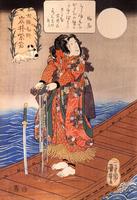
The actor
Utagawa Kuniyoshi
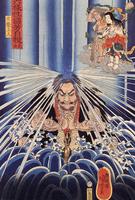
Mongaku doing penace at the Nachi waterfall
Utagawa Kuniyoshi
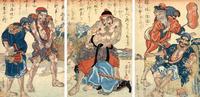
Suikoden Triptych the Fishermen
Utagawa Kuniyoshi
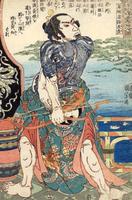
The Hundred and Eight Heroes of the Popular Suikoden
Utagawa Kuniyoshi
Nakajima Kanzō as Negoto no Chōzō
Tōshūsai Sharaku
Prince Hanzoku terrorised by a nine, tailed fox
Utagawa Kuniyoshi
Konseimao hanzui beset by demons
Utagawa Kuniyoshi
Yama-uba
Katsushika Hokusai
Ichikawa Tomiemon as Inokuma Monbei
Tōshūsai Sharaku
Thirty-six Famous Battles
Utagawa Kuniyoshi
Tametomo lifting a heavy beam
Utagawa Kuniyoshi
Tammeijiro Genshogo, from Tsuzoku Suikoden Goketsu Hyakuhachinin no Hitori
Utagawa Kuniyoshi
Heroes of china and Japan
Utagawa Kuniyoshi
Lin Chong
Tsukioka Yoshitoshi