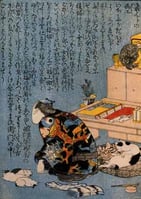
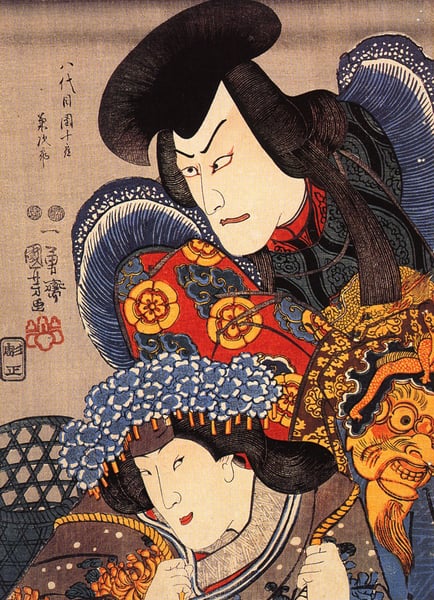
The actor
Utagawa Kuniyoshi sanatçısının The actor eseri hakkında uzman analizi
Tarz: Ukiyo-e · Tür: portrait
Expert Analysis: "The Actor" by Utagawa Kuniyoshi
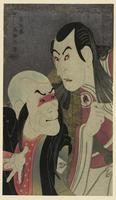
As an Ukiyo-e portrait depicting a kabuki actor, this work exemplifies the vibrant, transient culture of Edo-period Japan (1603–1868). Utagawa Kuniyoshi, a master of the ukiyo-e tradition, was renowned for his dynamic compositions and bold, expressive lines. In this genre—yakusha-e (actor prints)—Kuniyoshi’s significance lies in his ability to capture not just the likeness of the performer but the kinetic energy and emotional intensity of the kabuki stage.
The portrait likely emphasizes the actor’s mie (a dramatic, frozen pose), a hallmark of kabuki that Kuniyoshi rendered with exaggerated facial features, dynamic costume patterns, and strong contrasts of black, red, and deep blues. His use of bokashi (color gradation) and meticulous woodblock carving brings a tactile richness to the actor’s elaborate kimono and armor-like stage attire.
What makes this work significant within Ukiyo-e is Kuniyoshi’s departure from the more static, idealized portraits of earlier artists like Utamaro. Instead, he injects a sense of movement and psychological depth—the actor’s fierce expression and twisting posture suggest a moment of high drama, as if the print itself is a frozen frame from a living play. This approach anticipates the later, more dynamic ukiyo-e styles and influenced Western artists, including Van Gogh and Degas, who admired the emotional directness and graphic power of such portraits.
Moreover, Kuniyoshi’s actor prints reflect the social phenomenon of kabuki as a mass entertainment industry; these portraits were affordable collectibles that elevated performers to celebrity status. In "The Actor," the fusion of virtuoso printmaking, theatrical spectacle, and popular culture makes it a quintessential example of how ukiyo-e captured the fleeting, passionate spirit of Edo life.
Görsel olarak benzer
İlişkili kompozisyon ve renk paletine sahip 20 eser
The Miya Station
Hiroshige
Ichikawa Danjuro VII as Iga-no Jutaro
Utagawa Kunisada
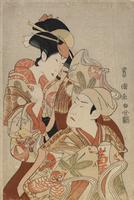
The actors Matsumoto Yonesaburô I and Nakamura Denkurô IV
Utagawa Toyokuni
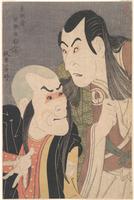
Sawamura Yodogorō II and Bandō Zenji as Kawatsura Hōgen and Onisadobō in the Play "Koinyōbō Somewake Tazuna"
Tōshūsai Sharaku
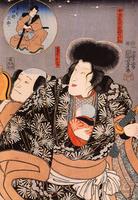
The female demond
Utagawa Kuniyoshi
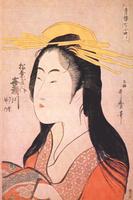
Kisegawa of Matsubaya, from the series 'Seven Komachis of Yoshiwara', c.1795 (woodblock print)
Kitagawa Utamaro
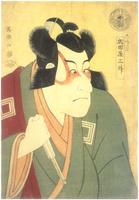
Ichikawa Danjūrō VI as Arakawa Tarō Takesada
Tōshūsai Sharaku
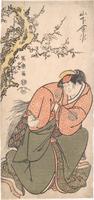
Actor Yamashita Kinsaku II as Sadato's Wife Iwate
Tōshūsai Sharaku
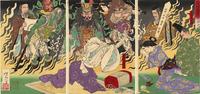
The Fever
Tsukioka Yoshitoshi
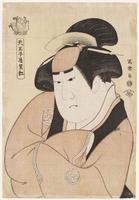
Yamashita Kinsaku II as the maid Ebizō Okane, actually Iwate Gozen, wife of Abe Sadatō
Tōshūsai Sharaku
Ichikawa Ebijūrō I
Utagawa Toyokuni
Morita Kanya as Genta Kagesuse
Natori Shunsen
Ishiyakushi
Utagawa Kuniyoshi
Hanamurasaki of theTamaya
Utagawa Sadatora
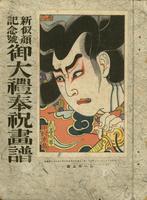
The actor Nakamura Tôzô V in the role of Susanoo no Mikoto
Natori Shunsen
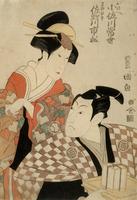
Kabuki Actors Sanogawa Ichimatsu II as Hayano Kampei and Osagawa Tsuneyo as Onoe
Utagawa Toyokuni
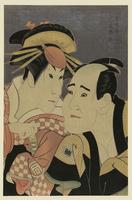
Kabuki Actors Sanogawa Ichimatsu III in the Role of the Courtesan Onnayo of Gion and Ichikawa Tomieimon in the Role of Kanisaka Tōma
Tōshūsai Sharaku
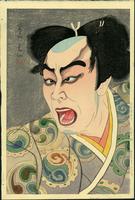
Matsumoto Koshiro as Watanabe no Tsuna
Natori Shunsen
Kabuki Actors Sawamura Yodogorō II as Kawatsura Hōgen and Bandō Zenji as Oni Sadobō
Tōshūsai Sharaku
Grab Tengu Nose
Tsukioka Yoshitoshi