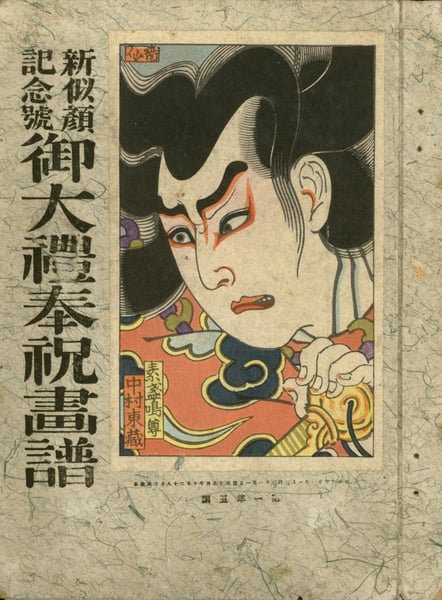
The actor Nakamura Tôzô V in the role of Susanoo no Mikoto
Détails
Analyse experte de The actor Nakamura Tôzô V in the role of Susanoo no Mikoto de Natori Shunsen
Style : Shin-hanga · Genre : yakusha-e
Expert Art Historical Analysis
Natori Shunsen’s The actor Nakamura Tôzô V in the role of Susanoo no Mikoto stands as a masterful example of the Shin-hanga (New Prints) movement, which revitalized traditional ukiyo-e themes in the early 20th century. The work belongs to the genre of yakusha-e (actor prints), a cornerstone of ukiyo-e that Shunsen helped modernize. Its significance lies in how it synthesizes the expressive conventions of kabuki portraiture with the meticulous craft and subdued naturalism characteristic of Shin-hanga.
Style and Period Context
Shin-hanga artists rejected the mass-produced, commercial ethos of late ukiyo-e, instead emphasizing hand-carved woodblocks, fine papers, and subtle color gradations. Shunsen, a dedicated printmaker of actor portraits, brought a psychological depth to yakusha-e that was rare in the genre. Here, the deity Susanoo no Mikoto—a tempestuous figure from Japanese myth—is portrayed not as a static legend but as a vivid theatrical moment. The actor Nakamura Tôzô V’s exaggerated facial expression, tense posture, and flowing costume capture the dynamic energy of kabuki’s aragoto (rough-style) acting.
Significance
- Revival of Actor Prints – By the early 1900s, yakusha-e had declined into formulaic souvenir prints. Shunsen’s work reasserted the genre’s artistic integrity, focusing on individual character and mood rather than mere documentation of actors.
- Mastery of Woodblock Technique – The print demonstrates Shin-hanga’s hallmark: a limited palette of rich, atmospheric colors (deep blacks, muted greens, warm flesh tones) and delicate linework that gives texture to the actor’s costume and hair. The soft bokashi (gradation) in the background isolates the figure, emphasizing his heroic isolation.
- Cross-Cultural Modernity – While rooted in ukiyo-e tradition, Shunsen subtly incorporates Western perspective and shading, giving Susanoo a three-dimensional presence. This reflects Shin-hanga’s goal of adapting Japanese aesthetics to a modern, international audience.
Conclusion
This print is significant as a bridge between Edo-period kabuki imagery and early modern Japanese art. It honors the theatrical legacy of Nakamura Tôzô V while elevating actor prints to a serious, collectible art form. For collectors and scholars, it exemplifies how Shin-hanga preserved the soul of ukiyo-e while infusing it with renewed technical and emotional sophistication.
Visuellement similaire
20 œuvres à la composition et à la palette proches
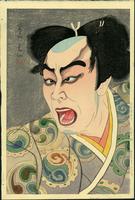
Matsumoto Koshiro as Watanabe no Tsuna
Natori Shunsen
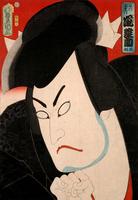
Hinasuke Arashi as Goemon Ishikawa
Utagawa Kunisada
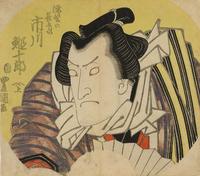
Ichikawa Ebijūrō I
Utagawa Toyokuni
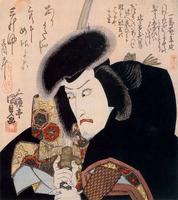
Ichikawa Danjuro VII as Iga-no Jutaro
Utagawa Kunisada
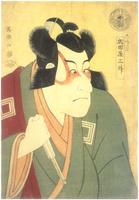
Ichikawa Danjūrō VI as Arakawa Tarō Takesada
Tōshūsai Sharaku
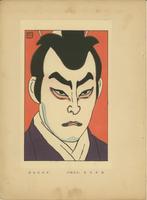
Kichiemon in the role of Yura Hyogo
Natori Shunsen
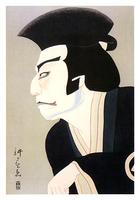
Ichikawa Danshiro II as Henmei Tesshinai
Yamamura Toyonari
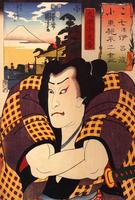
The actor
Utagawa Kuniyoshi
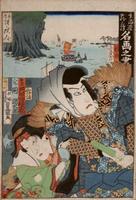
Kawarazaki Gonjuro and Kunitaro Hitomaru
Utagawa Kunisada
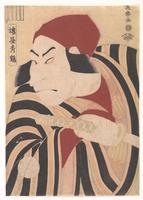
Nakamura Nakazo II as Prince Koretaka Disguised in the Play Ōshukubai Koi no Hatsune
Tōshūsai Sharaku
The Miya Station
Hiroshige
The actor
Utagawa Kuniyoshi
Yamashita Kinsaku II as the maid Ebizō Okane, actually Iwate Gozen, wife of Abe Sadatō
Tōshūsai Sharaku
Nakamura Nakazō II, also called Sakaiya Shūkaku
Tōshūsai Sharaku
Kyouhou - Mirror of the Ages
Toyohara Chikanobu
Ichikawa Sadanji as Narukami
Natori Shunsen
The actor
Utagawa Kuniyoshi
Morita Kan'ya as Kitsune Tadanobu in Yoshitsune Senbon Zakura
Natori Shunsen
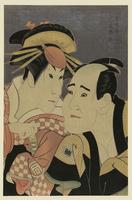
Kabuki Actors Sanogawa Ichimatsu III in the Role of the Courtesan Onnayo of Gion and Ichikawa Tomieimon in the Role of Kanisaka Tōma
Tōshūsai Sharaku
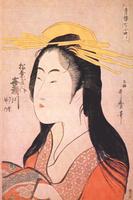
Kisegawa of Matsubaya, from the series 'Seven Komachis of Yoshiwara', c.1795 (woodblock print)
Kitagawa Utamaro