1. Home
  2. Max Ernst
  3. Ambiguous Figures (1 copper plate, 1 zinc plate, 1 rubber cloth...)
Ambiguous Figures (1 copper plate, 1 zinc plate, 1 rubber cloth...)
Max Ernst
Max Ernst
1891 – 1976
Ambiguous Figures (1 copper plate, 1 zinc plate, 1 rubber cloth...)

Ambiguous Figures (1 copper plate, 1 zinc plate, 1 rubber cloth...)

Max Ernst·1919
Sign In

Detalles

Año1919
PeríodoEarly works
UbicaciónCologne / Cöln / KölnGermany

Análisis experto de Ambiguous Figures (1 copper plate, 1 zinc plate, 1 rubber cloth...) de Max Ernst

Estilo: Dada, Metaphysical art · Género: symbolic painting

Generado por IA

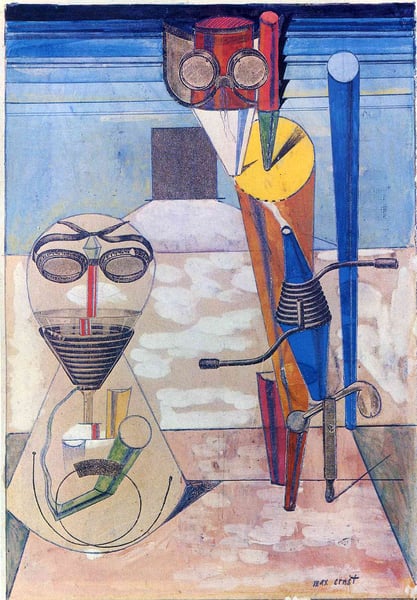
Max Ernst’s “Ambiguous Figures (1 copper plate, 1 zinc plate, 1 rubber cloth…)” stands as a pivotal early work that encapsulates the revolutionary spirit of Dada while foreshadowing the dreamlike logic of Surrealism. Created during his formative period, the piece derives its significance from its radical use of non-traditional materials—copper plate, zinc plate, and rubber cloth—which Ernst lists almost like a recipe for an anti-art object. This material assemblage directly challenges the sanctity of painting, transforming the canvas into a collage of industrial and everyday found elements. The “ambiguous figures” evoked by the title are not clearly depicted but rather suggested through the interplay of textures and metallic surfaces, forcing the viewer to construct meaning from fragmented, non-representational cues.

Stylistically, the work bridges Dada’s iconoclastic randomness with the eerie, suspended atmosphere of Metaphysical art (influenced by Giorgio de Chirico). The juxtaposition of hard, reflective metal with pliable rubber creates a tension between permanence and impermanence, clarity and obscurity—a hallmark of metaphysical enigma. Ernst’s deliberate ambiguity rejects artistic mastery in favor of chance and subconscious association, making this piece a landmark in the evolution from Dada’s anti-art provocations to Surrealism’s exploration of the irrational. As one of his earliest mixed-media experiments, it demonstrates how Ernst used material disruption to liberate imagery from logical constraints, paving the way for his later frottages and collages.

Género

Symbolic painting

Estilo

DadaMetaphysical art

Etiquetas

Allegories-and-symbols

Visualmente similares

20 obras con composición y paleta relacionadas

Apparatus and Hand

Apparatus and Hand

Salvador Dali

Feast of the God

Feast of the God

Max Ernst

The typographer

The typographer

Fernand Leger

Untitled

Untitled

David Lynch

Untitled

Untitled

Eva Hesse

Harlequin's Carnival

Harlequin's Carnival

Joan Miro

Untitled

Untitled

Max Ernst

Analysis of diverse perversities

Analysis of diverse perversities

Paul Klee

Green composition

Green composition

Wassily Kandinsky

Still life in the machine elements

Still life in the machine elements

Fernand Leger

Composition Mechanical Movement cart

Composition Mechanical Movement cart

Fernand Leger

Hydrometric Demonstration

Hydrometric Demonstration

Max Ernst

The slug room

The slug room

Max Ernst

Rencontre mecanique

Rencontre mecanique

Jules Perahim

Horizons chauds

Horizons chauds

Wifredo Lam

Machine elements

Machine elements

Fernand Leger

Nighttime, Enigma and Nostalgia

Nighttime, Enigma and Nostalgia

Arshile Gorky

Bathers on the beach

Bathers on the beach

Pablo Picasso

Contrast of Forms

Contrast of Forms

Fernand Leger

Alienation

Alienation

Conroy Maddox

caleido

versión 1.0.368

Únete a DiscordomelasSobre nosotrosCiudadesPolítica de privacidadTérminos del servicioEliminación de datosAyuda
© 2026 Caleido