
Expertenanalyse zu Max Ernsts Illustration to "A Week of Kindness"
Stil: Surrealism · Genre: illustration
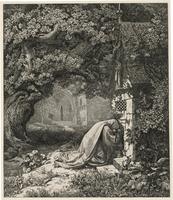
Expert Analysis: Max Ernst’s “Illustration to ‘A Week of Kindness’”
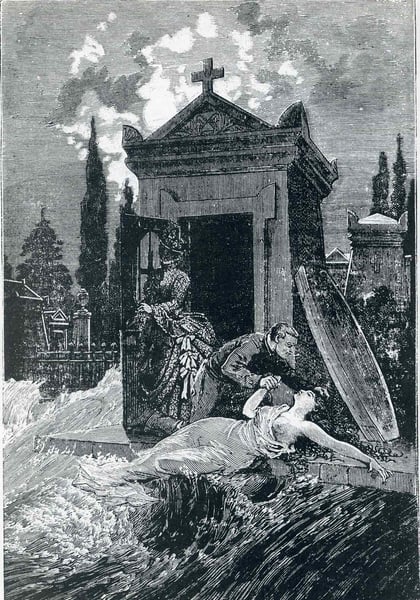
Max Ernst’s Illustration to “A Week of Kindness” is a defining work of the Surrealist movement, executed during his First French period (the 1920s–30s, when he was a central figure in the Parisian Surrealist group). The piece is part of his groundbreaking 1934 collage novel Une Semaine de Bonté (A Week of Kindness), which remains one of the most radical experiments in Surrealist book illustration and narrative art.
Significance within Surrealism and the Period
This work exemplifies Surrealism’s core ambition: to disrupt rational thought and tap into the unconscious through unexpected juxtapositions. Ernst did not paint this illustration from scratch; rather, he meticulously assembled it by cutting and recombining Victorian engravings and woodcut illustrations from 19th-century novels, scientific manuals, and catalogs. This technique—collage—was revolutionary. By taking familiar, often didactic imagery and recasting it in bizarre, dreamlike scenarios, Ernst subverted the very idea of a stable, logical world.
The “First French period” marks Ernst’s most intense engagement with the Surrealist ethos. He had fled Germany after World War I and was deeply influenced by the automatic writing and chance operations championed by André Breton. In A Week of Kindness, he created a “novel” without words, using seven booklets (one for each day of the week) to unleash a torrent of violent, erotic, and absurd imagery. This particular illustration likely appears in one of those booklets, blending Victorian domesticity with grotesque, hybrid creatures—a hallmark of Ernst’s critique of bourgeois morality and bourgeois art. The polished, academic style of the original engravings contrasts sharply with the irrational content, creating a friction that jolts the viewer out of passive reception.
Why It Matters
- Pivotal Collage Novel: A Week of Kindness is considered the first great example of a Surrealist collage novel, a form that influenced later graphic novels and experimental book arts. It demonstrates that narrative can be built not from linear text but from visual collisions.
- Subversion of Tradition: By using found images from the very culture Surrealists sought to dismantle, Ernst turns the tools of the establishment against itself. The illustration becomes a site of psychic liberation.
- Technical Mastery: Ernst’s cut-and-paste method required exacting skill—the seamless grafting of disparate elements into a coherent (if surreal) composition. The result is both meticulously crafted and disturbingly spontaneous.
In summary, Illustration to “A Week of Kindness” is significant not only as a stellar example of Surrealist collage but also as a key document of the movement’s ambition to merge art with the unconscious, and to challenge the very nature of how stories are told. It remains a touchstone for the power of appropriation and recombination in modern art.
Museum / Gallery
Visuell ähnlich
20 Werke mit ähnlicher Komposition und Farbpalette
My Tomb
Clovis Trouille
And life goes on
Antonio Sicurezza
The Firstborn of the Egyptians Are Slain
Gustave Dore
Paris
Eugène Louis Lami
La Chanson Du Pauvre Chanteur
Theophile Steinlen
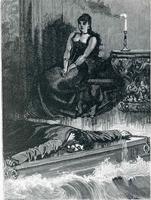
Illustration to "A Week of Kindness"
Max Ernst
Remords
Carlos Schwabe
Orpheus at the Tomb of Eurydice
Gustave Moreau
Pieta
Mikhail Vrubel
Great Burial Ground, Pera
John Frederick Lewis
The Sixties (A little Mourner)
Frederick Sandys
The Raising of Lazarus
Eduard von Gebhardt
The Roman antiquities, t. 2, Plate LVII. Urns, memorials and vases of marble ashtray in the Villa Corsini outside Porta S. Pancrazio.
Giovanni Battista Piranesi
Cemetery
Vasily Polenov
The Last Day of Pompeii
Karl Bryullov
Cemetery among the cypress
Vasily Polenov
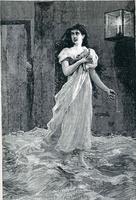
Illustration to "A Week of Kindness"
Max Ernst
Pantagruel
Gustave Dore
Satire of Suicide from Love
Leonardo Alenza
Die betende Nonne
Johann Wilhelm Schirmer