
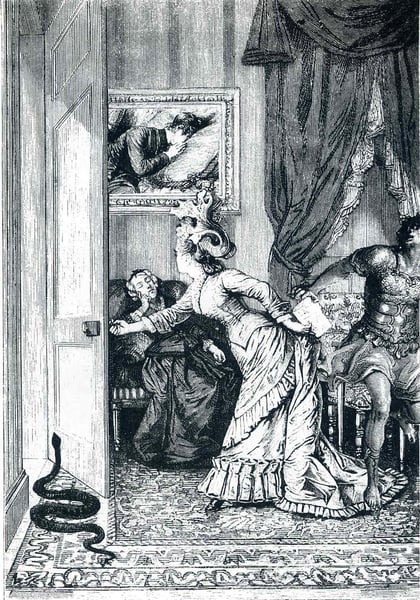
Expertenanalyse zu Max Ernsts Illustration to "A Week of Kindness"
Stil: Surrealism · Genre: illustration
This artwork is highly significant as a landmark of Surrealist visual narrative and collage technique.
Created during Max Ernst’s First French period (c. 1922–1938), when he was a central figure in the Surrealist movement in Paris, Illustration to "A Week of Kindness" is part of his groundbreaking 1934 collage novel of the same title. The work exemplifies Surrealism’s core ambition: to disrupt rational order and unlock the unconscious mind through jarring, dreamlike juxtapositions.
Significance arises from three key aspects:
-
Pioneering collage narrative: Ernst did not merely illustrate a story; he constructed a wordless “novel” using 182 collages assembled from 19th-century wood-engraved illustrations. By cutting, recontextualizing, and recombining disparate visual sources—often from Victorian scientific texts, fashion plates, and pulp novels—he created a haunting, ambiguous dream-world that defies linear logic. This technique made the unconscious visible through tangible, material means.
-
Subversion of reality and gender roles: The series systematically dismantles conventional domestic and social scenes, replacing them with unsettling metamorphoses: women morph into birds or objects, men become hybrids of animal and machine. The “kindness” of the title is darkly ironic; Ernst’s collages depict scenarios of eroticism, violence, and transformation that attack bourgeois morality and the stability of identity itself.
-
Influence on Surrealist aesthetics: A Week of Kindness is a touchstone for Surrealist collage, prefiguring later developments in photomontage and mixed-media storytelling. Ernst’s method of “irrational” juxtaposition—placing a Victorian drawing room alongside a fantastical creature or a mechanical appendage—became a template for how Surrealists explored the uncanny, the repressed, and the absurd.
As an illustration within this series, the specific image carries the weight of the entire project’s radicalism: it is not a decorative accompaniment but a self-contained visual poem, where every detail is deliberately destabilized to evoke a state between waking and dreaming. This work remains a quintessential example of how Surrealism used collage to challenge reality, narrative, and the very act of seeing.
Museum / Gallery
Visuell ähnlich
20 Werke mit ähnlicher Komposition und Farbpalette
Illustration to "A Week of Kindness"
Max Ernst
Illustration to "A Week of Kindness"
Max Ernst
Illustration to "A Week of Kindness"
Max Ernst
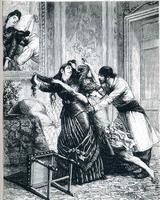
Illustration to "A Week of Kindness"
Max Ernst
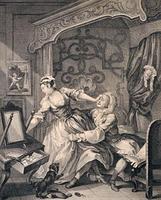
Before
William Hogarth
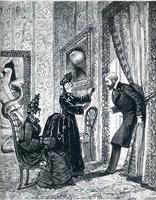
Illustration to "A Week of Kindness"
Max Ernst
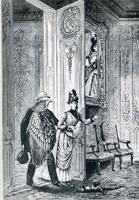
Illustration to "A Week of Kindness"
Max Ernst
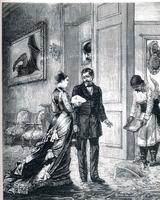
Illustration to "A Week of Kindness"
Max Ernst
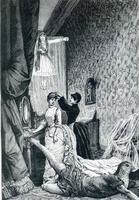
Illustration to "A Week of Kindness"
Max Ernst
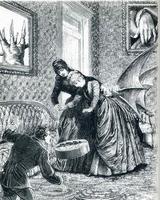
Illustration to "A Week of Kindness"
Max Ernst
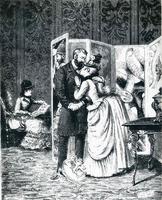
Illustration to "A Week of Kindness"
Max Ernst
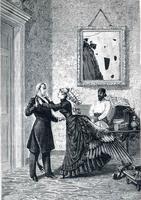
Illustration to "A Week of Kindness"
Max Ernst
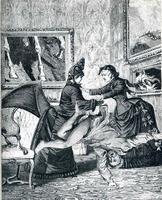
Illustration to "A Week of Kindness"
Max Ernst
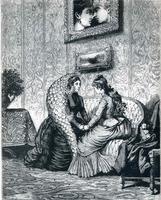
Illustration to "A Week of Kindness"
Max Ernst
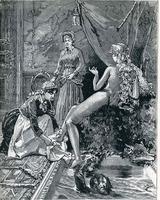
Illustration to "A Week of Kindness"
Max Ernst
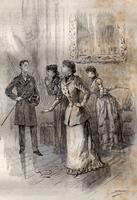
Story Le Rubis Du Grand-lama
Edouard Riou
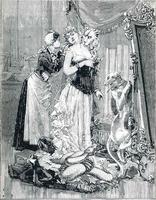
Illustration to "A Week of Kindness"
Max Ernst
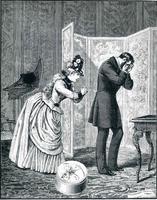
Illustration to "A Week of Kindness"
Max Ernst
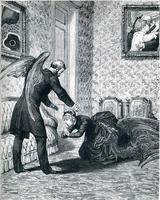
Illustration to "A Week of Kindness"
Max Ernst
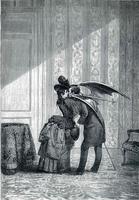
Illustration to "A Week of Kindness"
Max Ernst