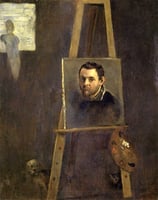
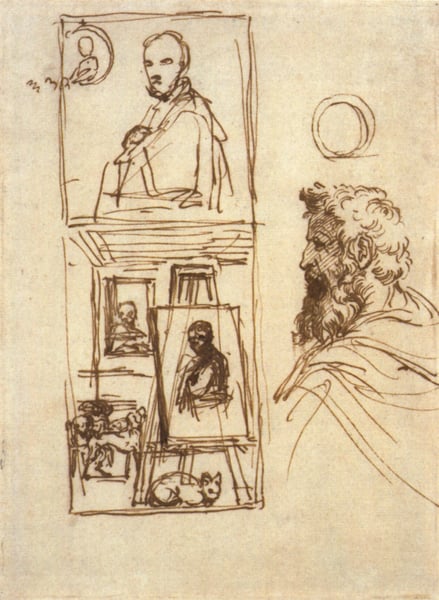
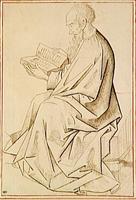
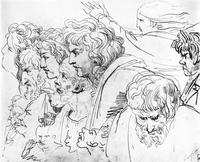
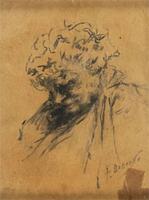
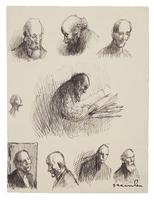
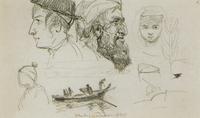
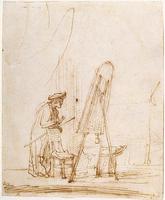
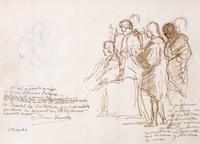
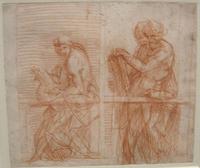
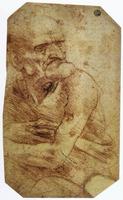
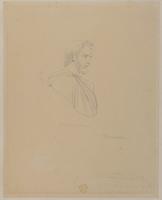
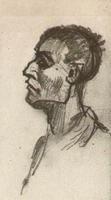
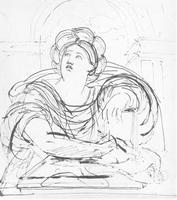
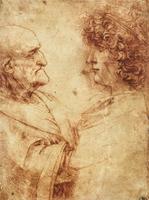
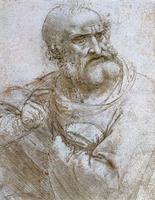
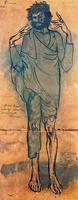
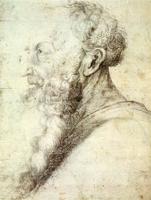
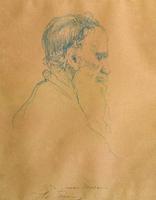
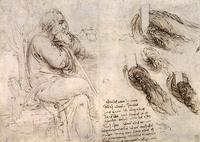
This preparatory drawing by Annibale Carracci is a revealing document of Baroque artistic practice. As a sketch and study, it captures the raw, spontaneous energy of the artist’s creative process—a hallmark of the early Baroque emphasis on naturalism and direct observation. Here, Carracci works out the composition for his final Self-portrait on an Easel in a Workshop, blending the immediacy of a life study with the self-reflective introspection that characterizes the period’s interest in the artist’s own identity.
The drawing’s significance lies in how it embodies the Carracci reform: a return to drawing from nature as the foundation of art, combined with a classicizing structure. In its loose, searching lines, we see the artist testing pose, light, and arrangement—revealing the discipline behind the finished Baroque masterwork. This work is therefore not merely a preliminary sketch but a vital key to understanding how Carracci, a pivotal figure in the shift from Mannerism to Baroque, used preparatory studies to achieve the lifelike immediacy and psychological depth that define his era.