Description
Stile: Rococo · Genere: portrait
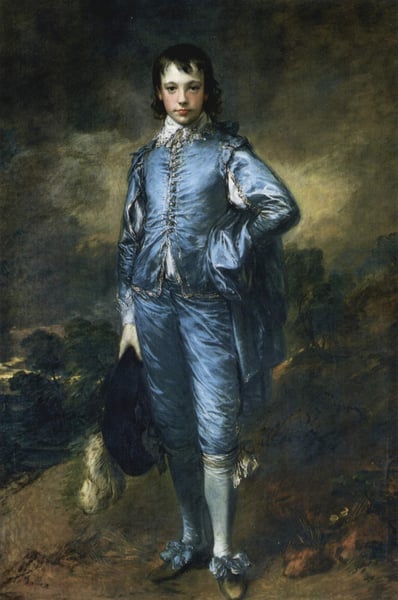
One of the most celebrated British paintings is the portrait The Blue Boy (c. 1770) by Thomas Gainsborough. The painting shows a boy dressed in a 17th-century costume, an homage to the Flemish master Anthony van Dyck. The dress and gestures in The Blue Boy echo van Dyck’s portraits of Charles II as a child (1637), The Children of King Charles I of England (1637) and Charles II as Prince of Wales, in Armor (c. 1637-1638). These types of portraits were usually not commissions, instead, they served as intellectual exercises that allowed portrait painters to experiment, to show off their painterly skills and mastery. Gainsborough demonstrates his artistry in his treatment of the brooding landscape in the background, and the satin fabric costume in which he experiments with the play of light and shadow on the garment.
It has been said that Gainsborough painted The Blue Boy because of his rivalry with fellow portrait painter, Sir Joshua Reynolds. In his writings, Reynolds stated that cool colors should not dominate the foreground, rather they should be used in small amounts to set off the warm colors in the painting. However, this story was likely invented to play up the rivalry between the painters: The Blue Boy was exhibited in 1770, and Reynolds made this remark in 1778. Still, it is worth noting that the two painters held opposed artistic beliefs: while Reynolds was very stern and advocated for the study of old masters, Gainsborough was more spontaneous and modern in his approach.
Because he was the owner of the painting, it was widely believed that the sitter in the painting was Jonathan Buttall, the son of a wealthy hardware merchant. However, this identification was never confirmed and recently art historian Susan Sloman suggested the sitter could be Gainsborough Dupont, the artist’s nephew. Dupont lived with Gainsborough’s family in Bath and London and was the painter’s one and only resident apprentice and assistant. Gainsborough painted his nephew’s portrait in a similar costume on two other occasions: Gainsborough Dupont (1770-1772) in the Tate collection and Gainsborough Dupont (1773) in the Rothschild collection. The two portraits of Dupont demonstrate a physical resemblance to the sitter in The Blue Boy. In the Rothschild portrait, Dupont even wears a blue frock like the one worn by The Blue Boy. Furthermore, x-rays of the painting show that originally Gainsborough painted a dog next to the boy. The dog, an English water spaniel was likely Tristram, one of the Gainsborough’s family pets, making it more likely that the artist was painting a family member.
The painting belonged to Jonathan Buttall until he filed for bankruptcy in 1796. From that point, it changed several owners: initially it was bought by politician John Nesbitt, later, in 1802, by painter John Hoppner, and in 1809, it entered the collection of Earl Grosvenor. During this period, The Blue Boy was featured in multiple exhibitions: it became beloved by the public and was widely reproduced in print. In 1921, the iconic painting was sold to American railroad magnate Henry Edward Huntington for £182,200 – a record price at the time. The sale caused public outcry so before it was shipped to California, it was briefly displayed at The National Gallery. The Blue Boy was seen by 90,000 people, and The National Gallery director Charles Holmes even made an emotional gesture by scrawling the words “Au Revoir, C.H” on the back of the canvas. Today, the painting is in the Huntington Library, San Marino, California.
Museum / Gallery
Visivamente simili
20 opere con composizione e palette affini
Charles Howard, 11th Duke of Norfolk
Thomas Gainsborough
The Brown Boy (Thomas Lister)
Joshua Reynolds
Philip Stanhope
John Russell
Portrait of a Young Man
Jacob Fransz. van der Merck
John Monso
Pompeo Batoni
Johan Oxenstierna
Anthony van Dyck
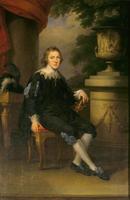
Thomas Noel-Hill (1770–1832), 2nd Baron Berwick of Attingham
Angelica Kauffman
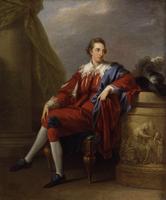
Portrait of John Simpson
Angelica Kauffman
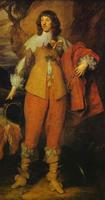
Portrait of Henri II de Lorraine, Duc de Guise
Anthony van Dyck
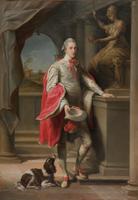
Portrait of John, 3rd Baron Monson of Burton
Pompeo Batoni
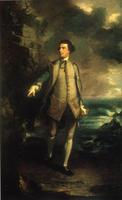
Augustus Keppel
Joshua Reynolds
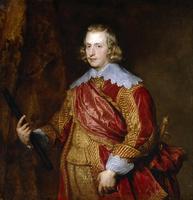
Portrait of Cardinal-Infante Ferdinand of Austria
Anthony van Dyck
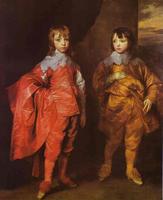
George Villiers, 2nd Duke of Buckingham and His Brother Lord Francis Villiers
Anthony van Dyck
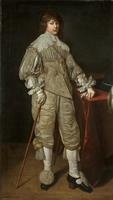
Portrait of Prince Janusz Radziwiłł
David Bailly
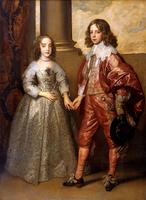
William II, Prince of Orange and Princess Henrietta Mary Stuart, daughter of Charles I of England
Anthony van Dyck
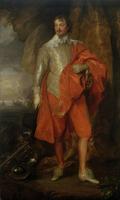
Robert Rich
Anthony van Dyck
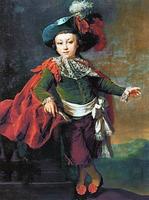
Portrait of F.P. Makerovskiy in masquerade costume
Dmitry Levitzky
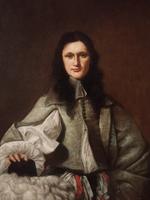
Portrait of Ignác Jetřich Vitanovský of Vlčkovice
Karel Škréta
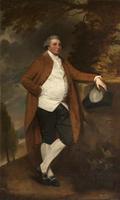
Sir John Trevelyan (1734–1828), 4th Bt
George Romney
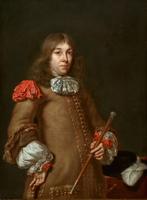
Portrait of Cornelis de Graeff
Gesina ter Borch