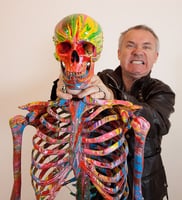
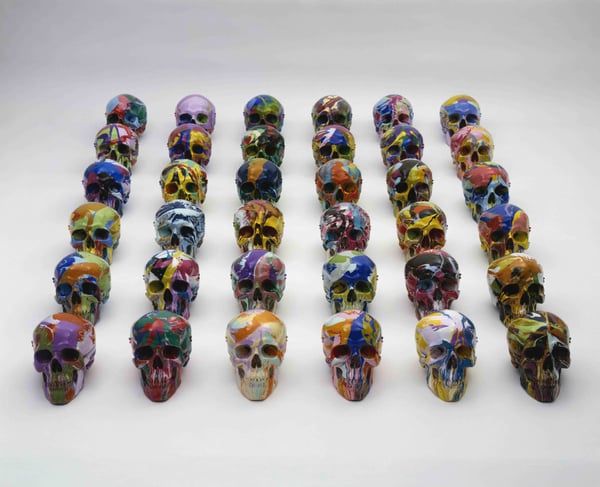
Cornucopia
Damien Hirst の Cornucopia の専門的な分析
スタイル:Neo-Pop Art · ジャンル:installation
Expert Analysis: "Cornucopia" by Damien Hirst
Damien Hirst’s Cornucopia is a quintessential work of Neo-Pop Art, deploying the genre’s characteristic fascination with consumer culture, excess, and the tension between spectacle and mortality. As an installation, it transforms the gallery space into a visceral critique of abundance, inviting viewers to confront the seductive yet hollow promises of modern materialism.
Significance within Neo-Pop Art:
Neo-Pop Art emerged in the late 20th century as a revival and critique of 1960s Pop Art, updating its engagement with commercial imagery for a more cynical, media-saturated age. Hirst, a leading figure in this movement, uses Cornucopia to push beyond the flat, ironic surfaces of earlier Pop (e.g., Warhol’s soup cans) into a three-dimensional, immersive experience. The installation’s overwhelming profusion of objects—often referencing luxury goods, organic forms, or pharmaceutical packaging—mirrors the glut of contemporary consumer society. Unlike the celebratory tone of classic Pop, Hirst’s work carries an undercurrent of anxiety: the horn of plenty becomes a symbol of suffocating excess, not generosity.
Context and Interpretation:
The title Cornucopia traditionally evokes abundance and nourishment, but Hirst subverts this by filling the space with items that are artificial, preserved, or deathly—such as dead butterflies, surgical instruments, or vitrines of pills. This juxtaposition of life and decay is a hallmark of Hirst’s practice. The installation’s scale and sensory overload force viewers to navigate through a labyrinth of desire and revulsion, mirroring the ways in which capitalist production bombards us with choices while stripping meaning from objects. The work’s significance lies in its ability to make the familiar strange, turning the cornucopia into a critique of the very excess it once celebrated.
Why It Matters:
Cornucopia exemplifies how Neo-Pop Art can occupy the space between attraction and repulsion, entertainment and critique. It is significant not only as a provocative statement on consumerism and mortality but also as a demonstration of installation art’s power to envelop the viewer in a total environment. Hirst’s work challenges the passive consumption of images, forcing an active, embodied response—a key contribution to the evolution of Pop-derived art in the 21st century.
視覚的に類似
構図やパレットが近い作品 20 件
Psychedelic Skull 04
Alex Jesús Cabello Leiva
Vanitas (Three skulls)
Georg Scholz
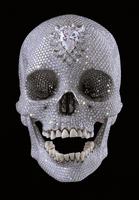
For the Love of God
Damien Hirst
Skulls
Nicholas Roerich
Still life with three skulls
Paul Cezanne
Death Goes To The Disco
Paulo Fontes
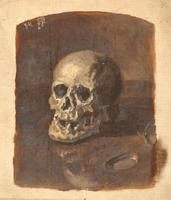
Study of skull
Nicholas Roerich
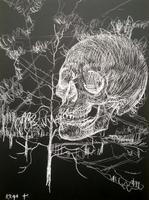
Chemtrails?
Alfred Freddy Krupa
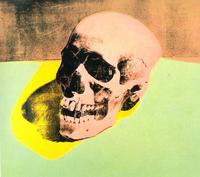
Skull
Andy Warhol
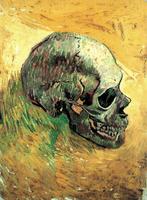
Skull
Vincent van Gogh
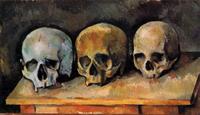
The Three Skulls
Paul Cezanne
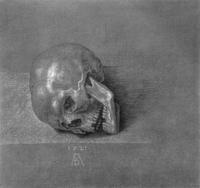
Skull
Albrecht Durer
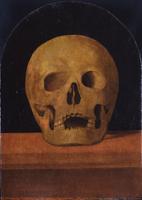
Triptych
Mariotto Albertinelli
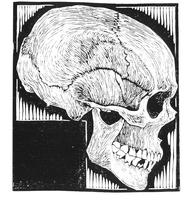
Skull
M.C. Escher
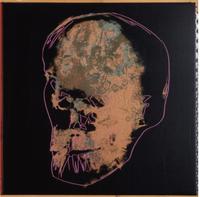
Philip's Skull
Andy Warhol
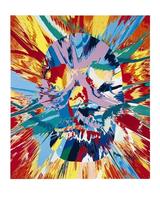
Beautiful Maat Intense Fetishistic
Damien Hirst
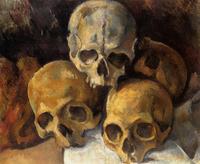
Pyramid of skulls
Paul Cezanne
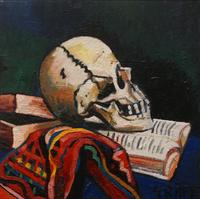
Vanitas
Matthias Laurenz Gräff
Skull
Gregoire Boonzaier
Skull
Vincent van Gogh