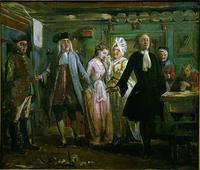
Expert Analysis of "Suicide of the Countess" by William Hogarth
Style & Genre
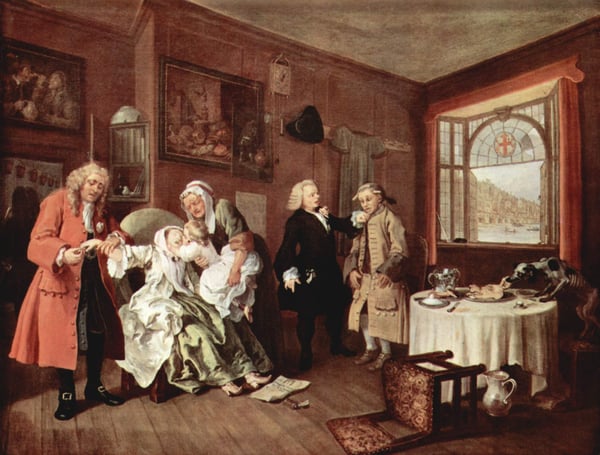
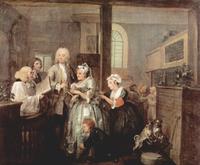
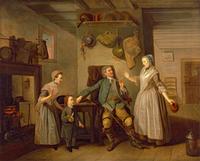
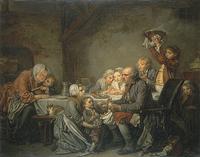
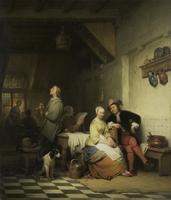
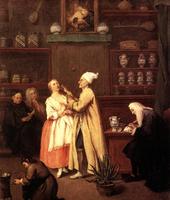
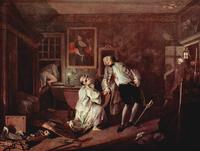
As a Rococo genre painting, this work displays the characteristic decorative elegance, soft pastel palette, and intricate detailing associated with the style. Yet Hogarth subverts Rococo’s typical frivolity by embedding a stark moral narrative within the domestic scene.
Significance
The painting is a critical moment from Hogarth’s Marriage à-la-mode series, which satirized the corruptions of arranged marriages among the upper classes. Here, the countess—ruined by adultery and debt—takes her own life, while a physician and a magistrate fail to intervene. Hogarth elevates genre painting from mere everyday depiction to a vehicle for social critique. The Rococo flourishes (silks, mirrors, ornate furniture) contrast violently with the grim subject, underscoring the hypocrisy of the aristocracy. This fusion of refined style with unflinching morality marks Hogarth as a pioneer of narrative art and a sharp commentator on 18th-century English society.