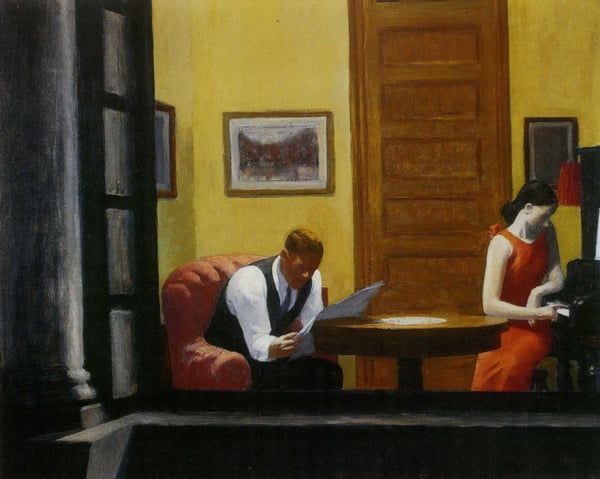
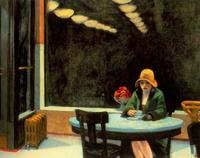
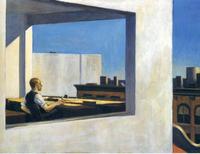
Edward Hopper's Room in New York (1932) stands as a quintessential example of Social Realism, a movement dedicated to depicting the unvarnished realities of everyday life. As a genre painting, it captures a domestic interior, yet Hopper elevates this ordinary scene into a profound commentary on urban alienation. The work’s significance lies in its ability to convey profound emotional disconnect through subtle visual cues: a man reads a newspaper, a woman plays a piano, yet their physical proximity underscores an impenetrable psychological distance. Hopper’s characteristic use of stark light and shadow heightens the sense of isolation, transforming a shared space into a stage for silent, unspoken tensions. This painting exemplifies how Social Realism could probe beneath the surface of American life, using the mundane to expose the loneliness that lurks within the modern metropolis.