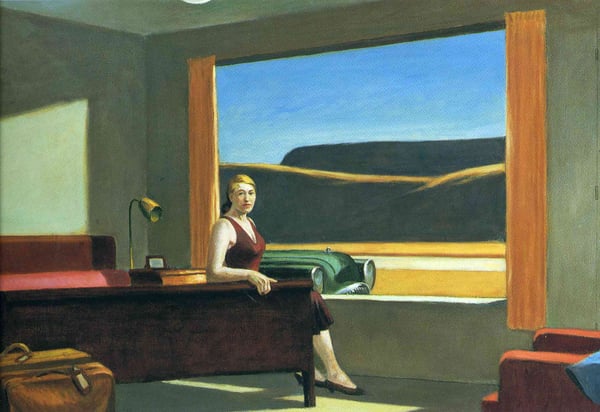
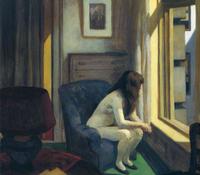
Edward Hopper's Western Motel (1957) stands as a masterwork of New Realism, a style that marries precise, unembellished representation with profound psychological depth. As a genre painting—depicting a scene from everyday life—the work elevates a mundane, transient interior into a resonant study of mid-century American solitude.
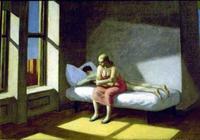
The painting centers on a woman seated in a spare motel room, her gaze distant, while through a large window the vast, open landscape of the American West stretches under a pale sky. Hopper’s signature use of stark light and shadow, flattened perspective, and muted color palette creates an atmosphere of eerie stillness. The motel, a symbol of impermanence and rootlessness, becomes a stage for a quintessentially Hopperesque tension: the promise of freedom versus the weight of isolation.
Significantly, Western Motel crystallizes the themes that define Hopper’s contribution to New Realism. Unlike the social critiques of earlier American Regionalists or the abstraction of the contemporary New York School, Hopper’s realism is both visually accurate and emotionally charged. The painting captures a specific postwar American condition—the lonely mobility of the automobile age, where vast landscapes are viewed through the isolating frame of a rented room. The woman’s ambiguous expression and the rigid geometry of the space invite viewers to project their own narrative, making the work a timeless meditation on the distances between people and places.