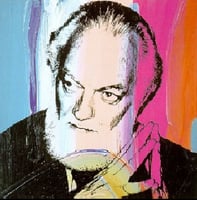
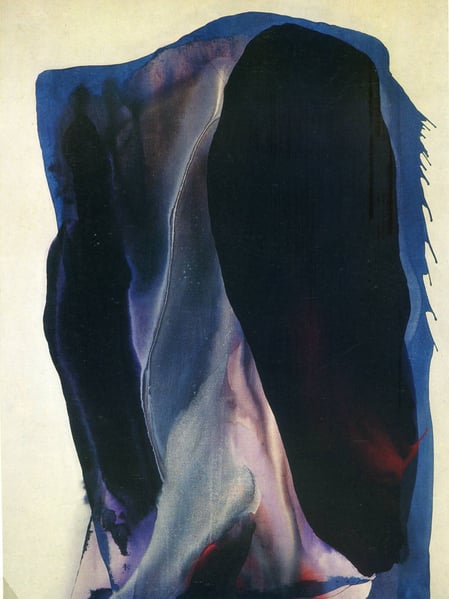
Untitled
Экспертный разбор работы «Untitled» художника Paul Jenkins
Стиль: Abstract Expressionism, Lyrical Abstraction · Жанр: abstract
Expert Analysis: Paul Jenkins' Untitled (c. 1960s–1970s)
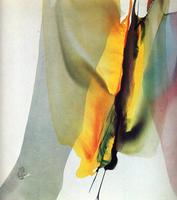
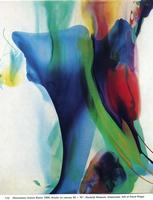
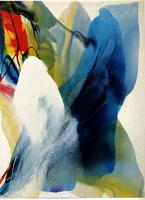
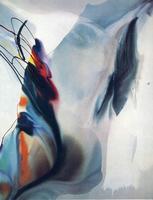
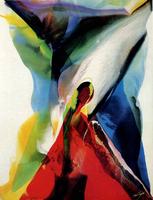
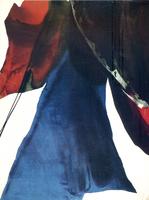
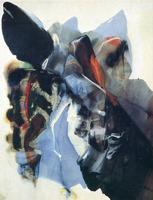
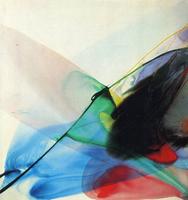
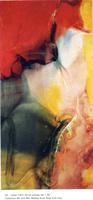
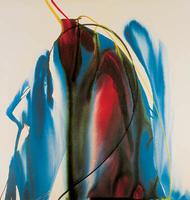
Paul Jenkins’ Untitled stands at a pivotal intersection of Abstract Expressionism and Lyrical Abstraction, demonstrating how the artist transformed the aggressive, gestural energy of the New York School into a luminous, fluid meditation on color and form. Working primarily in the 1960s and 1970s, Jenkins developed a signature “poured paint” technique—applying thin washes of acrylic directly onto unprimed canvas, then tilting the surface to guide the pigments into organic, translucent veils. In this untitled work, that method produces a layered, atmospheric field where cascading bands of jewel-like hues (crimson, sapphire, amber) seem to emerge from and dissolve into the raw canvas.
Significance within Abstract Expressionism and Lyrical Abstraction:
-
Bridging Two Movements: Jenkins emerged as a second-generation Abstract Expressionist, inheriting the all-over composition and emphasis on process from pioneers like Jackson Pollock and Willem de Kooning. Yet Untitled replaces their violent drips and slashes with a controlled, almost meditative flow—a shift that prefigures Color Field painting (e.g., Helen Frankenthaler, Morris Louis) and Lyrical Abstraction’s celebration of chromatic transparency. The work is thus a key example of how the late 1950s/early 1960s New York scene began to move from “action painting” to a more sensuous, optically charged abstraction.
-
The “Poured Paint” Innovation: Where Pollock’s drip technique emphasized physical exertion and psychological intensity, Jenkins’ pours invite chance and gravity as collaborators. The pigments intermingle on the canvas, creating soft edges, watercolor-like stains, and internal depth—qualities that distinguish Untitled from harder-edged abstraction. This method allowed Jenkins to achieve what he called “the inner image”: a state where color itself becomes the subject, unburdened by representation or symbolic narrative.
-
Lyrical Abstraction’s Core Attributes: The term “lyrical” aptly describes the work’s rhythmic flow and emotional aura. Unlike the stark geometry of Minimalism or the insistent gesture of first-generation Abstract Expressionism, Jenkins’ Untitled invites a slow, contemplative gaze. The cascading forms evoke natural phenomena (water, light, geological strata) without directly imitating them, placing the viewer in a suspended, dreamlike space. The painting’s power lies in its balance of spontaneity and elegance: the poured paint retains a sense of free fall, yet the final composition is remarkably harmonized.
Legacy: Untitled exemplifies why Jenkins is considered a crucial transitional figure. His work expanded the possibilities of abstract painting by proving that the medium could be both physically direct and optically delicate, both process-driven and formally refined. In this piece, the fusion of Abstract Expressionism’s raw energy with Lyrical Abstraction’s evocative color field marks a sophisticated evolution—one that resonates with later developments in post-painterly abstraction and contemporary stained-canvas practices.
Визуально похожие
20 работ с близкой композицией и палитрой
Untitled
Paul Jenkins
Untitled
Paul Jenkins
Untitled
Paul Jenkins
Untitled
Paul Jenkins
Phenomena Graced by Three
Paul Jenkins
Untitled
Paul Jenkins
Untitled
Paul Jenkins
Untitled
Paul Jenkins
Untitled
Paul Jenkins
Untitled
Paul Jenkins
Lotus
Paul Jenkins
Mizar
Rene Duvillier
Phenomena Yellow Strike
Paul Jenkins
Untitled
Paul Jenkins
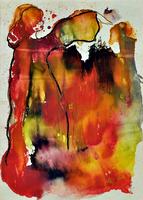
The Fairy of the Colours
George Stefanescu
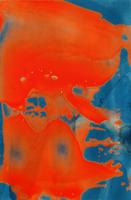
Number 288
Roger Weik
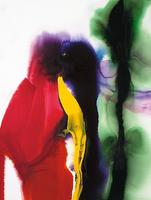
Phenomena Wind Arch
Paul Jenkins
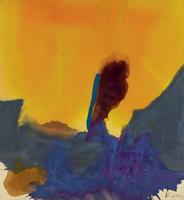
Glow II
Helen Frankenthaler
Phenomena Waiting Gables
Paul Jenkins
Seal
Morris Louis