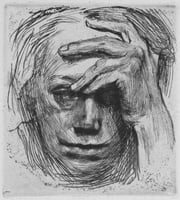
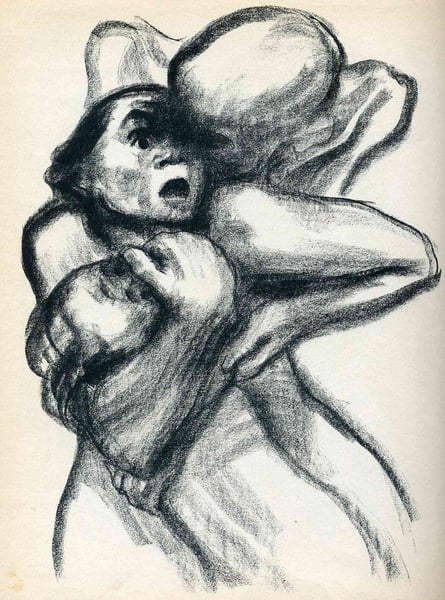
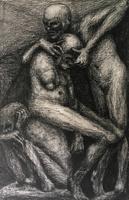
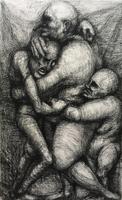
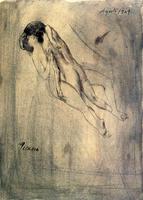
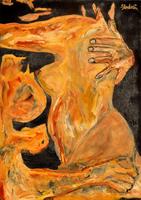
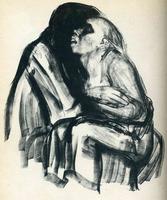
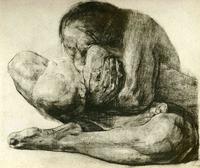
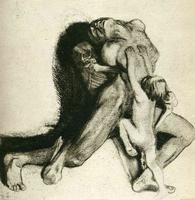
Käthe Kollwitz's "Death Seizing A Woman" stands as a potent emblem of Expressionism’s raw emotional power, channeled through the allegorical genre. The work’s significance lies in how Kollwitz transforms the universal theme of mortality into a deeply personal, visceral confrontation—a hallmark of Expressionist inquiry. By personifying Death as an active, gripping force and the woman as a figure of struggle or resignation, the artist moves beyond classical allegory’s detached moralizing. Instead, she harnesses the style’s signature distortion, stark contrast, and emotional intensity to render grief tangible. Within Kollwitz’s oeuvre, this piece resonates as part of her relentless exploration of suffering, loss, and the human cost of war, particularly after her own son’s death in World War I. The allegory thus becomes a vehicle for modern, gendered tragedy: the woman is not a passive symbol but an individual caught in the universal grip of death, making the work a significant Expressionist statement on the intersection of personal anguish and inescapable fate.