Analisi esperta di Ukraine di Arkhyp Kuindzhi
Stile: Impressionism · Genere: landscape
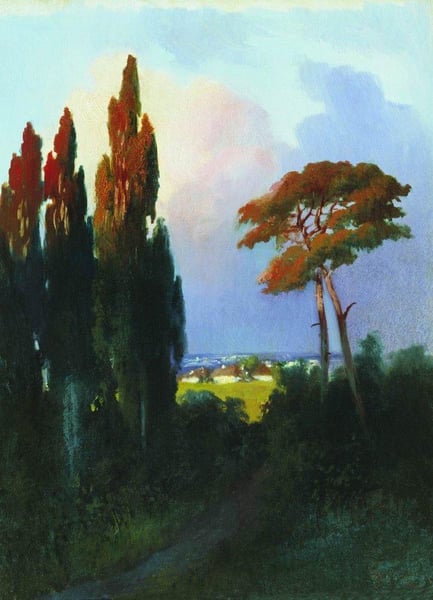
Expert Analysis of "Ukraine" by Arkhyp Kuindzhi
While Arkhyp Kuindzhi is often associated with the Russian Peredvizhniki (Wanderers) tradition and a proto‑Luminist use of light, the supplied facts identify this work as Impressionist in style and a landscape in genre. Approached through that lens, "Ukraine" becomes a striking example of how an Eastern European painter interpreted Impressionist principles—especially the fascination with transient light, vibrant color, and atmospheric effect—applied to a distinctly Ukrainian subject.
Significance within Impressionism:
Kuindzhi’s "Ukraine" transcends the typical Impressionist focus on Parisian boulevards or suburban leisure by turning to the vast, elemental landscape of the Ukrainian steppe. The work captures the quintessential Impressionist interest in optical truth and fleeting moments of natural light, but does so with a monumental, almost spiritual stillness that sets it apart from the more hurried brushwork of Monet or Renoir. The composition likely emphasizes the horizontality of the plains, with the sky dominating the canvas—a hallmark of Kuindzhi’s later pieces, where light becomes the true subject.
Key Impressionist Features in the Work:
- Palette and Color: Kuindzhi employs the Impressionist technique of juxtaposing pure, unmixed hues to simulate the shimmer of sunlight on grass, water, or clouds. The deep greens of the Ukrainian landscape are offset by warm golds and luminous blues, creating a sense of atmospheric depth.
- Brushwork: Though perhaps more deliberate than the rapid plein air dabs of French Impressionists, the application of paint in "Ukraine" would still appear loose and textured when viewed up close, dissolving into distinct strokes of color that resolve into a cohesive vision from a distance.
- Light as Protagonist: True to Impressionist innovation, the painting’s real subject is not the physical terrain but the quality of light—the way it falls across the land, suffuses the sky, and modulates the color of distant fields. This aligns with Kuindzhi’s known fascination with extreme luminosity, often described as “light painting.”
Genre and Cultural Significance:
As a landscape, "Ukraine" performs double duty: it is both an Impressionist study of natural phenomena and a celebration of national identity. The wide, unbroken horizon and the humble yet monumental sweep of the steppe evoke a sense of endless space and rootedness—a motif that was central to Ukrainian cultural consciousness in the 19th century. By applying the innovative visual language of Impressionism to this intimate yet epic terrain, Kuindzhi asserts that the Ukrainian landscape is worthy of the same artistic revolution that transformed European painting.
In summary, "Ukraine" demonstrates how Impressionist doctrines of light, color, and atmospheric immediacy could be adapted to a land‑based, nationally‑inflected subject, producing a work that is at once a masterful optical experiment and a poetic hymn to the Ukrainian earth. It remains significant for bridging the gap between Western European avant‑garde sensation and Eastern European landscape tradition.
Visivamente simili
20 opere con composizione e palette affini
Landscape
Arkhyp Kuindzhi
Moonlight Reflections
Granville Redmond
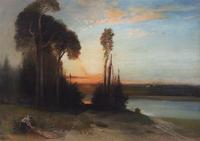
By evening
Aleksey Savrasov
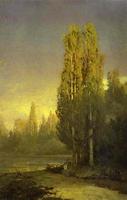
Poplars Lit by the Sun
Fyodor Vasilyev
Landscape near the sea
Giovanni (Nino) Costa
In the Campagna
Giovanni (Nino) Costa
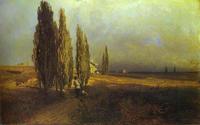
Poplars
Fyodor Vasilyev
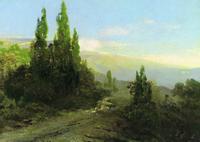
Evening in the Crimea
Fyodor Vasilyev
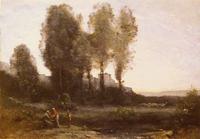
The Monastery Behind the Trees
Camille Corot
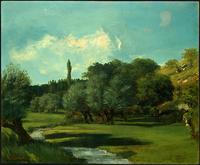
La Bretonnerie in the Department of Indre
Gustave Courbet
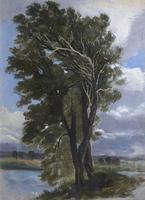
Trees in a Wind
George Harvey
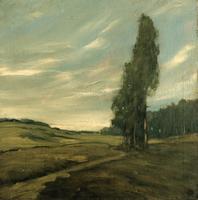
Contra Costa Landscape
Xavier Martinez
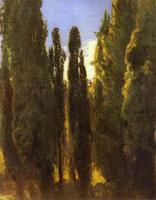
Cypresses in the Crimea
Fyodor Vasilyev
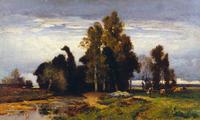
Barbizon Landscape
Jules Dupre
Les arbres au bord du chemin à Lagny
Léo Gausson
Forest
Arkhyp Kuindzhi
Cloud Study over Poplars
Knud Baade
Cypresses on a Seashore. The Crimea
Arkhyp Kuindzhi
Hudson River
Leon Dabo
Livadia
Ivan Aivazovsky