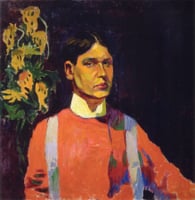
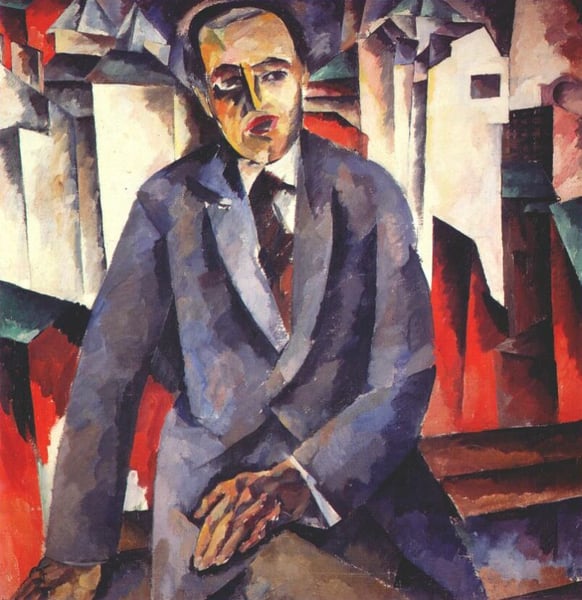
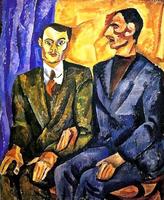
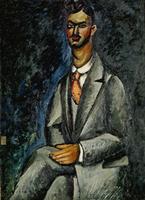
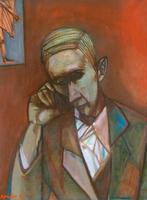
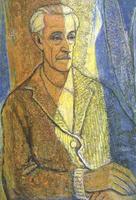
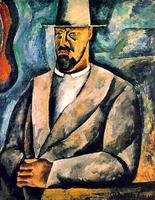
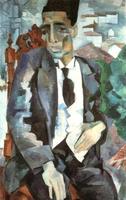
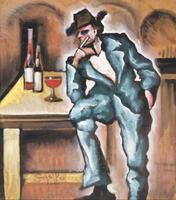
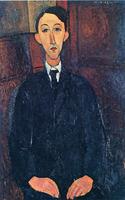
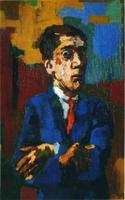
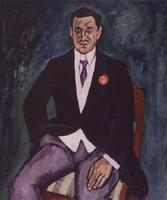
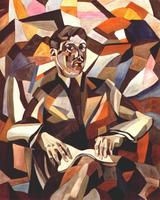
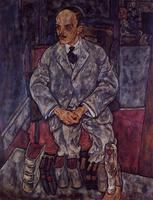
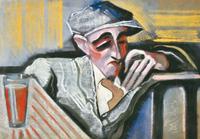
This portrait exemplifies the distinctive Russian interpretation of Cubism, known as Cubo-Futurism, which Aristarkh Lentulov helped pioneer. While the work adopts the fractured planes and geometric abstraction of French Cubism, Lentulov infuses it with a vibrant, almost theatrical dynamism—a fitting choice for a portrait of Alexander Tairov, a radical theatre director. The composition breaks the sitter's face and figure into intersecting facets, yet retains a powerful sense of presence and personality. The significance lies in how Lentulov moves beyond pure analytical Cubism: instead of muted earth tones, he likely uses strong, saturated colours and rhythmic, angular lines to convey the energy of the stage and the modernist spirit of early 20th-century Russian avant-garde theatre. This portrait is not merely a formal exercise but a dialogue between painting and performance, capturing the essence of a creative revolution through a Cubist lens while asserting a uniquely Russian artistic identity.