
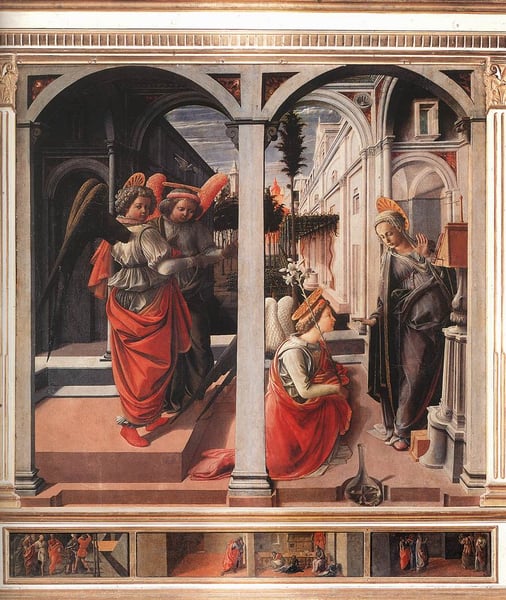
Expert analysis of Filippo Lippi’s Annunciation
Style: Early Renaissance · Genre: religious painting
Expert Analysis: "Annunciation" by Filippo Lippi (c. 1440–1445)
Style: Early Renaissance | Genre: Religious painting
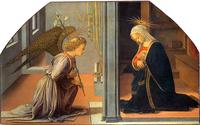
Filippo Lippi’s Annunciation is a landmark of Early Renaissance religious painting, distinguished by its intimate, humanized treatment of a sacred subject. While the scene traditionally emphasizes the divine mystery of the Incarnation, Lippi grounds it in a convincingly domestic, light-filled interior—a departure from the iconic gold-ground settings of Gothic art.
Key Significance:
-
Humanized Spirituality – The Virgin Mary is depicted as a graceful, youthful figure reacting with natural humility rather than static reverence. The angel Gabriel, kneeling with a gentle tilt, conveys the dialogue between heaven and earth as a tender, personal exchange. This emotional accessibility aligns with the Early Renaissance shift toward relatable piety.
-
Spatial Clarity and Perspective – Lippi employs a clear, one-point perspective (visible in the floor tiles and architectural recession) to create a credible, three-dimensional space. The open doorway and window invite the viewer into a measured, harmonious world—a hallmark of Renaissance rationalism. The careful handling of light, falling softly across Mary’s face and the angel’s robes, models forms with gentle volume and enhances the serene atmosphere.
-
Symbolism in the Ordinary – The annunciation lily, held by the angel, is a traditional symbol of Mary’s purity, but Lippi situates it within a lived-in setting: a simple bedroom with a shelf, books, and a carved bed. This juxtaposition of holy event and everyday environment makes the miracle feel tangible, reflecting the era’s interest in merging divine narratives with human experience.
-
Influence of Masaccio and Fra Angelico – Lippi synthesizes Masaccio’s monumental figures and volumetric clarity with Fra Angelico’s luminous color and devotional grace. The result is a work that balances naturalism with lyricism—a defining achievement of mid-Quattrocento Florentine painting.
Conclusion:
Lippi’s Annunciation is significant for reimagining a foundational Christian story as an intimate, psychologically believable encounter. Its mastery of perspective, light, and human expression marks a mature phase of the Early Renaissance, where spiritual depth and spatial logic coexist in perfect equilibrium. This painting remains a touchstone for understanding how religious art evolved to speak directly to the heart and mind of the Renaissance viewer.
Museum / Gallery
Visually similar
20 works with related composition and palette

Annunciation
Filippo Lippi
The Annunciation
Francesco del Cossa

The Annunciation with two Kneeling Donors
Filippo Lippi
Annunciation
Fra Angelico

Polyptych Albani Torlonia
Pietro Perugino
Annunciation
Fra Angelico
Annunciation
Filippo Lippi

The Annunciation
Vittore Carpaccio
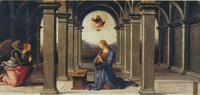
Pala di Fano (Annunciation)
Pietro Perugino
Virgin with the Child and Scenes from the Life of St. Anne (detail)
Filippo Lippi
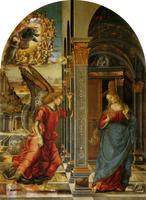
Annunciation
Luca Signorelli
Esther Choisie Par Assuérus
Filippino Lippi
Portrait of the Donor Francesca Pitti Tornabuoni
Domenico Ghirlandaio
Madonna and Child with St. Lucy, St. Francis, St. Nicolas and St. John the Baptist, from Santa Lucia dei Magnoli
Domenico Veneziano
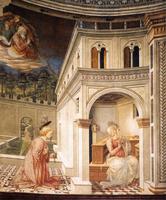
Annunciation
Filippo Lippi
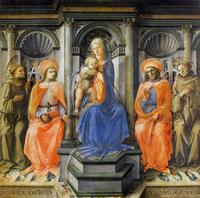
Madonna Enthroned with Saints
Filippo Lippi
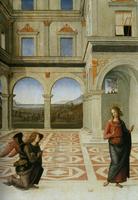
The Annunciation
Pietro Perugino
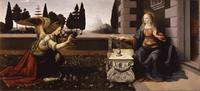
Annunciation
Leonardo da Vinci
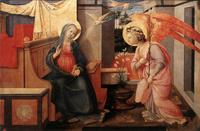
Annunciation
Filippo Lippi

Polyptych Albani Torlonia (particular detail)
Pietro Perugino