
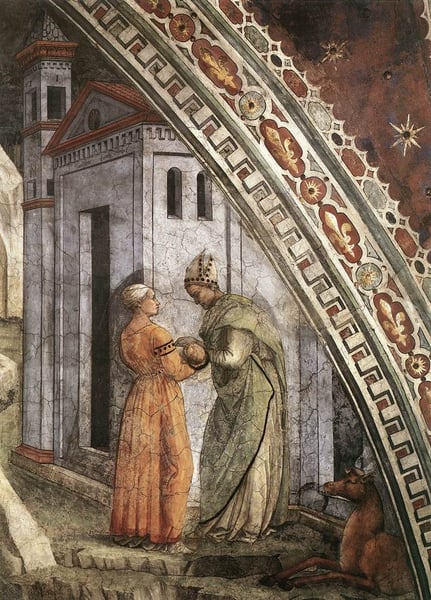
Expertenanalyse zu Filippo Lippis The Birth and Infancy of St. Stephen (detail)
Stil: Early Renaissance · Genre: religious painting
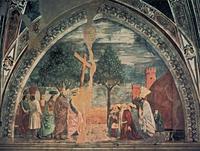
In the detail from The Birth and Infancy of St. Stephen, Filippo Lippi exemplifies the Early Renaissance shift from medieval abstraction to a more naturalistic, human-centered sacred narrative. As a fresco or panel segment from a larger cycle (likely in Prato Cathedral, where Lippi painted such scenes), the work’s significance lies in its intimate, domestic treatment of a saint’s early life—a subject that allows Lippi to blend religious devotion with the everyday warmth of quattrocento Florence.
Lippi’s composition here masters the era’s emerging linear perspective and careful spatial organization, yet what truly sets it apart is the tender, almost maternal interaction between figures. The detail probably focuses on the infant Stephen in a humble, recognizable setting—a cradle or a mother’s arms—echoing contemporary families rather than stiff hieratic poses. This humanization of holy figures was a hallmark of Lippi’s style, influenced by Fra Angelico’s clarity and Masaccio’s volumetric solidity, but infused with his own lyrical sweetness and delicate chiaroscuro.
The palette is characteristically bright and locally observed, with soft drapery folds that reveal Lippi’s skill in rendering fabric as both decorative and structurally descriptive. The detail’s psychological realism—the calm glance, the gentle gesture—elevates the narrative from mere illustration to an empathetic encounter. Within the Early Renaissance, Lippi’s work helped shift religious painting toward emotional accessibility, making the miraculous feel palpably human. This fragment, in its intimacy and technical grace, stands as a testament to that transformative moment.
Visuell ähnlich
20 Werke mit ähnlicher Komposition und Farbpalette
St Catherine's Disputation (detail)
Pinturicchio
St. John the Evangelist
Filippo Lippi
St. Francis Renouncing his Worldly Goods
Giotto
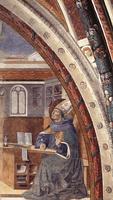
St. Augustine's Vision of St. Jerome
Benozzo Gozzoli
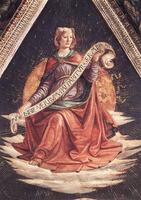
A Sibyl
Domenico Ghirlandaio
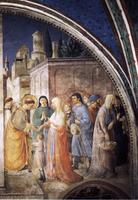
St. Stephen Distributing Alms
Fra Angelico
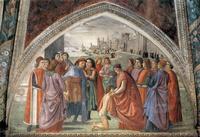
Renunciation of Worldly Goods
Domenico Ghirlandaio
Cappella Rinuccini
Giovanni da Milano
Annunciation to Zacharias
Giotto
Raising of the Boy in Sessa
Giotto
Cappella Rinuccini
Giovanni da Milano
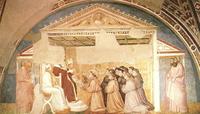
Confirmation of the Rule
Giotto
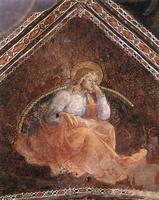
St. Luke the Evangelist
Filippo Lippi
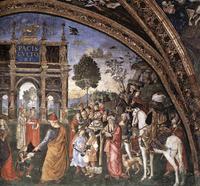
St Catherine's Disputation (detail)
Pinturicchio
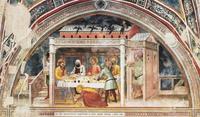
Cappella Rinuccini
Giovanni da Milano
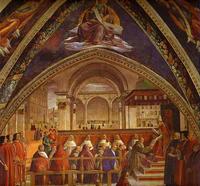
Confirmation of the Rule
Domenico Ghirlandaio
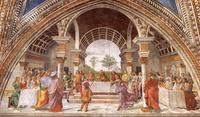
Herod's Banquet
Domenico Ghirlandaio
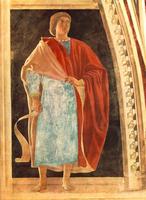
Prophet
Piero della Francesca
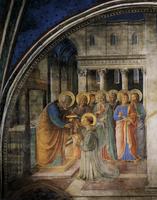
St. Peter Consacrates Stephen as Deacon
Fra Angelico
Exaltation of the Cross: Heraclius enters Jerusalem with the Cross
Piero della Francesca