Analyse experte de Goddess on the Rocks de Gustave Moreau
Style : Symbolism · Genre : mythological painting
Analysis of "Goddess on the Rocks" by Gustave Moreau
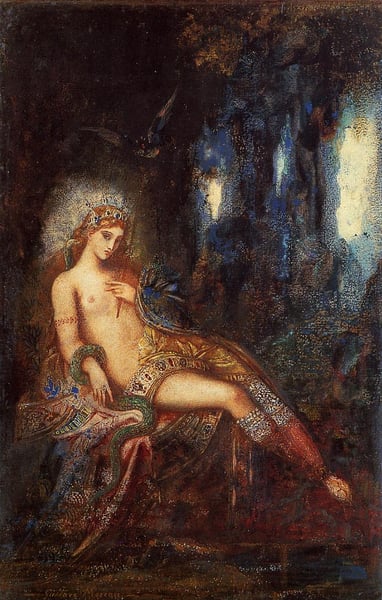
Gustave Moreau’s “Goddess on the Rocks” stands as a quintessential example of Symbolist mythological painting. Within the Symbolist movement, artists rejected naturalistic representation in favor of evocative, often dreamlike imagery that conveyed inner truths, emotions, and spiritual ideas. Moreau was a master of this approach, and this work exemplifies his contribution to the style.
The painting’s significance lies in its treatment of the mythological subject. Rather than narrating a clear mythic story, Moreau presents a static, enigmatic figure—a goddess isolated on a rocky outcrop. This composition emphasizes mystery and timelessness, inviting the viewer to contemplate the symbolic weight of the figure rather than a specific mythological event. The rocky setting itself is not a realistic landscape but a stylized, almost theatrical backdrop, typical of Moreau’s symbolic landscapes that evoke a sense of the primordial or the sublime.
Furthermore, “Goddess on the Rocks” demonstrates Moreau’s hallmark technique: meticulous, jewel-like detail combined with an atmospheric, almost hazy treatment of light and color. This duality—precise draftsmanship alongside a dreamlike aura—was central to Symbolism’s aim of making the invisible visible. The goddess likely represents a fusion of divine femininity and untamed nature, a recurring theme in Moreau’s oeuvre that prefigures the fin-de-siècle fascination with the femme fatale and the exotic.
In the context of Symbolism, this work is significant for how it uses a mythological framework not to celebrate classical ideals but to explore psychological and spiritual dimensions. Moreau’s emphasis on the goddess’s inscrutable expression and the barren, rocky environment creates a feeling of solitude and power, aligning with Symbolist concerns with the inner life and the sublime. Ultimately, “Goddess on the Rocks” is a compelling example of how Moreau transformed traditional mythological painting into a vehicle for personal, poetic, and deeply symbolic expression.
Museum / Gallery
Visuellement similaire
20 œuvres à la composition et à la palette proches
Perseus and Andromeda
Gustave Moreau
Cleopatra
Gustave Moreau
Mystical dream
Eliseu Visconti
Fairy and Griffon
Gustave Moreau
Frauenakt
Károly Lotz
The Song of Songs
Gustave Moreau
Sleeping Bacchant
Károly Lotz
Galatea
Gustave Moreau
Susanna and the Elders
Gustave Moreau
Bathsheba
Henri Fantin-Latour
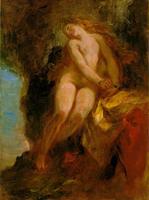
Andromeda
Eugene Delacroix
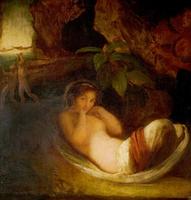
'A Midsummer Night's Dream', Act II, Scene 2, Titania Reposing with Her Indian Votaries
George Romney
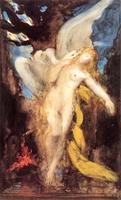
Leda
Gustave Moreau
Source
Henri Fantin-Latour
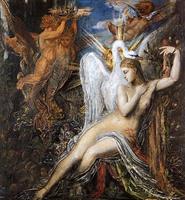
Leda
Gustave Moreau
Truth
Henri Fantin-Latour
Eve Tempted
George Frederick Watts
Eve
Gustave Moreau
Danae
Carolus-Duran
Reclining nude with rose
Delphin Enjolras