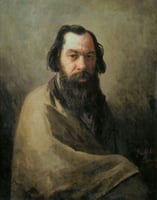
Analisi esperta di Spring di Aleksey Savrasov
Stile: Realism · Genere: landscape
Expert Analysis: "Spring" by Aleksey Savrasov
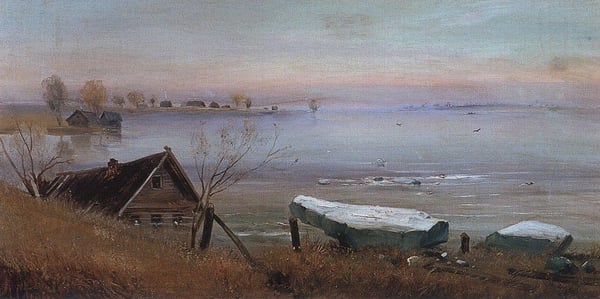
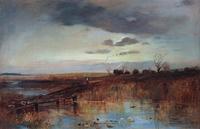
Aleksey Savrasov’s Spring stands as a quintessential example of Russian Realist landscape painting, a genre in which the artist achieved profound emotional and national resonance. While the composition may depict a seemingly humble, unadorned scene—likely the thawing of snow, the first patches of bare earth, or the tentative bloom of early vegetation—Savrasov elevates this mundane moment into a meditation on nature’s cyclical rebirth. His mastery lies in capturing the transient, often overlooked beauty of the Russian countryside, infusing it with a quiet melancholy and hopefulness that defined the Realist movement’s shift away from idealized, historical landscapes.
Significance within Realism:
-
Emotional Authenticity: Unlike the grandiose, often dramatic landscapes of earlier Romanticism, Savrasov’s Spring focuses on intimacy and truth. The muted palette, soft atmospheric effects, and careful observation of light filtering through bare branches reflect the Realist commitment to depicting the world as it is—not as a stage for heroic action, but as a living, breathing environment that mirrors human feeling. The work’s emotional weight comes from its ability to evoke the bittersweet tension between winter’s end and spring’s hesitant arrival.
-
National Identity: Savrasov was instrumental in forging a distinctly Russian landscape tradition. While European Realists often painted pastoral or industrial scenes, Savrasov turned to the quiet, sparse corners of the Russian countryside—soggy fields, crooked wooden fences, melting snow—and found in them a profound sense of place. Spring exemplifies this by celebrating the raw, unglamorous beauty of the Russian landscape, making it a cornerstone of the Peredvizhniki (The Wanderers) movement, which sought to break from academic conventions and connect art with everyday life.
-
Innovation in Light and Atmosphere: Savrasov’s handling of atmospheric conditions was revolutionary. In Spring, the subtle gradations of gray-blue skies, the dampness clinging to the air, and the way light diffuses through haze create a sense of fleeting time. This mastery of plein air observation, while rooted in Realism, anticipates later developments in Impressionism, yet remains firmly grounded in a mood of national introspection rather than optical sensation.
In summary, Spring is significant because it transforms a simple landscape into a deeply felt portrait of Russia’s soul—vulnerable, resilient, and eternally renewed. It is a testament to Savrasov’s ability to find poetry in the ordinary, a hallmark of Realism that continues to influence how we see both nature and art.
Visivamente simili
20 opere con composizione e palette affini
Early Spring
Aleksey Savrasov
Winter Landscape
Aleksey Savrasov
Sea of Mud.
Aleksey Savrasov
Landscape with a house
Aleksey Savrasov
Early spring. Dali
Aleksey Savrasov
Early Spring
Aleksey Savrasov
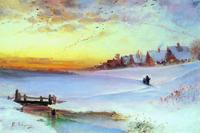
Winter Landscape (Thaw)
Aleksey Savrasov
Farmhouse on the island
Lev Lagorio
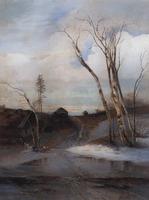
Spring
Aleksey Savrasov
Distance
Ivan Shishkin
Norwegian Landscape
Andreas Achenbach
Country Scene
Aleksey Savrasov
Drifting ice on the Volga
Aleksey Savrasov
Seascape
Efim Volkov
Ледоход
Vitold Byalynitsky-Birulya

Winter
Fyodor Vasilyev
On the Bank of the Volga
Fyodor Vasilyev
Early Spring. Thaw
Aleksey Savrasov
Evening
Isaac Levitan
Autumn. Village near the stream
Aleksey Savrasov