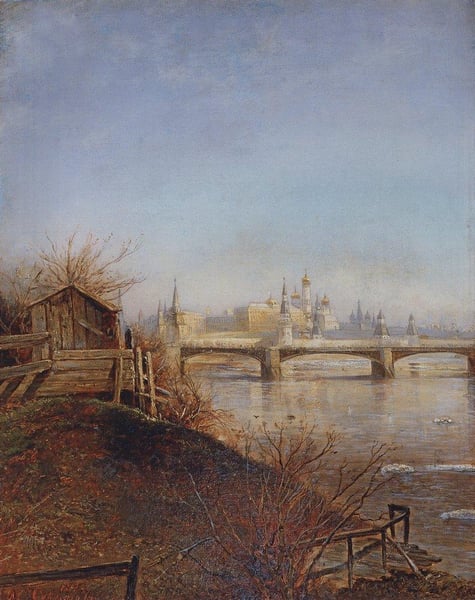
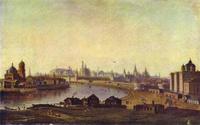
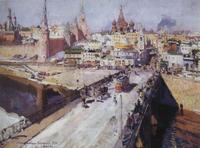
This artwork is a quintessential example of the Realist movement's commitment to truthful, unidealized representation. As a landscape painting, "View of the Moscow Kremlin" focuses on a specific, recognizable location—the historic Kremlin—rather than a generalized or romanticized vista. Its significance lies in how it embodies Realism's core tenets: objective observation, attention to natural light and atmosphere, and the elevation of everyday, contemporary subject matter to a subject worthy of fine art. By depicting a real place with accuracy and restraint, the work rejects both classical idealization and academic conventions, making it a key document of the shift toward a more democratic and direct visual language in the mid-19th century.