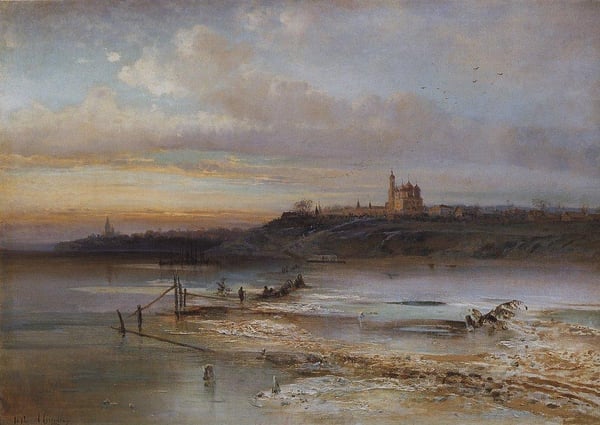
Expert analysis of Aleksey Savrasov’s Thaw. Yaroslavl.
Style: Realism · Genre: landscape
Expert Analysis: "Thaw. Yaroslavl." by Aleksey Savrasov
Aleksey Savrasov’s “Thaw. Yaroslavl.” is a masterful example of Russian Realist landscape painting that elevates an ordinary seasonal transition into a deeply poetic meditation on nature and national identity. Painted in the prime of Savrasov’s career, the work belongs to the tradition of the Peredvizhniki (Wanderers), who rejected idealized, academic landscapes in favor of truthful, emotionally resonant depictions of the Russian countryside.
Significance within Realism and the Peredvizhniki Movement
Savrasov was a pivotal figure in Russian Realism, and this painting exemplifies the movement’s core tenets: fidelity to observed nature, empathy for the everyday, and a subtle, often melancholic lyricism. Unlike the dramatic, sublime landscapes of Western Romanticism, “Thaw. Yaroslavl.” finds its power in the mundane—a muddy road, melting snow, a grey winter sky yielding to the first hints of spring. The artist captures a fleeting moment of atmospheric change: the soft light diffusing through clouds, the wet ground reflecting a pale sky, and the damp, heavy air of a thaw. This attention to transient weather conditions and the specific mood of a Russian provincial town (Yaroslavl) aligns with the Realist commitment to painting en plein air and documenting the unvarnished truth of local life.
What Makes the Work Exceptional
-
Emotional Atmosphere: Savrasov’s genius lies in his ability to infuse a seemingly straightforward landscape with a profound sense of longing and renewal. The thaw is not just a meteorological event; it symbolizes the slow, uneasy awakening of nature after a harsh winter—a theme resonant with Russian cultural consciousness. The muted palette of ochres, greys, and dirty whites, punctuated by the darker silhouettes of bare trees and buildings, creates a restrained, almost sorrowful beauty that is both intimate and universal.
-
Composition and Focus: The painting centers on a receding path or riverbank leading the viewer’s eye through the scene, a classic Realist device that invites contemplation of everyday space. The humble structures of Yaroslavl—wooden houses, a church dome in the distance—are not picturesque accessories but integral elements that root the thaw in a specific, lived-in environment. This integration of human presence (even without figures) grounds the natural phenomenon in social reality, a hallmark of Peredvizhniki philosophy.
-
Technical Mastery: Savrasov’s brushwork is both delicate and expressive. He captures the wetness of the thawing snow and the softness of the overcast sky with subtle gradations of tone and restrained impasto. The handling of light—diffuse, cloud-softened, without strong shadows—conveys the stillness of late winter. This technical control allows the painting to transcend mere reportage, achieving a timeless, lyrical quality.
Legacy and Influence
“Thaw. Yaroslavl.” stands as a precursor to the more overtly nationalistic and moody landscapes of later Russian Realists like Isaac Levitan, who was directly influenced by Savrasov. It demonstrates how the Realist aesthetic could elevate the most ordinary scene—a provincial thaw—into a powerful symbol of Russia’s seasonal rhythm and emotional geography. Savrasov’s unassuming yet deeply felt approach helped define the “landscape of mood” that became a distinctive contribution of Russian Realism to world art.
In sum, this painting is significant because it encapsulates the essence of Savrasov’s art: a quiet, honest observation of nature that speaks to the human condition through the simple, transformative moment of a thaw. It is a testament to the power of Realism to find profound beauty not in the extraordinary, but in the truth of a single, fleeting glance.
Visually similar
20 works with related composition and palette
Spring Thaw
Aleksey Savrasov
Caves Monastery near Nizhny Novgorod
Aleksey Savrasov
Village on a Dutch Coast
Konstantinos Volanakis
Landscape with Church
Aleksey Savrasov
Flooding of the Volga river near Yaroslavl
Aleksey Savrasov
Volga
Aleksey Savrasov
Spring
Aleksey Savrasov
Early spring. Dali
Aleksey Savrasov
Sea shore in the vicinity Oranienbaum
Aleksey Savrasov
View of Volga near Yurievts
Aleksey Savrasov
The Rooks Have Arrived
Aleksey Savrasov
Spring. Kitchen Gardens
Aleksey Savrasov
Smolny as seen from Bolshaya Okhta
Alexey Bogolyubov
On the Bank of the Volga
Fyodor Vasilyev
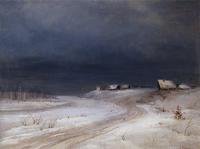
Winter Landscape
Aleksey Savrasov
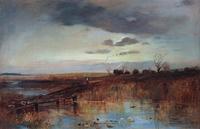
Autumn. Village near the stream
Aleksey Savrasov
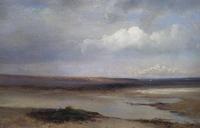
Volga
Aleksey Savrasov
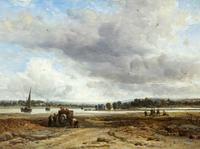
Calshott Castle, near Southampton
James Webb
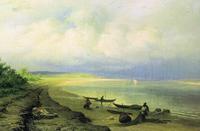
Bank of the Volga after the Storm
Fyodor Vasilyev
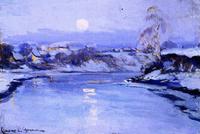
Moonrise
Clarence Gagnon