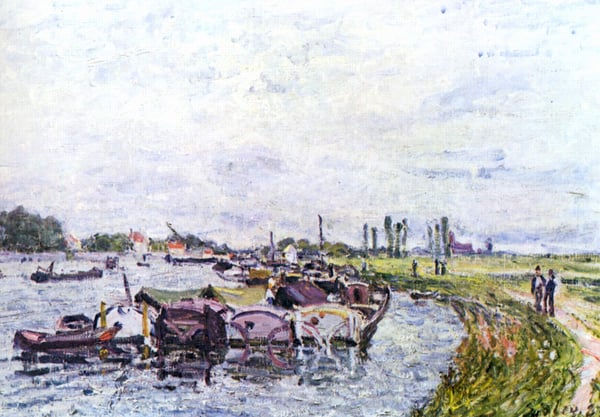
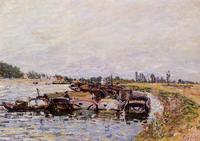
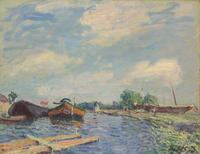
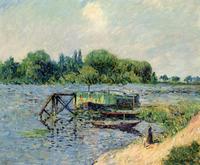
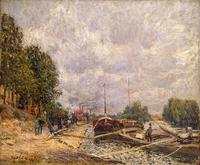
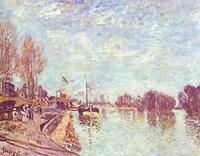
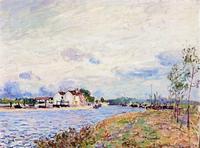
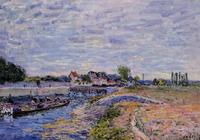
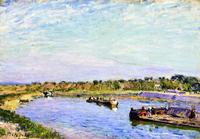
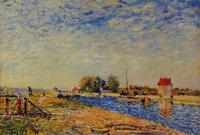
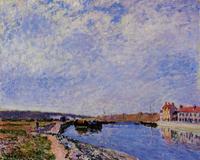
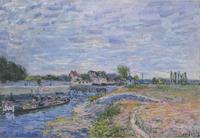
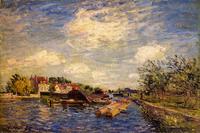
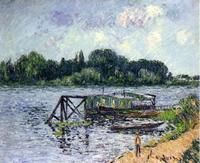
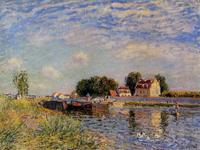
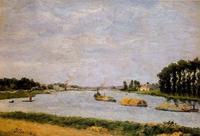
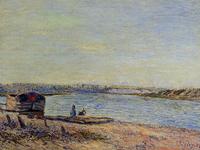
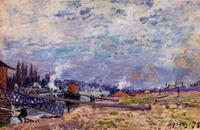
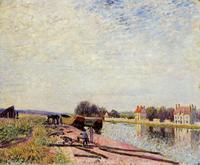
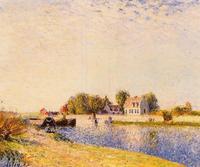
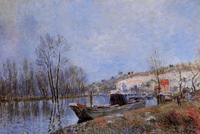
As a masterwork of Impressionism, Alfred Sisley's Barges at Saint Mammès stands as a quintessential example of the movement's dedication to landscape painting and the fleeting effects of natural light. The work’s significance lies in its pure embrace of Impressionist principles: Sisley captures a transient moment on the water with loose, visible brushwork and a luminous palette, focusing on the interplay of sky, river, and barges. Unlike many of his peers who also painted urban or figurative scenes, Sisley remained almost exclusively devoted to the landscape genre, and this painting exemplifies his unwavering commitment to rendering the atmosphere and calm rhythm of rural life. The composition, with its horizontal lines of barges and reflections, creates a harmonious balance that invites the viewer to experience the quiet, ephemeral beauty of a specific place and time—a core goal of Impressionist art.