Expert Analysis: "Banks of the Orvanne" by Alfred Sisley
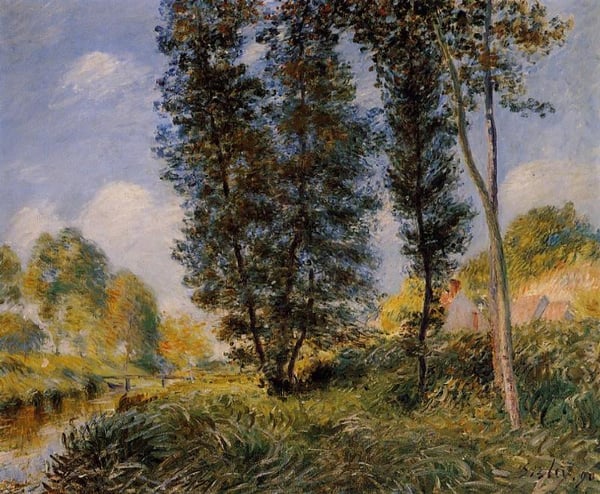
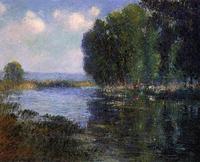
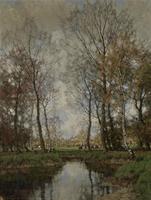
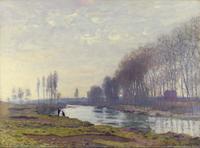
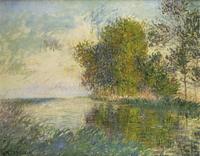
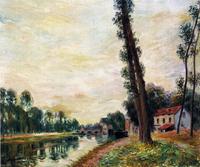
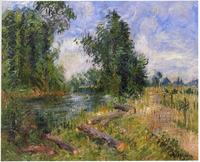
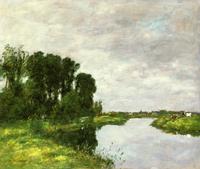
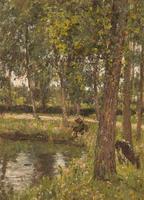
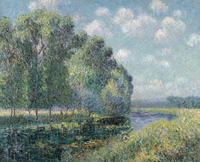
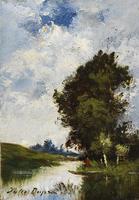
Alfred Sisley’s Banks of the Orvanne exemplifies the core tenets of Impressionism through its tranquil landscape subject and luminous handling of natural light. As a dedicated Impressionist who seldom strayed from plein-air landscape painting, Sisley here captures the shifting reflections and soft atmospheric effects typical of the movement. The scene—depicting the Orvanne River in the Île-de-France region—demonstrates his characteristic sensitivity to water, sky, and foliage, rendered with broken brushwork and a high-key palette that evokes a specific moment of daylight.
Within the Impressionist period, this work is significant for its pure, unmediated observation of nature. Unlike many contemporaries who occasionally turned to figures or urban scenes, Sisley remained steadfast in his commitment to landscape as the primary vehicle for exploring the ephemeral play of light and color. Banks of the Orvanne thus stands as a refined example of his ability to convey the serene, transient beauty of the French countryside, reinforcing his reputation as one of Impressionism’s most consistent and lyrical landscape painters.