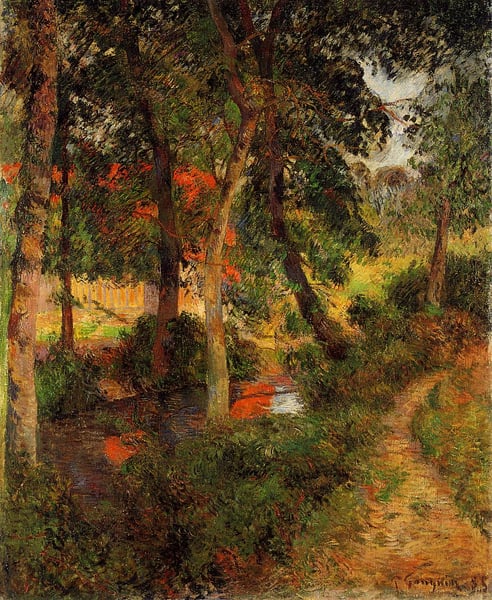
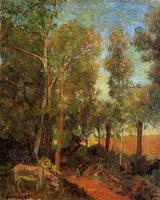
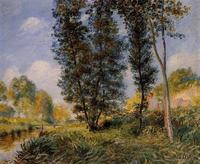
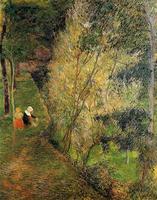
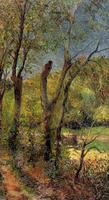
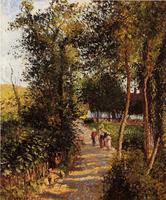
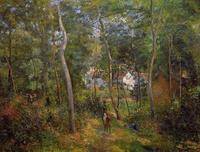
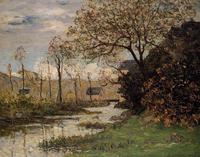
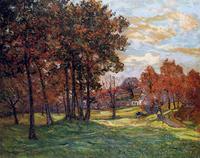
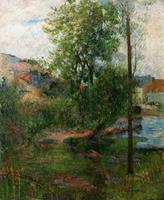
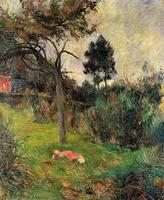
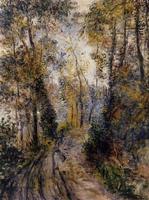
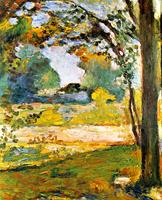
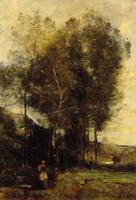
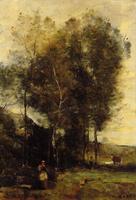
As an early work by Paul Gauguin within the Impressionist style, Pere Jean’s Path is significant for documenting the artist’s foundational engagement with landscape painting before his later departure into Post-Impressionism. In this period, Gauguin was still closely aligned with the Impressionist emphasis on capturing fleeting light and atmospheric effects directly from nature. The work’s genre—a landscape—highlights his early commitment to plein-air observation and the depiction of rural paths or roads, a common Impressionist subject used to explore perspective and the play of sunlight. Its importance lies in revealing the technical and thematic roots Gauguin would later transform: the vivid color harmonies and simplification of form that define his mature style are here still subordinated to the more naturalistic, optical concerns of Impressionism. Thus, this painting stands as a crucial bridge between Gauguin’s apprenticeship within the movement and his eventual breakthrough into a symbolist, synthetist vocabulary.