Expert analysis of Alfred Sisley’s The Forest at Boulogne
Style: Impressionism · Genre: landscape
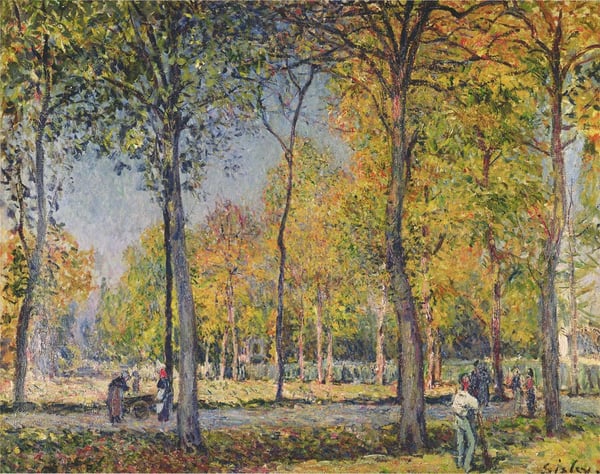
As an expert art historian, I will provide an analysis based solely on the structured facts you have supplied: the artwork is The Forest at Boulogne by Alfred Sisley, an Impressionist landscape. No additional details about the painting’s specific composition, color palette, or date are available, so I will focus on the significance of these facts within the Impressionist movement.
Alfred Sisley is often described as the most consistent and purest landscape painter among the Impressionists. Unlike Monet, who relentlessly pursued series on haystacks and cathedrals, or Renoir, who turned to figure painting, Sisley devoted his entire career to capturing the transient effects of light and atmosphere on rural and suburban scenes. The Forest at Boulogne—the name suggests a wooded area near the Bois de Boulogne in Paris—is significant because it exemplifies the core Impressionist concern with plein air observation and the rendering of natural light as it filters through foliage.
Within the Impressionist style, Sisley’s landscapes are noted for their subtle tonal harmonies and delicate, feathery brushwork. While we cannot describe the specific hues of this painting, the title “Forest” implies a motif of dappled light and shadow, a favorite Impressionist subject that allowed artists to break color into small, visible touches of paint. Sisley’s treatment of such scenes often conveys a quiet, meditative mood, avoiding dramatic narrative in favor of pure visual sensation. His work is significant because it demonstrates how Impressionism could achieve a sense of atmospheric depth and fleeting immediacy without resorting to the more vivid contrasts found in his peers’ works.
As a landscape genre piece, The Forest at Boulogne aligns with Sisley’s lifelong dedication to depicting the French countryside with a sense of calm and permanence, even as he captured the ephemeral play of sunlight. In the context of the period, Sisley’s landscapes helped establish Impressionism as a legitimate mode of seeing—one that valued the artist’s subjective perception of a single moment over classical composition. His relative obscurity during his lifetime, contrasted with his current reputation, further underscores the significance of works like this: they represent the quiet, lyrical heart of Impressionism, where nature is observed with both scientific precision and poetic empathy.
Visually similar
20 works with related composition and palette
Alley of Poplars
Gustave Loiseau
Trees in Winter, View of Bennecourt
Claude Monet
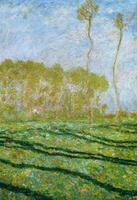
Springtime Landscape at Giverny
Claude Monet
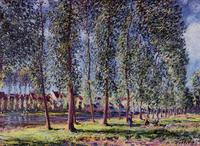
Lane of Poplars at Moret
Alfred Sisley
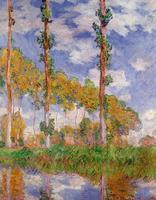
Three Trees in Summer
Claude Monet
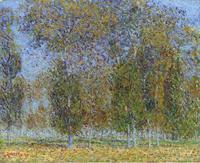
Autumn near Saint Cyr du Vaudreuil
Gustave Loiseau
Banks of the Loing at Moret
Alfred Sisley
Lane of Poplars on the Banks of the Loing
Alfred Sisley
The Seine at Marly
Alfred Sisley
Small Meadows in Spring
Alfred Sisley
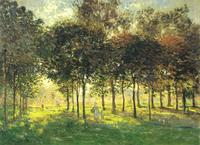
The Promenade at Argenteuil, Soleil Couchant
Claude Monet
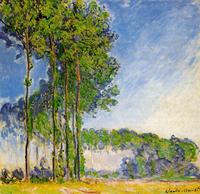
Poplars, View from the Marsh
Claude Monet
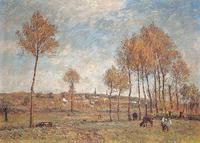
At Montreuil, France
James Charles
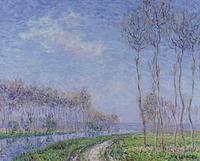
Trees by the River
Gustave Loiseau
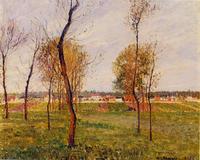
A Meadow in Moret
Camille Pissarro
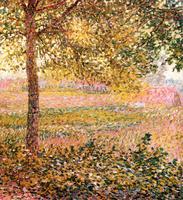
Landscape
Gustave de Smet
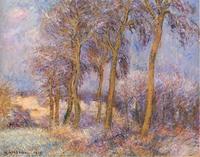
Winter
Gustave Loiseau
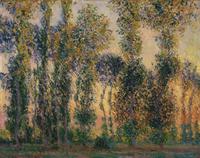
Poplars at Giverny
Claude Monet
Wiese By
Alfred Sisley
The Allee du Champ de Foire at Argenteuil
Claude Monet