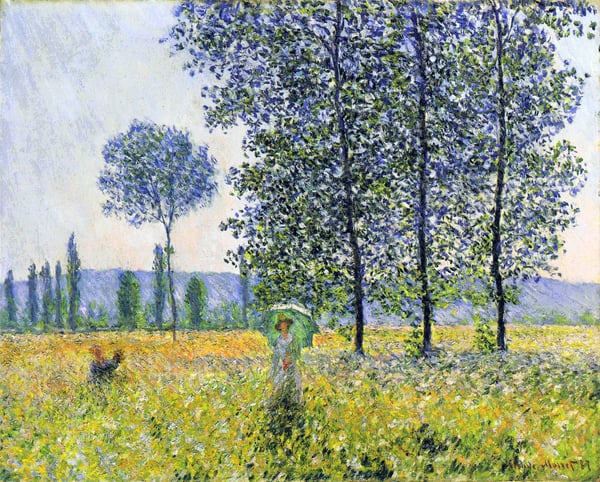
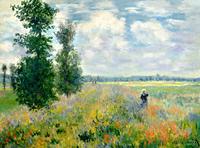
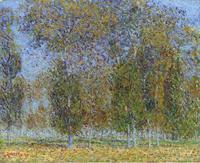
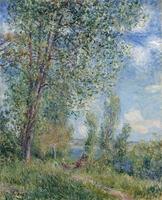
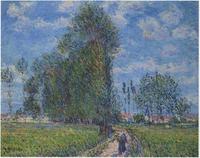
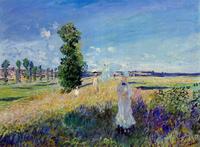
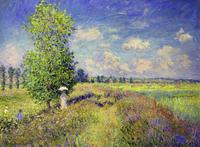
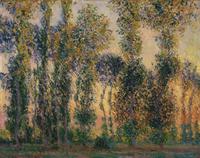
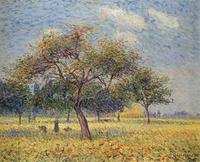
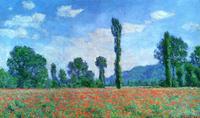
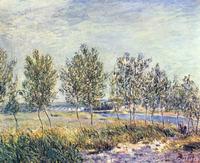
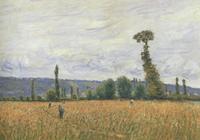
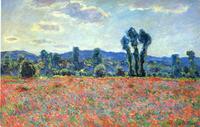
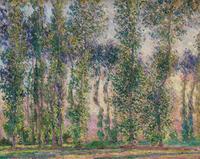
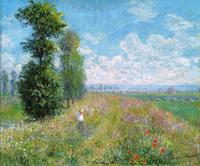
Claude Monet's Sunlight Effect under the Poplars is a quintessential example of Impressionism's revolutionary approach to landscape painting. The work’s significance lies in its radical focus on transient atmospheric conditions rather than a fixed, idealized view of nature. Monet captures the fleeting interplay of light filtering through the poplar trees, using broken, visible brushstrokes and vibrant, unmixed colors to convey the shimmering, ephemeral sensation of sunlight. This technique—prioritizing the optical experience of a specific moment over detailed form—epitomizes the Impressionist break from academic tradition. The painting is not about the poplars themselves but about the effect of light on the viewer’s perception, a hallmark of Monet’s series exploring how the same scene changes under different lighting conditions. This work thus stands as a key document of Impressionism’s core ambition: to record the immediate, sensory impressions of the natural world.