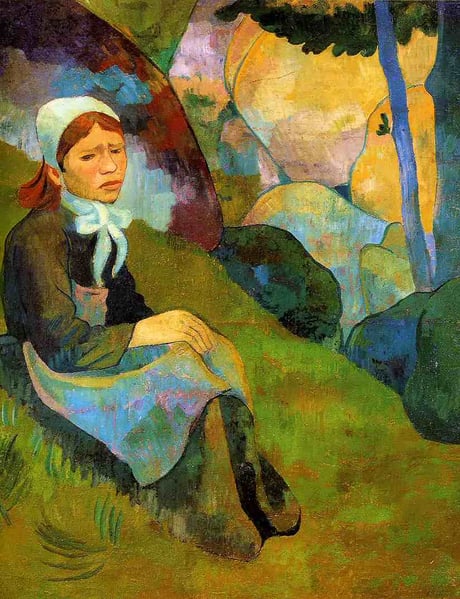
Solitude, Huelgoat Landscape
Dettagli
Analisi esperta di Solitude, Huelgoat Landscape di Paul Serusier
Stile: Cloisonnism · Genere: genre painting
Expert Analysis of "Solitude, Huelgoat Landscape" by Paul Sérusier
This painting is a quintessential example of Cloisonnism, a style pioneered by Paul Sérusier and his fellow Nabis in the late 1880s. As a genre painting, it depicts an everyday rural scene from the Huelgoat forest in Brittany—a subject that Sérusier frequently explored to escape the academicism of Paris.
What makes it significant
- Synthesis of form and color: True to Cloisonnist principles, Sérusier simplifies the landscape into flat, bold patches of color outlined by dark contours—reminiscent of stained glass or medieval cloisonné enamel. This technique rejects naturalistic modeling and perspective, prioritizing emotional and symbolic impact over literal representation.
- Brittany as a spiritual retreat: Huelgoat, with its ancient forest and Celtic folklore, became a laboratory for Sérusier’s radical simplification. “Solitude” captures the quiet, meditative quality of the location, aligning with the Nabis’ interest in the mystical and the ordinary elevated to art.
- Influence of Gauguin and Pont-Aven: Sérusier painted this after his transformative experience in Pont-Aven, where Paul Gauguin instructed him to paint not what he saw, but what he felt. This canvas exemplifies that break from Impressionism into a more synthetic, expressive language.
- Formal daring: The composition’s stark horizontal bands, flattened trees, and simplified figures (if any) reject illusionistic depth. This radical abstraction, while still anchored in genre, paved the way for 20th-century modernist reduction.
Within its period, “Solitude, Huelgoat Landscape” stands as a manifesto of Cloisonnist thought: it demonstrates that a humble landscape can convey profound solitude through pure color and line, not narrative. Sérusier’s work here is less a window onto nature and more a tapestry of the mind—a crucial step in the evolution from Post-Impressionism to Symbolism and, ultimately, to Fauvism.
Museum / Gallery
Visivamente simili
20 opere con composizione e palette affini
Two girls seated in the birch forest
Paula Modersohn-Becker
The Young Mothers
Paul Serusier
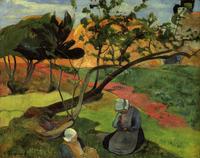
Landscape with two breton women
Paul Gauguin
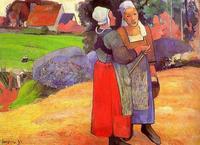
Paysannes bretones
Paul Gauguin
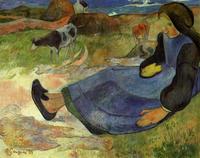
Seated breton girl
Paul Gauguin
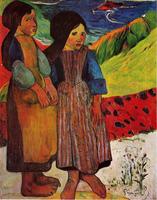
Breton Girls by the sea
Paul Gauguin
Washerwomen at the Laita River, near Pouldu
Paul Serusier
Three Breton Women in the Forest
Georges Lacombe
Two Breton Women under a Flowering Apple Tree
Paul Serusier
Girl with a Stick
Camille Pissarro
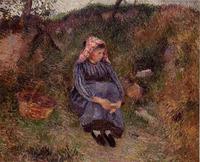
Seated Peasant Girl
Camille Pissarro
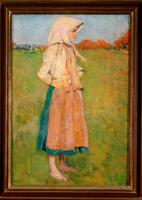
Country Girl
Józef Mehoffer
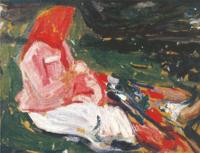
A Woman with Child
Oleksa Novakivskyi
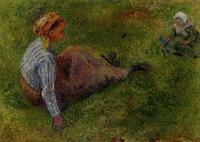
Peasant Sitting with Infant
Camille Pissarro
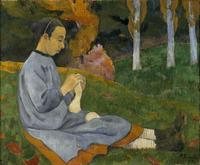
Girl from Savoy
Paul Serusier
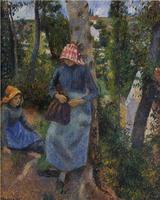
Two Young Peasants Chatting under the Trees
Camille Pissarro
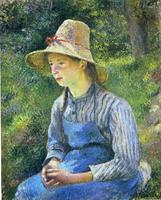
Young Peasant Girl Wearing a Hat
Camille Pissarro
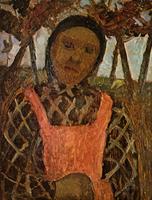
Peasant child with pink apron
Paula Modersohn-Becker
Seated Peasant Woman
Camille Pissarro
Seated Young Girl with Hat
Pierre-Auguste Renoir