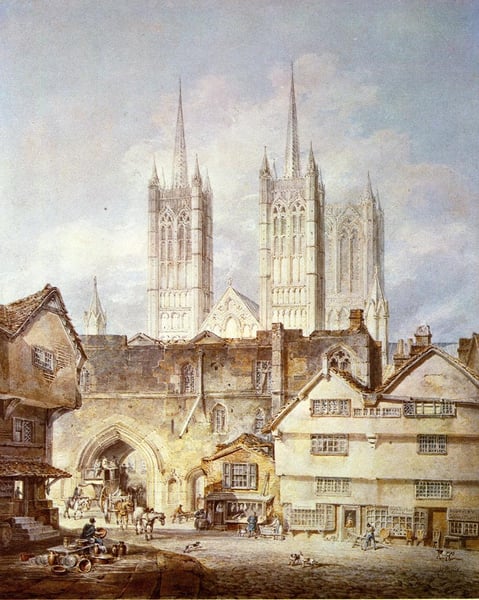
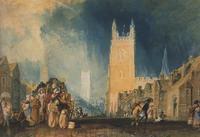
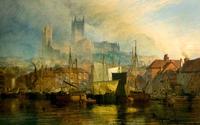
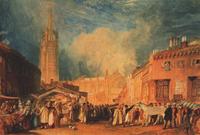
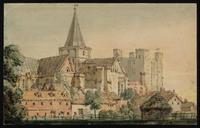
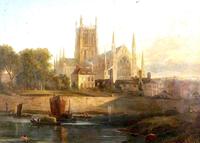
J.M.W. Turner’s Cathedral Church at Lincoln exemplifies the Romantic fascination with the sublime and the emotional power of architecture. As a cityscape executed in the Romantic style, the work transforms a factual representation of Lincoln Cathedral into a dramatic meditation on light, atmosphere, and spiritual grandeur. Turner’s characteristic handling of diffuse light and turbulent sky elevates the Gothic structure beyond mere documentation; the cathedral becomes a symbol of human aspiration and divine presence, dwarfed yet glorified by nature’s vastness. This tension between the man-made and the natural is central to Romanticism, and Turner’s ability to dissolve hard architectural lines into shimmering, almost ethereal color reinforces the period’s emphasis on feeling over precise form. The painting is significant not for topographical accuracy, but for how it uses the cityscape genre to evoke a transcendent, emotional response—a hallmark of Turner’s contribution to Romantic landscape and cityscape painting.