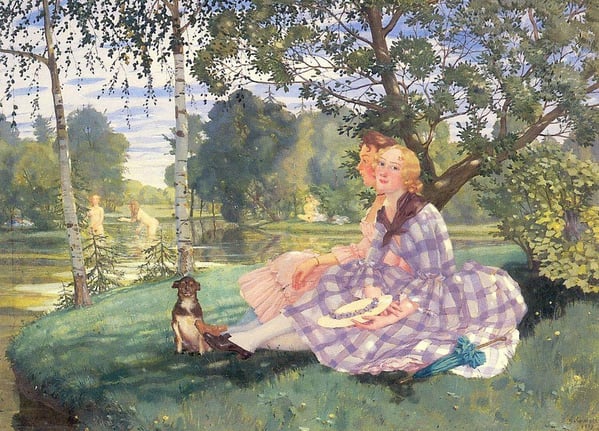
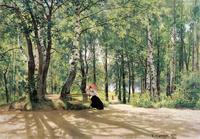
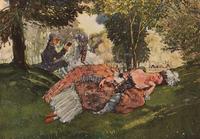
In Konstantin Somov’s Summer, the artist channels the core ideals of Art Nouveau through a genre painting that transforms a seasonal moment into a decorative and theatrical tableau. The work’s significance lies in Somov’s ability to marry the elegant, flowing lines and ornamental sensibility of the Modern style—characterized by sinuous curves, natural motifs, and a refined palette—with a genre scene that suggests leisure, nostalgia, or an idealized past. Rather than a straightforward depiction of rural life, Somov imbues the composition with a staged, almost dreamlike quality, typical of the Mir iskusstva (World of Art) group he belonged to. This fusion of everyday subject matter with the aestheticized, artifice-driven language of Art Nouveau elevates Summer from simple representation to a hallmark of how the movement reimagined modern life through beauty, pattern, and stylized emotion.