Analisi esperta di Lotus and kingfisher di Qi Baishi
Stile: Ink and wash painting · Genere: bird-and-flower painting
Expert Analysis of "Lotus and kingfisher" by Qi Baishi
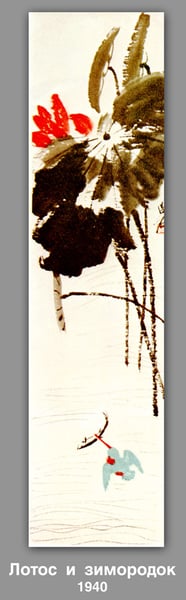
Qi Baishi’s Lotus and kingfisher stands as a masterful synthesis of the ink‑and‑wash tradition and the bird‑and‑flower genre, yet it elevates both through a distinctively bold, unpretentious vitality. What makes this work significant within its style and period is Qi’s ability to break free from the rigid formalism of late‑Qing literati painting while retaining its philosophical depth.
Stylistic and Technical Innovation
Qi Baishi combines spontaneous, wet‑ink washes with crisp, decisive linework. The lotus leaves, rendered in broad, translucent strokes of black ink, seem to breathe with life—their irregular, almost calligraphic edges capture the organic decay and renewal of nature. In contrast, the kingfisher perched on a stem is depicted with startling precision: its turquoise and cobalt feathers are applied in thick, opaque dabs, a technique borrowed from folk‑art color sense. This juxtaposition of saturated color against monochrome washes was revolutionary for the ink‑and‑wash tradition, which had long privileged tonal restraint.
Symbolism and Observation
Qi rooted his art in direct observation of nature, rejecting stale academic formulas. The lotus, a classic emblem of purity emerging from muddy water, is here painted not as a symbol of distant virtue but as a tangible, weather‑worn plant. The kingfisher’s alert pose—head angled, beak poised—introduces a moment of narrative tension; the viewer senses the bird’s readiness to dive. This integration of animal behavior (a hallmark of Qi’s later style) brings a sense of living immediacy typical of the “bird‑and‑flower” genre, but Qi’s treatment is more intimate, less idealized.
Significance in Art Historical Context
Painted during the 1920s‑1940s, when Chinese artists grappled with modernization, Lotus and kingfisher exemplifies Qi’s “red‑flower and ink‑leaf” approach—one that reconciled literati restraint with popular taste. By using bright pigments (often forbidden by orthodox painters as vulgar) and simplifying forms to their expressive essence, Qi revitalized Chinese painting for a broader audience. His work bridges the gap between the lofty amateurism of scholar‑painters and the earthy directness of folk art, proving that tradition could be reinvented without losing its soul.
In essence, the significance of Lotus and kingfisher lies in its effortless balance: it is at once a disciplined ink painting and a vibrant, almost modern study of a living moment. Qi Baishi reminds us that the greatest traditional art is not a museum fossil but a living, breathing encounter with the world.
Visivamente simili
20 opere con composizione e palette affini
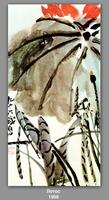
Lotus
Qi Baishi
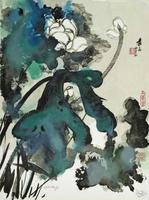
Lotus
Chang Dai-chien
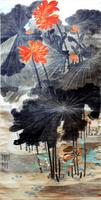
Lotus and Mandarin Ducks
Chang Dai-chien
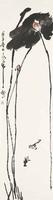
Lotus and Frogs
Ding Yanyong
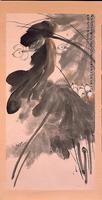
Lotus
Chang Dai-chien
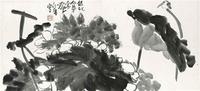
Bird and Lotus
Ding Yanyong
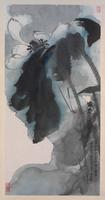
Lotus
Chang Dai-chien
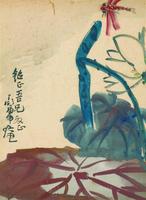
Lotus
Ding Yanyong

Fragrance of lotus
Dayou Lu
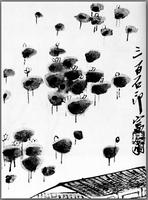
Lotus pond
Qi Baishi
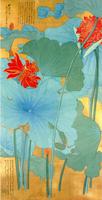
Lotus
Chang Dai-chien
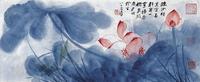
Lotus
Chang Dai-chien
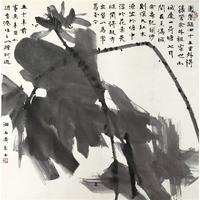
Ink Lotus
Huang Yongyu

Fragrance of lotus
Dayou Lu
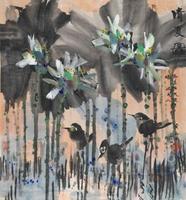
Lotus with birds
Huang Yongyu
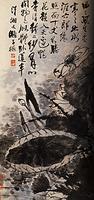
The Lotus
Shitao
Flower and Rock
Lan Ying
Spring Breeze
Wu Guanzhong
Beautiful rhythm in the lotus pond
Dayou Lu
Lotus and Frogs
Ding Yanyong