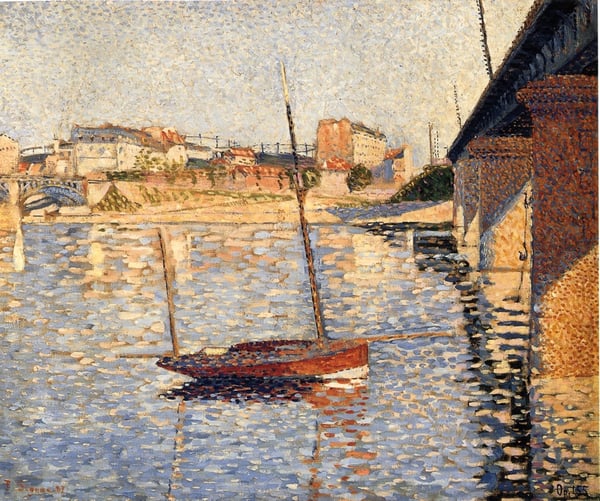
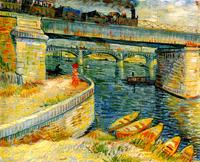
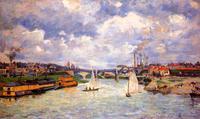
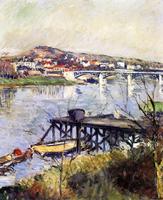
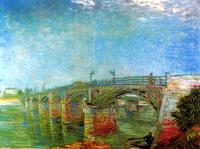
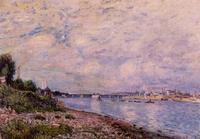
Paul Signac's Le Clipper, Asnieres is a seminal landscape within the Neo-Impressionist and Pointillist movements. As a leading figure of this style after Georges Seurat, Signac here applies the rigorous technique of juxtaposing tiny, distinct dots of pure color. This method—known as pointillism—relies on optical mixing, where the viewer's eye blends the dots to produce luminous, vibrant tonalities rather than through physical mixing on the palette. The choice of Asnières, a popular boating and leisure spot along the Seine, allows Signac to explore the interplay of natural light on water and sail, a hallmark of the movement's focus on scientific color theory and atmospheric effects. The work's significance lies in its demonstration of how Neo-Impressionism transformed traditional landscape painting into a calculated study of color harmony and light, directly influencing the course of modernist art.