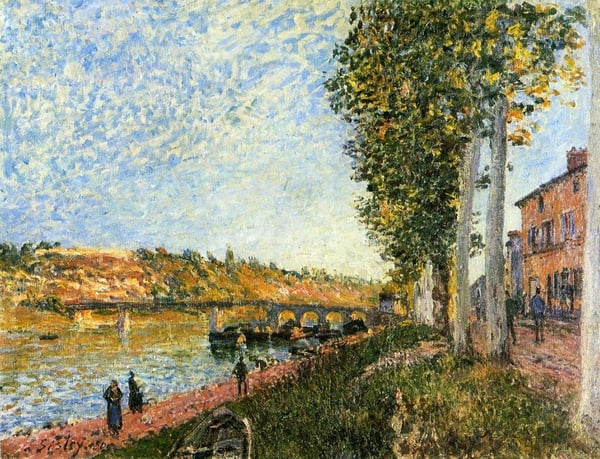
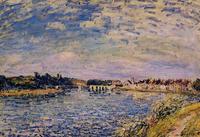
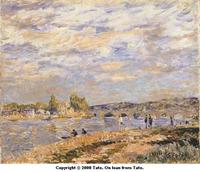
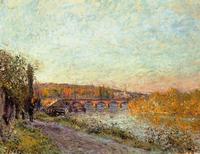
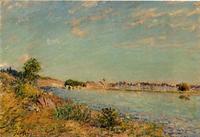
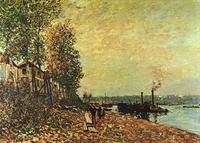
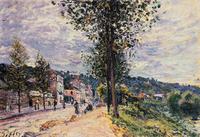
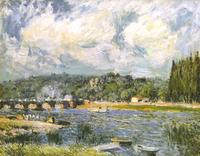
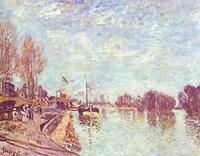
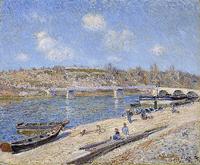
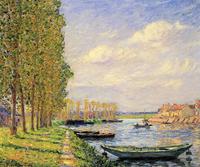
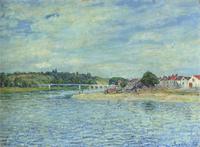
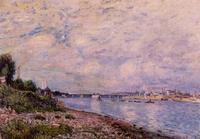
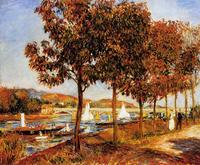
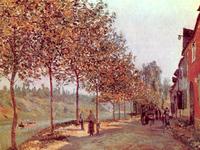
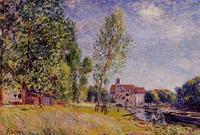
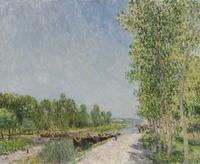
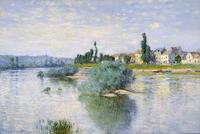
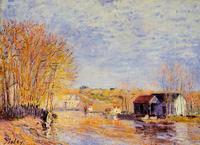
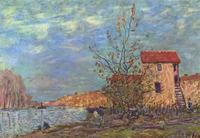
As an Impressionist landscape by Alfred Sisley, Sunrise at Saint Mammes exemplifies the movement’s core commitment to capturing transient atmospheric effects and the ephemeral quality of light. Sisley’s focus on the natural environment—a hallmark of his practice—allows the painting to serve as a pure study of dawn’s shifting colors and reflections, rendered with the loose, visible brushwork and broken color typical of Impressionism. The work’s significance lies in its direct, unidealized portrayal of a specific moment, where the rising sun transforms the river and sky into a unified, vibrating field of light, demonstrating how Impressionist landscapes elevated ordinary scenes into meditations on perception and sensory experience.