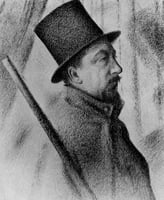
Paul Signac sanatçısının The Bonaventure Pine eseri hakkında uzman analizi
Tarz: Impressionism, Neo-Impressionism · Tür: landscape
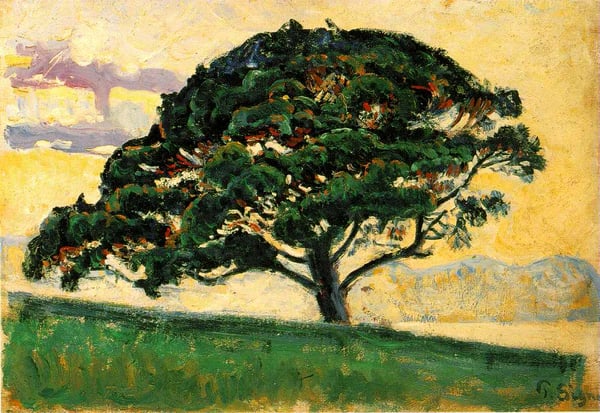
Expert Analysis of "The Bonaventure Pine" by Paul Signac
Paul Signac’s The Bonaventure Pine stands as a compelling synthesis of Impressionist spontaneity and Neo-Impressionist scientific rigor, marking a key moment in the evolution of late 19th-century landscape painting. While the work adopts the quintessential Impressionist subject—a sun-drenched landscape captured en plein air—its significance lies in how Signac transforms fleeting optical sensation into a methodical, almost architectural arrangement of pure color.
As a leading figure of Neo-Impressionism, Signac was deeply engaged with the color theories of Georges Seurat, advocating for Divisionism (or Pointillism) as a means to achieve greater luminosity and harmonic vibrancy. In The Bonaventure Pine, this approach is evident not through overly mechanical dots, but through disciplined, short brushstrokes that break down foliage, sky, and water into discrete touches of complementary hues. The pine tree itself—centered and monumental—acts as a vertical anchor, its dark silhouette contrasted with the dappled light of the Mediterranean coast. Signac’s palette here likely leans toward warm yellows, cool blues, and vibrant greens, each stroke placed to optically mix into a unified, shimmering surface when viewed from a distance.
What makes this work significant within its style and period is twofold. First, it demonstrates the mature Neo-Impressionist shift away from Seurat's rigid pointillism toward a more expressive, fluid application of color—a precursor to the Fauves' bolder chromatic experiments. Second, as a landscape, it elevates a humble subject (a single pine tree) into a study of atmospheric light and structural composition. Signac’s insistence on painting from nature while adhering to a rigorous color logic bridges the gap between Impressionism’s immediate sensory delight and Post-Impressionism’s intellectual, symbolic possibilities. The Bonaventure Pine is thus not merely a landscape, but a manifesto of how science and intuition can coexist on canvas.
Görsel olarak benzer
İlişkili kompozisyon ve renk paletine sahip 20 eser
Willunga landscape
Horace Trenerry
Landscape
Konstantinos Parthenis
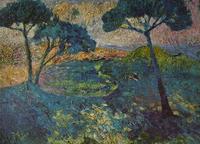
The Three Pines
Salvador Dali
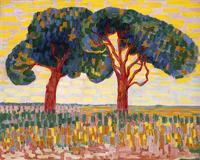
Twee bomen, olieverf op doek
Jacoba van Heemskerck
Landscape
Xavier Martinez
Landscape with Pine tree
Nikolaos Lytras
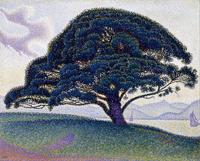
The Bonaventure Pine
Paul Signac
Douglas Hall
Samuel Peploe
Breton Landscape Trees and Moor
Pierre-Auguste Renoir
French Landscape
Willard Metcalf
Landskap met kronkelende pad, Kenilworth
Gregoire Boonzaier
Rafales de vent, Le Brusc
Armand Guillaumin
Woodside Pastoral
Horace Trenerry
Apple Tree II
Gustav Klimt
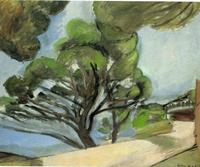
Untitled
Henri Matisse
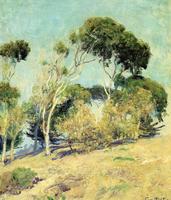
Windswept Trees, Laguna
Guy Rose
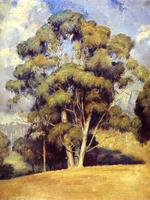
A Queen of Gums
Tom Roberts
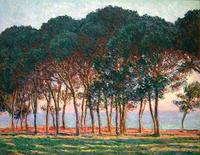
Under the Pine Trees at the End of the Day
Claude Monet
Landscape with three trees
Paul Gauguin
Summer
Cuno Amiet