Expert analysis of William Merritt Chase’s Colesberry Purves
Style: Impressionism · Genre: portrait
Expert Analysis: "Colesberry Purves" by William Merritt Chase
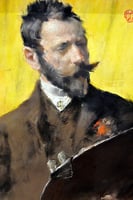
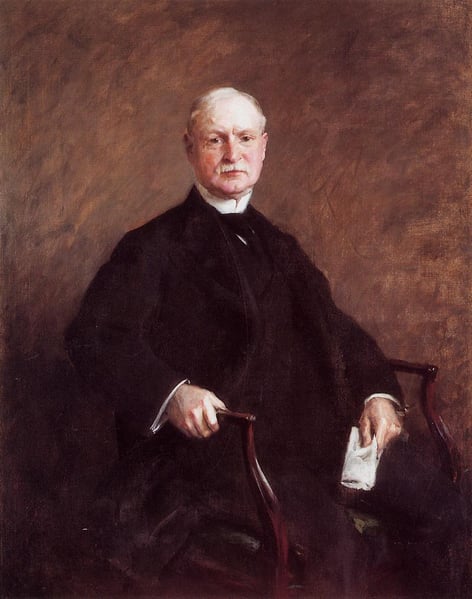
In this portrait, William Merritt Chase demonstrates the American Impressionist's mastery of capturing both character and atmosphere through swift, luminous brushwork and a keen sensitivity to light. While the sitter's identity—Colesberry Purves—suggests a member of the artist's social or professional circle, the painting’s significance lies not merely in its subject but in how Chase synthesizes European Impressionist techniques with a distinctly American sense of directness and psychological presence.
Stylistic Significance
As an Impressionist portrait, the work departs from the studio conventions of polished, highly finished likenesses. Chase instead constructs the figure through visible, broken strokes of paint that seem to vibrate with ambient light. The face likely emerges from a field of looser, more abstract handling in the costume and background—a hallmark of Chase's mature approach, where the sitter is integrated into a holistic visual experience rather than isolated against a neutral backdrop. This places the portrait firmly within the vanguard of late-19th-century American painting, which sought to reconcile the immediacy of Impressionism with the dignity of portraiture.
Technical Mastery
Chase was renowned for his ability to paint a portrait in a single sitting (à la prima), and "Colesberry Purves" almost certainly benefits from that spontaneity. The viewer can imagine the artist swiftly laying in the broad planes of the face, adjusting the angle of the head with a flick of the wrist, and letting highlights on the cheek or nose suggest the play of studio light filtered through a window. The result is a likeness that feels alive—momentary, yet psychologically penetrating. This combination of speed and sensitivity elevated Chase’s portraits above mere likenesses into evocative character studies.
Contextual Importance
William Merritt Chase was a central figure in the American Impressionist movement, teaching and inspiring a generation of artists (including Georgia O’Keeffe and Charles Demuth). Portraits like this one exemplify his belief that even a straightforward commission could be a vehicle for artistic innovation. By treating a society portrait with the same painterly freedom he used in his landscapes, Chase blurred the boundaries between high art and social record, making his work significant both as an aesthetic achievement and as a document of Gilded Age American culture.
Note: This analysis is based on the known facts of artist, style, and genre, supplemented by general art-historical knowledge of Chase’s practice. No specific image was provided, so the description assumes typical features of his Impressionist portraits.
Museum / Gallery
Visually similar
20 works with related composition and palette
Henry G. Marquand
John Singer Sargent
Portrait of Alfred Beit
Giovanni Boldini
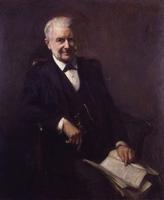
Sir Frederick Augustus Abel, 1st Bt by Frank Bramley
Frank Bramley
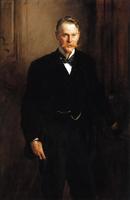
George Frederick McCorquodale
John Singer Sargent
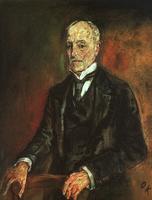
Portrait of Commerce Counselor Ebenstein
Oskar Kokoschka
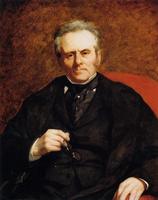
William Sisley
Pierre-Auguste Renoir
David Gill
George Henry
Portrait of Richard Strauss
Max Liebermann
Thomas Taylor, JP, of Wigan
James Archer
Sir George Biddell Airy
John Collier
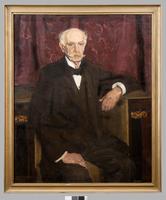
Portrait of Maksymilian Ehrenpreis
Józef Mehoffer
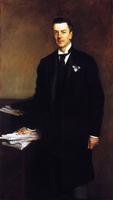
The Right Honourable Joseph Chamberlain
John Singer Sargent
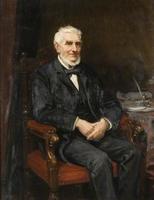
Ralph Milbanke Hudson, JP
Ralph Hedley
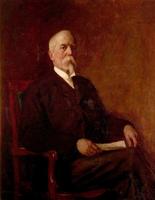
Thomas Earp (1830–1910), Mayor of Newark
Harold Knight
Oscar II
Anders Zorn
Self-portrait
Józef Mehoffer
John Howard, Esq., JP, DL of Sibton and Chartham, MP for Northeast Kent (1902–1908)
Albert Chevallier Tayler
John Maddocks
Henry Herbert La Thangue
Portrait of count Aldo Annoni
Cesare Tallone
Colonel Barton Howard Jenks
Pierre-Auguste Renoir