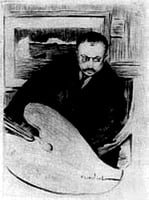
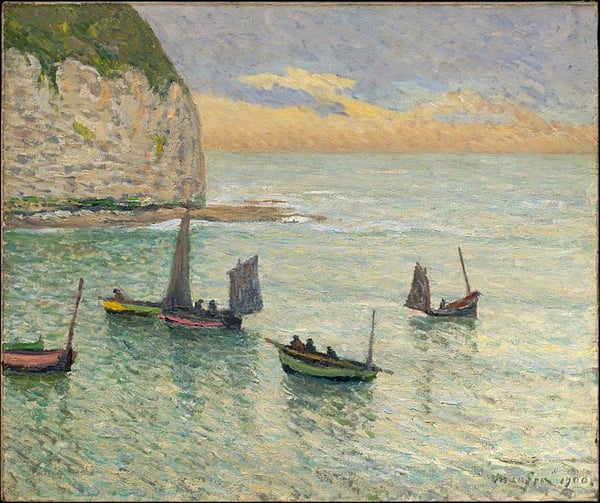
Expert analysis of Maxime Maufra’s Departure of Fishing Boats
Style: Post-Impressionism · Genre: marina
Expert Analysis of "Departure of Fishing Boats" by Maxime Maufra (Post-Impressionism, Marina)
Maxime Maufra’s Departure of Fishing Boats stands as a compelling example of Post-Impressionist marine painting, bridging the immediacy of Impressionist observation with the structural and emotional intensification characteristic of the movement’s second wave. Within the marina genre—often dominated by seascapes and harbor views—Maufra distinguished himself by infusing a quotidian fishing scene with a palpable sense of mood and monumentality.
Significance Within Post-Impressionism
Maufra, a member of the Pont-Aven School alongside Gauguin and Émile Bernard, adopted their synthetic approach: simplifying forms, flattening spatial depth, and using broad, unmodulated zones of color. In Departure of Fishing Boats, this manifests in the way the boats are rendered as bold, almost geometric silhouettes against a stylized sky and sea. Rather than capturing a fleeting moment of light (as an Impressionist would), Maufra emphasizes the eternal, rhythmic cycle of departure—balancing the physical weight of the vessels with the atmospheric pressure of the gathering clouds. The palette—deep blues, ochres, and muted greens—is both naturalistic and deliberately expressive, evoking the bracing salt air and the solemn dignity of maritime labor.
Contribution to the Marina Genre
Maufra’s work is significant for elevating the marina from a picturesque subject to a vehicle for psychological and regional identity. As an official painter of the French Navy (Peintre de la Marine), he brought firsthand knowledge of sailing and fishing life to his compositions. Here, the departing boats are not merely objects in a landscape but protagonists in a narrative of human endeavor against the sea. The composition—boats angled diagonally, pushing outward from the harbor—creates a dynamic tension between the safety of port and the uncertainty of open water. This resonates with the Post-Impressionist interest in suggesting profound themes through everyday scenes.
Why It Matters
Departure of Fishing Boats exemplifies how Post-Impressionist artists extended the possibilities of the traditional marina. Maufra’s synthesis of decorative structure, expressive color, and authentic regional subject matter anticipates the Fauvist celebration of pure hue and the later Symbolist marine works. For viewers, it offers a window into the Breton coastal life that so captivated artists of the late 19th century, while its formal boldness marks a distinct step away from naturalism toward a more personal, emotionally charged vision of the sea.
Visually similar
20 works with related composition and palette
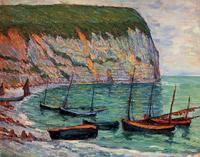
Fishing Boats on the Shore
Maxime Maufra
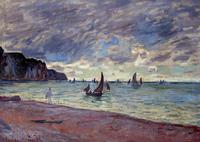
Fishing Boats by the Beach and the Cliffs of Pourville
Claude Monet
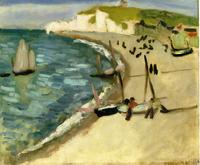
Aht Amont Cliffs at Etretat
Henri Matisse
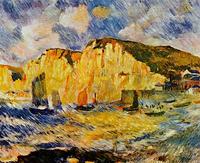
Cliffs
Pierre-Auguste Renoir
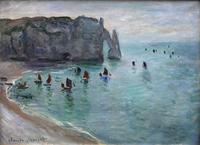
Etretat the Aval Door Fishing Boats Leaving the Harbour
Claude Monet
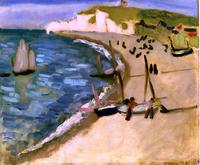
Yaht Amont Cliffs at Etretat
Henri Matisse
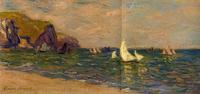
Sailboats at Sea, Pourville
Claude Monet
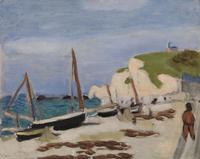
The Black Boat
Henri Matisse
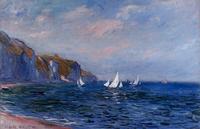
Cliffs and Sailboats at Pourville
Claude Monet
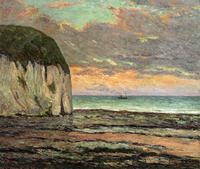
Sunset
Maxime Maufra
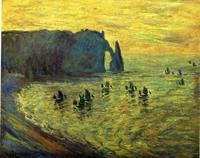
The Cliffs at Etretat
Claude Monet
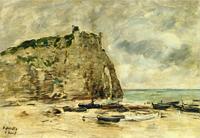
Etretat, Beached Boats and the Cliff of Aval
Eugene Boudin
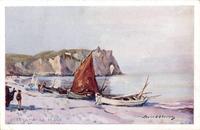
La plage d’Étretat
Louise Abbéma
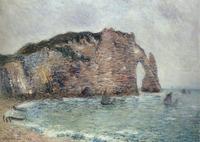
Etretat
Gustave Loiseau
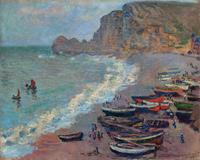
The Beach at Etretat
Claude Monet
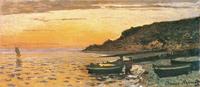
Seacoast at Saint-Adresse, Sunset
Claude Monet
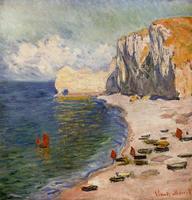
The Beach and the Falaise d'Amont
Claude Monet
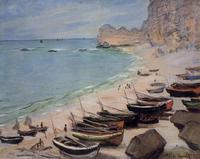
Boats on the Beach at Etretat
Claude Monet
The Cliffs at Dieppe and the 'Petit Paris'
Eugene Boudin
Fishing Boats in Winter, Etretat
Henri Matisse