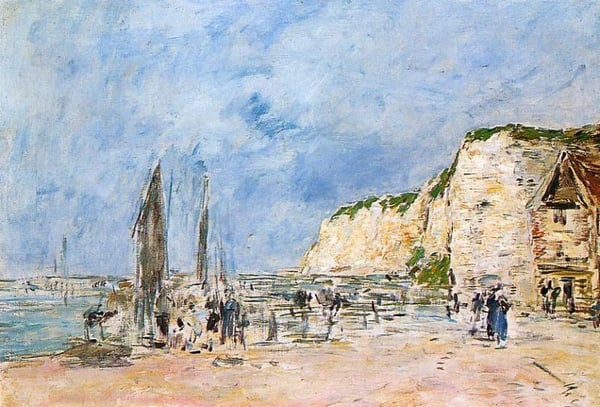
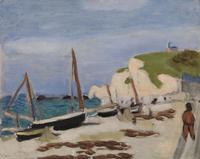
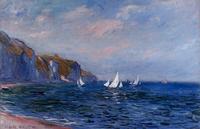
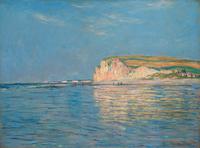
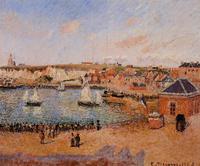
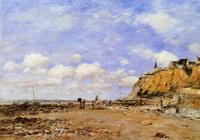
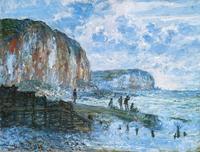
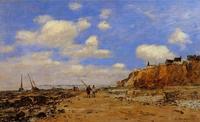
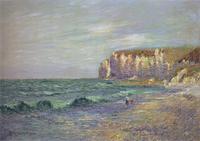
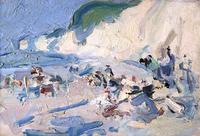
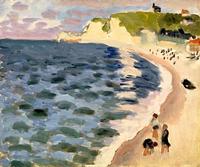
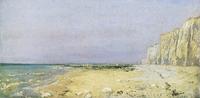
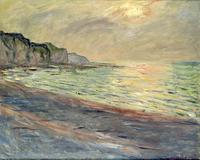
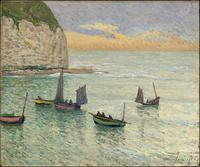
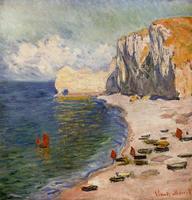
Eugène Boudin’s The Cliffs at Dieppe and the "Petit Paris" is a significant work within the Impressionist movement, primarily because it captures the fleeting atmospheric effects of light and weather that became a hallmark of the style. As a landscape painting, the scene is less about topographical accuracy and more about the transient interplay of sky, sea, and land. Boudin, a precursor to Impressionism, often focused on beach life and coastal vistas, and this painting exemplifies his ability to convey the freshness of an outdoor moment—likely painted en plein air. The mention of “Petit Paris” in the title hints at a specific, localized leisure spot, linking the natural cliffs with the modern tourist culture of Dieppe. The work’s significance lies in its pioneering use of broken brushwork and a luminous palette to evoke the shimmering light of the Normandy coast, directly influencing later Impressionists like Monet. It stands as an early, vital step toward the movement’s central goal: capturing the immediate, sensory experience of a landscape in perpetual change.