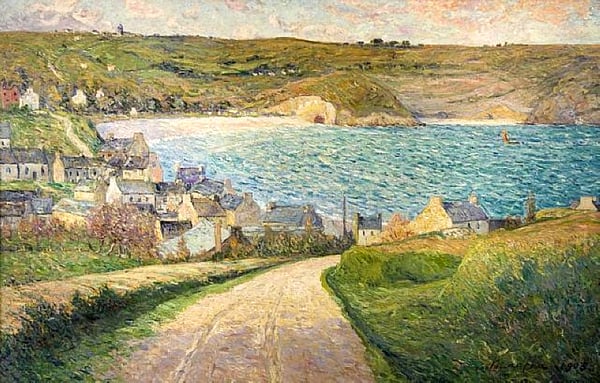
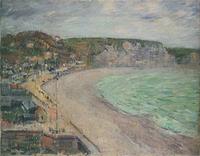
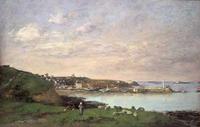
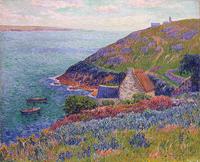
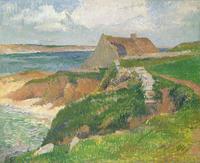
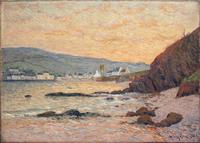
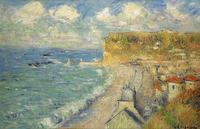
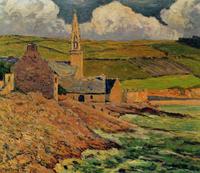
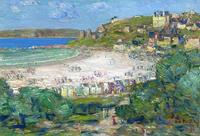
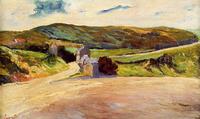
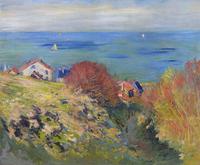
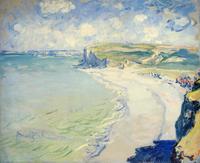
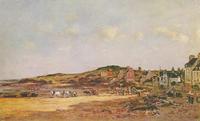
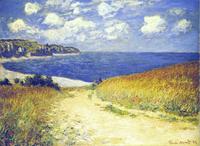
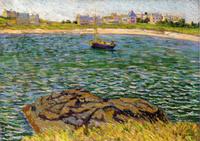
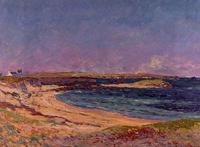
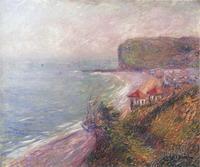
Based solely on the provided facts, the significance of The Beach at Morgat by Maxime Maufra lies in its representation of Post-Impressionist landscape painting. As a landscape within the Post-Impressionist style, the work demonstrates a departure from the naturalistic depiction of the scene, likely emphasizing subjective expression through color, structure, or brushwork rather than strict optical accuracy. Maufra’s handling of the Breton coast—a region favored by his contemporaries—would align with the movement’s interest in capturing the emotional and atmospheric essence of a place. The painting’s importance is thus rooted in how it exemplifies the broader Post-Impressionist goal of using landscape as a vehicle for personal vision, moving beyond Impressionism’s fleeting light effects toward a more deliberate, symbolic arrangement of form and hue.