Childe Hassam の November, Cos Cob の専門的な分析
スタイル:Impressionism · ジャンル:cityscape
Expert Analysis: "November, Cos Cob" by Childe Hassam
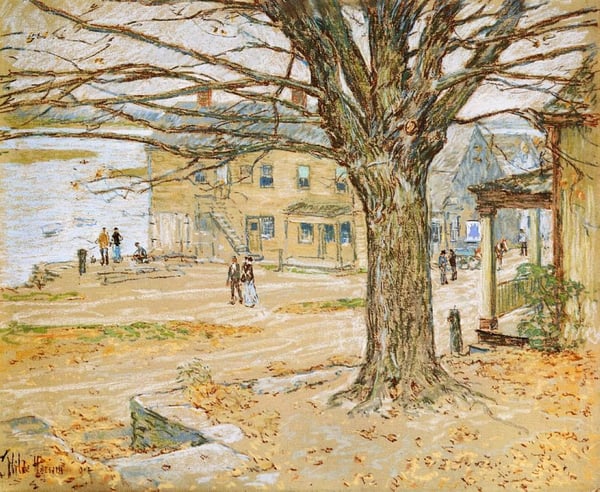
Childe Hassam’s November, Cos Cob stands as a quintessential example of American Impressionism, demonstrating how the artist adapted the French movement’s core principles to capture the quiet, domestic landscape of New England. Painted during his time at the Cos Cob art colony in Connecticut, the work reflects Hassam’s deep engagement with light, atmosphere, and the subtle moods of the changing seasons.
Significance within Style and Period
-
American Impressionist Innovation: Unlike the brilliant, sun-drenched palette of many French Impressionists, Hassam here employs a restrained, earthier tone—ochres, umbers, and muted greens—that perfectly evokes the chill, hazy light of late autumn. This compositional choice marks a distinct American adaptation: instead of celebrating leisure and spectacle, Hassam finds beauty in the quiet, nearly monochromatic decay of the season. The loose, broken brushwork in the foliage and the soft, diffused outlines of the buildings create a sense of impermanence, as if the scene is dissolving into the humid November air.
-
The Cos Cob Colony and American Identity: Cos Cob was a vital hub for American artists seeking to break from academic strictures. Hassam’s depiction of a modest, vernacular street or yard—rather than a grand vista—links him to the broader American Impressionist interest in intimate, local scenes. The painting’s “cityscape” genre is softened into a semi-rural suburb, reflecting the era’s transition from Gilded Age urbanity to a nostalgic, pastoral ideal. The muted light and lack of human figures emphasize solitude, making the work a meditation on place and season rather than a narrative.
-
Technical Mastery of Atmosphere: Hassam’s signature achievement in this work is his handling of the overcast November light. The sky is a pearl-gray wash, and the shadows are not dark but filled with subtle lavender and blue undertones—a hallmark of Impressionist color theory. The trees, rendered with quick, vertical dabs of paint, seem to sway in a brisk wind, while the houses recede into a hazy backdrop. This sense of atmospheric depth, combined with the high horizon line, compresses the space, drawing the viewer into the quiet, enclosed world of Cos Cob.
Conclusion: November, Cos Cob is significant as a masterful synthesis of Impressionist technique and American sensibility. It showcases Hassam’s ability to find profound poetry in the ordinary, using a subdued palette and soft focus to capture a specific season’s transient beauty. This work not only solidifies his role as a leading American Impressionist but also exemplifies how the movement flourished in the United States—by turning its gaze inward, toward the subtle moods of home and climate.
視覚的に類似
構図やパレットが近い作品 20 件
The Barn, Cos Cob
Childe Hassam
The Gray House
Robert Spencer
Windham Village
Julian Alden Weir
Cos Cob
Childe Hassam
The Crossroads
Robert Spencer
New Castle, New Hampshire
William James Glackens
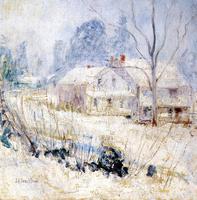
Country House in Winter
John Henry Twachtman
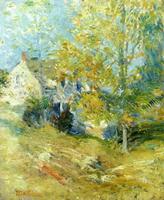
The Artist's House through the Trees (also known as Autumn Afternoon)
John Henry Twachtman
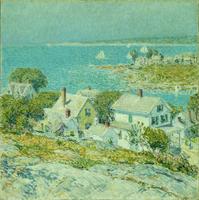
New England Headlands
Childe Hassam
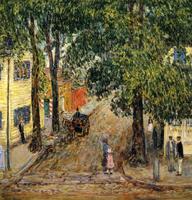
Duke Street, Newport
Childe Hassam
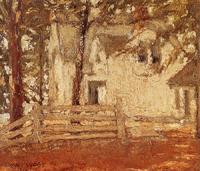
Grandmother's house inhabit a forest
Grant Wood
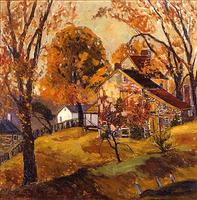
Autumn Gold, Lumerville
Fern Coppedge
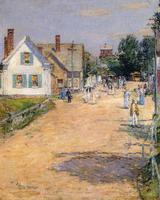
East Gloucester, End of Trolly Line
Childe Hassam
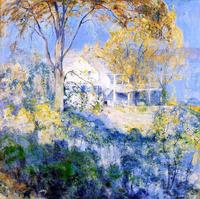
October
John Henry Twachtman
Marblehead
Maurice Prendergast
Old House, Point Pleasant
Fern Coppedge
A Country Road
Childe Hassam
Hassam Street in Portsmouth
Childe Hassam
Old Homestead Connecticut
Willard Metcalf
Gloucester Harbor
Allan Randall Freelon