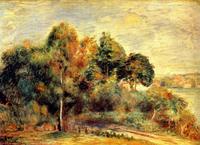
Expert Analysis of "October" by John Henry Twachtman
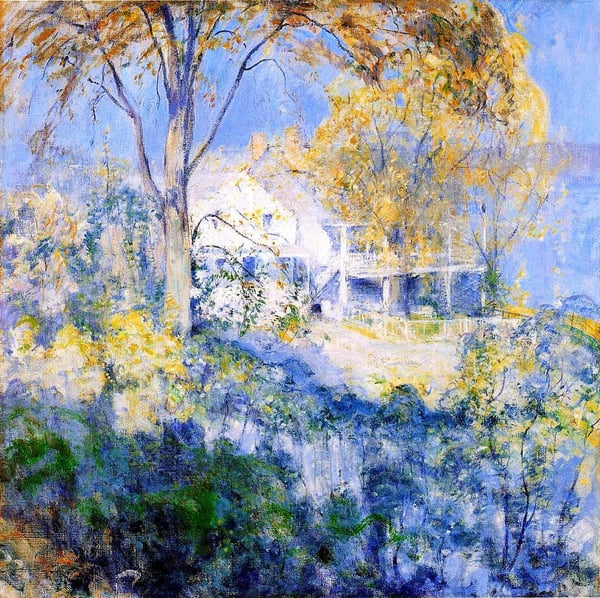
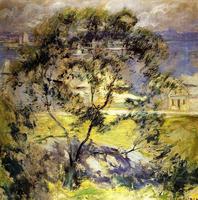
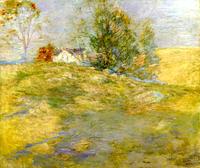
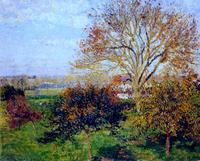
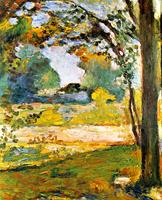
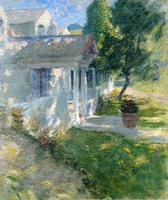
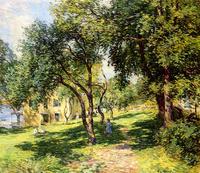
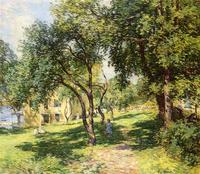
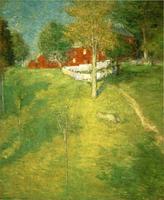
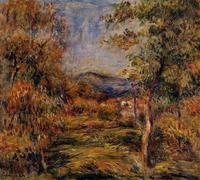
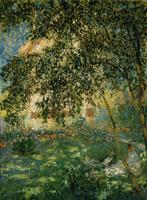
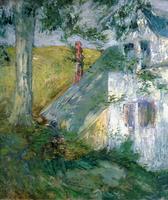
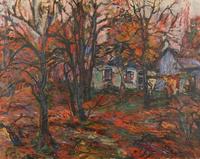
As an Impressionist landscape, John Henry Twachtman’s "October" stands out for its quiet, meditative interpretation of the season—a hallmark of the artist’s personal approach within the broader Impressionist movement. While many Impressionists focused on vibrant, sun-drenched scenes and rapid brushwork, Twachtman often favored muted palettes, subtle tonal shifts, and a sense of atmospheric calm. In "October", this manifests as a delicate balance between the warm, fading hues of autumn and the cool, soft light of an overcast or early evening sky. The work is significant for how it demonstrates the American adaptation of French Impressionism: Twachtman does not merely replicate the optical brilliance of Monet or the structural looseness of Renoir; instead, he infuses the landscape with an introspective, almost poetic stillness, capturing the transient beauty of the season through understated color harmonies and restrained brushwork. This painting exemplifies Twachtman’s ability to elevate a simple seasonal moment into a meditation on light, change, and atmosphere—key concerns of Impressionism, yet rendered with a distinctly personal, lyrical sensibility.