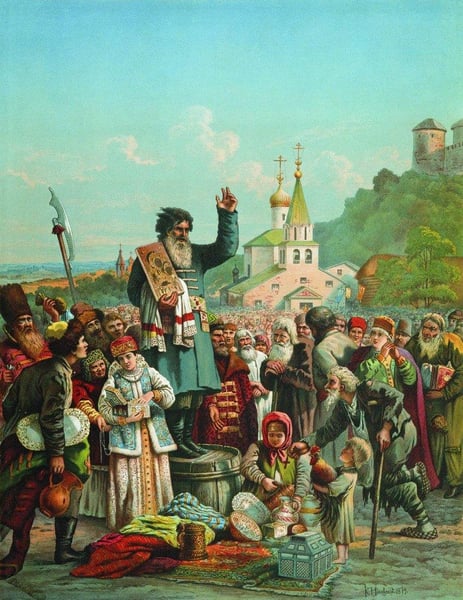
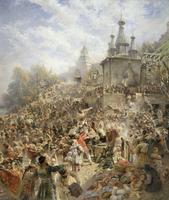
Proclamation of Kuzma Minin in Nizhny Novgorod in 1611
Konstantin Makovsky sanatçısının Proclamation of Kuzma Minin in Nizhny Novgorod in 1611 eseri hakkında uzman analizi
Tarz: Romanticism · Tür: history painting
An expert analysis of Konstantin Makovsky's "Proclamation of Kuzma Minin in Nizhny Novgorod in 1611" must first ground itself in the work's defined context: it is a history painting executed in the Romanticism style. The significance of this artwork is derived precisely from how it synthesizes these two categories to elevate a specific national narrative.
Significance within Romanticism: As a Romantic work, Makovsky's painting is significant for its intense emotional and dramatic focus on individual heroism and collective national spirit. The subject—a moment of civic proclamation—is not a calm historical record but a stirring tableau. Romanticism prized the depiction of powerful emotions, and here the artist channels that through the concentrated expressions, dynamic gestures, and theatrical composition of the crowd reacting to Kuzma Minin. The scene is imbued with a sense of urgency and moral purpose, turning a historical moment into a visceral, patriotic spectacle that appeals to the viewer's sentiment and imagination.
Significance as a History Painting: Within the hierarchy of genres, history painting was considered the highest form, charged with moral and educational weight. Makovsky's choice to depict this pivotal event in the Time of Troubles elevates a specific act of civic duty into a monumental, heroic narrative. The work does not simply illustrate a fact; it constructs a founding myth. By focusing on the proclamation—the moment of impassioned speech and public commitment—the painting celebrates the power of rhetoric and collective action to save a nation. This aligns perfectly with the Romantic reinterpretation of history painting, where the past is used to inspire contemporary national identity and pride.
Conclusion: The artwork is significant because it fuses Romanticism’s emphasis on emotional intensity and dramatic action with the high artistic purpose of history painting. It transforms a local event into a universal Romantic symbol of patriotic sacrifice and civic awakening, making the past feel immediate, heroic, and deeply relevant to a 19th-century audience.
Görsel olarak benzer
İlişkili kompozisyon ve renk paletine sahip 20 eser
Dancing
Klavdy Lebedev
Palm Sunday in Moscow
Vyacheslav Schwarz
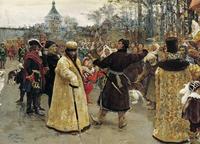
Arrival tsars Piotr and Ioann
Ilya Repin
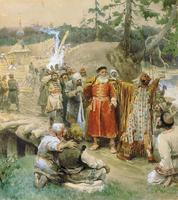
The development of new lands by Russian
Klavdy Lebedev
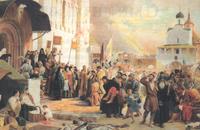
Protection of Holy Trinity Monastery
Vasily Vereshchagin
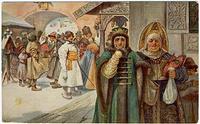
Returning from matins
Sergey Solomko
Appeal of Minin
Konstantin Makovsky
Martha the Mayoress. Destruction of Novgorod by Ivan III.
Klavdy Lebedev
To Blagovest
Mikhail Nesterov
Saint Russia
Mikhail Nesterov
Fist fight on the Moscow River
Boris Kustodiev
Singing Beggars (Pilgrims)
Viktor Vasnetsov
Religious Procession
Ilya Repin
Easter Procession in a Village
Vasily Perov
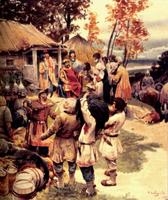
Russian knyaz Igor exacts tribute from the Drevlyans in 945
Klavdy Lebedev
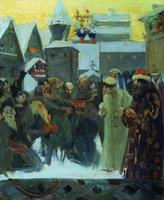
Exit of Tsar Ivan the Terrible
Boris Kustodiev
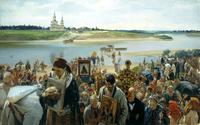
Easter Procession
Illarion Pryanishnikov
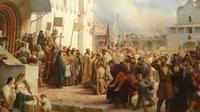
Осада Троице-Сергиевой лавры
Vasily Vereshchagin
Весілля в Київській губернії
Микола Пимоненко
Beggars near the Church
Ivan Tvorozhnikov