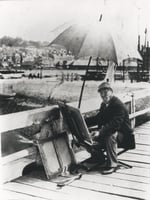
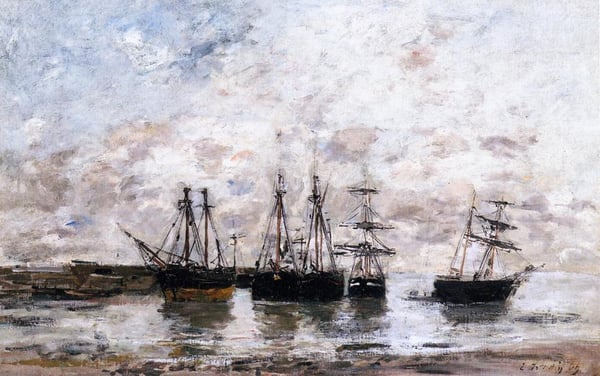
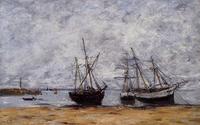
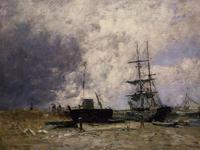
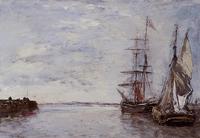
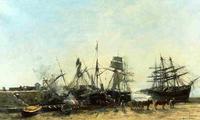
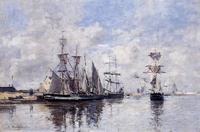
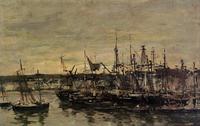
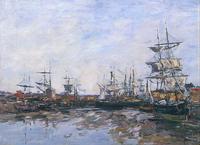
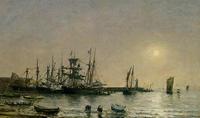
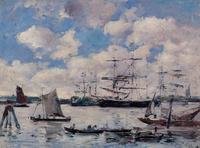
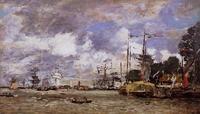
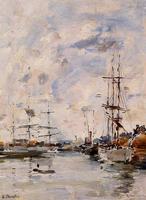
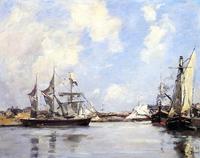
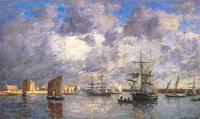
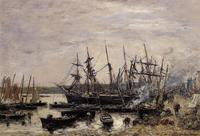
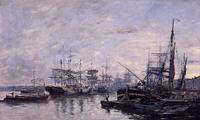
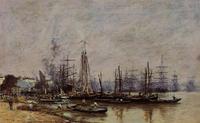
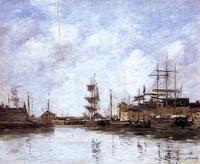
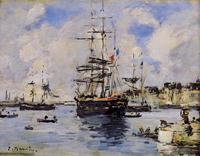
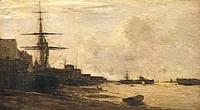
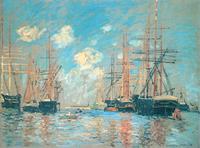
"Portrieux" by Eugène Boudin is a quintessential example of the Impressionist marina, a genre that Boudin helped elevate through his pioneering approach to plein-air painting. While Boudin is often celebrated as a mentor to Claude Monet, his own work here demonstrates a masterful handling of transient light and atmospheric conditions—core principles of Impressionism. The painting likely depicts the harbor at Portrieux, a coastal town in Brittany, with Boudin’s characteristic emphasis on the expansive sky and its reflection on the water. His loose, rapid brushwork captures the shimmering surface of the sea and the ever-changing clouds, while the composition balances the sturdy geometry of docks and boats with the fluid, ephemeral quality of light. This work is significant because it crystallizes Boudin’s role as a bridge between Realism and Impressionism: he retains a sense of place and structure, yet dissolves forms into patches of color and light, anticipating the fully developed Impressionist style. The marina setting allows him to explore the interplay between human activity (fishing boats, figures on the quay) and the elemental forces of nature, a theme that would become central to later Impressionist seascapes.