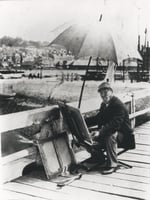
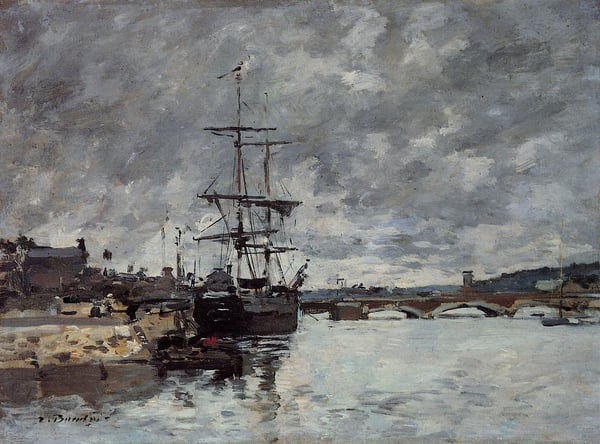
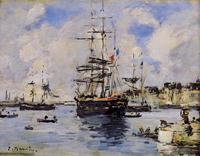
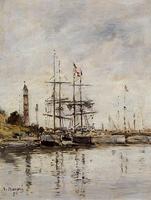
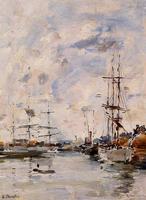
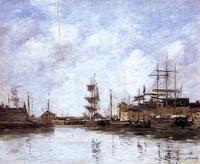
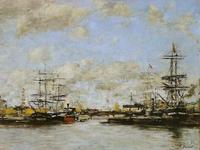
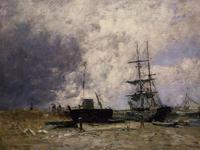
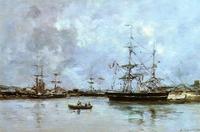
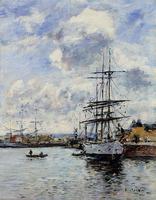
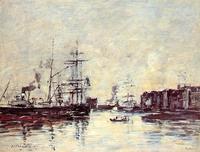
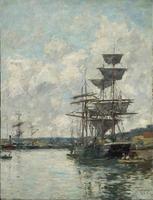
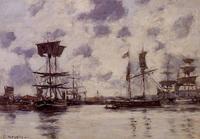
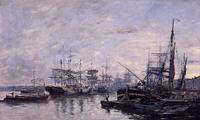
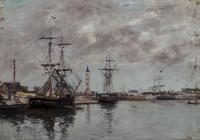
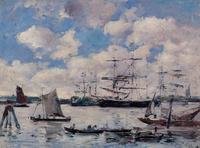
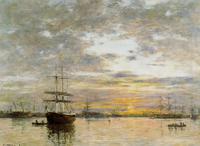
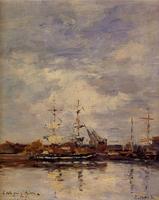
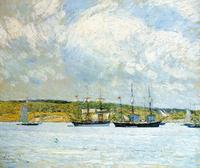
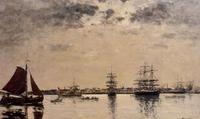
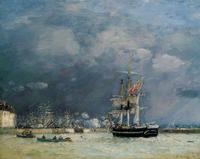
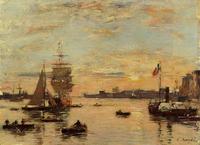
Eugène Boudin’s The Bridge over the Toques at Trouville exemplifies the transitional moment between Realism and Impressionism, making it significant for its pioneering treatment of atmosphere and light. As a key precursor to the Impressionist movement, Boudin was one of the first French artists to paint en plein air, directly capturing the fleeting effects of weather and sky. In this landscape, the bridge and river are rendered with loose, visible brushstrokes that suggest shimmering reflections and the moist, coastal air of Trouville. Boudin’s focus on the subtle gradations of the sky—a hallmark of his style—demonstrates his influence on the young Claude Monet, whom he encouraged to paint outdoors. The work’s significance lies in its shift away from studio-based finish toward spontaneous observation, embracing the transient qualities of natural light that would become central to Impressionism.