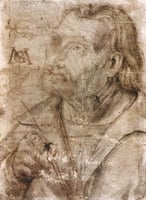
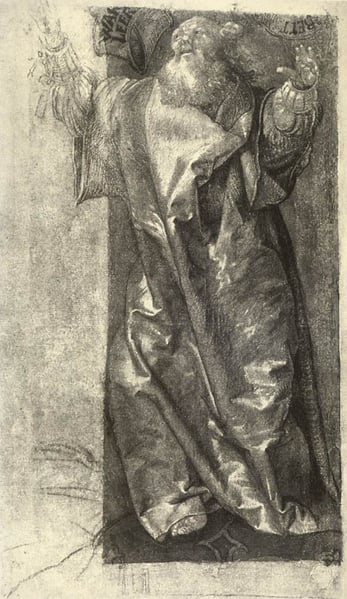
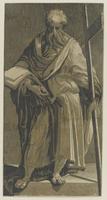
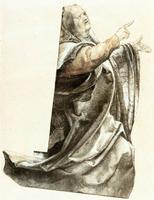
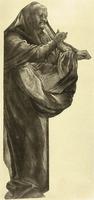
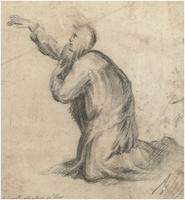
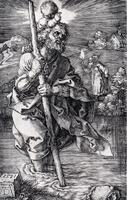
The artwork Moses by Matthias Grünewald is a striking example of Northern Renaissance religious painting, a period known for its meticulous naturalism and profound spiritual symbolism. Grünewald’s interpretation stands out for its emotional intensity and vivid, almost jarring color palette—hallmarks of his unique style within the movement. Unlike the more serene and balanced compositions of many Italian Renaissance contemporaries, Northern Renaissance works often embraced expressive distortion and hyper-detailed realism to convey divine presence and human suffering. In this piece, Grünewald likely emphasizes the prophetic and authoritative nature of Moses through dramatic lighting, intricate folds of drapery, and a strongly individualised, expressive face. The painting’s significance lies in its ability to merge detailed observation of the physical world with an otherworldly, visceral spirituality—a key Northern Renaissance innovation that invited viewers into a deeply personal encounter with the biblical narrative. This focus on raw emotion and symbolic detail marks Grünewald as a master of the period’s devotional art.