Expertenanalyse zu Albrecht Durers The young peasant and his wife
Stil: Northern Renaissance · Genre: genre painting
Expert Analysis: "The Young Peasant and His Wife" by Albrecht Dürer
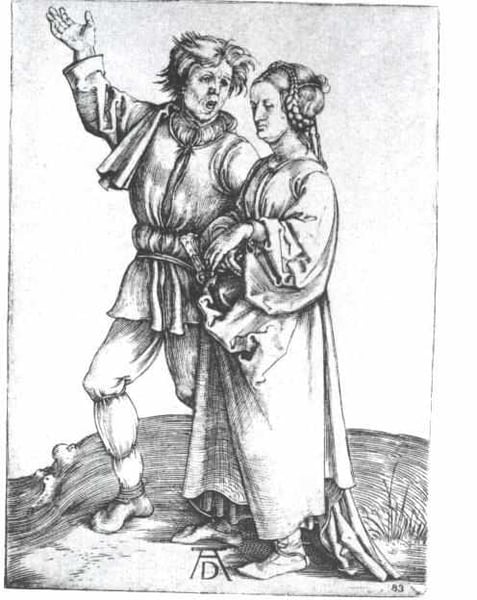
Albrecht Dürer’s The Young Peasant and His Wife stands as a compelling example of Northern Renaissance genre painting, a style distinguished by its meticulous naturalism, symbolic depth, and empathetic portrayal of everyday life. Created during a period when Dürer was deeply engaged with humanist ideals and the observation of common people, this work elevates a seemingly simple scene into a study of dignity, labor, and domestic harmony.
Technical Mastery and Composition
Dürer’s unparalleled skill in engraving—characterized by fine, crosshatched lines and precise tonal modulation—is on full display. The textures of the peasant’s rough tunic, his wife’s layered skirt, and the weathered landscape behind them are rendered with extraordinary detail. The composition is balanced yet intimate: the couple occupies the foreground, their quiet, slightly stiff posture suggesting both pride and weariness. The wife’s hand rests gently on her husband’s arm, a subtle gesture of partnership that anchors the emotional core of the piece.
Significance within Northern Renaissance Art
Unlike Italian Renaissance art, which often idealized its subjects, the Northern Renaissance celebrated the specific, the imperfect, and the real. Here, Dürer follows the tradition of artists like Pieter Bruegel the Elder, who depicted peasants not as caricatures but as individuals with distinct character and social presence. The young peasant’s weathered face and his wife’s guarded yet gentle expression convey a sense of resilience—a quiet nobility embedded in everyday struggle.
Genre Painting as Social Document
As a genre painting, this work offers a window into 16th-century rural life. Dürer avoids moralizing or sentimentalizing; instead, he presents his subjects with a humanist’s respect for their place in the world. The lack of overt religious or allegorical symbols marks a shift toward secular observation, a key development in Northern Renaissance art. The couple’s modest attire, tools (perhaps implied by the man’s stance), and the open landscape behind them suggest an enduring connection to land and labor.
Dürer’s Legacy in the North
While Dürer is most famous for his religious and self-portraits, The Young Peasant and His Wife demonstrates his versatility and his influence on later genre painters. The print medium allowed such works to circulate widely, democratizing art and shaping the Northern European sensibility toward honest, detailed depictions of ordinary life. In this sense, the piece is not merely a charming snapshot—it is a testament to the Northern Renaissance’s belief that the sacred and the profound could reside in the faces of common people.
Visuell ähnlich
20 Werke mit ähnlicher Komposition und Farbpalette
Rustic Couple
Albrecht Durer
Three Peasants In Conversation
Albrecht Durer
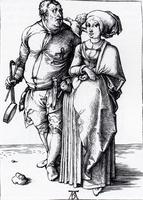
The Cook And His Wife
Albrecht Durer
Noble woman at horses and Lansquenet
Albrecht Durer
Young couple
Albrecht Durer
The Mocking of Christ
Albrecht Durer
Young Couple Threatened by Death ( Promenade)
Albrecht Durer
Peasant Couple Dancing
Albrecht Durer
Schoolmaster
Albrecht Durer
The Beheading of St John the Baptist
Albrecht Durer
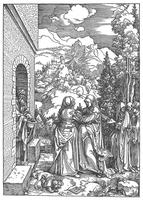
The Visitation
Albrecht Durer
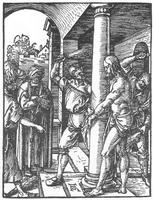
The Flagellation
Albrecht Durer
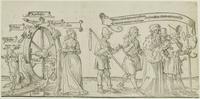
Allegory on Social Injustice
Albrecht Durer
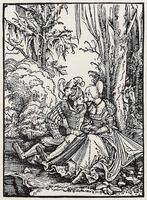
Lovers
Albrecht Altdorfer
Jacques de Caumont
Frederick Sandys
Emblem
Adriaen van de Venne
Varia Et Concinna Delineamenta
Salvator Rosa
St. Catherine and the executioner
Albrecht Durer
Study for 'The Knight's Dream'
Raphael
The banner swinger
Albrecht Durer