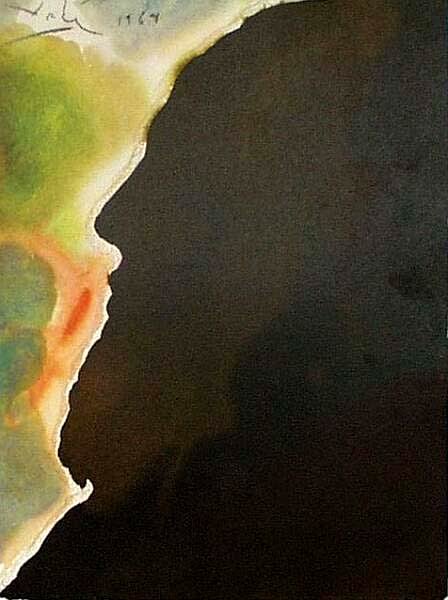
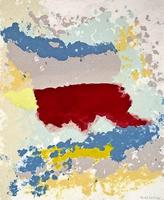
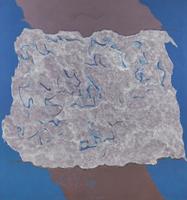
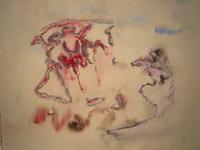
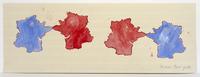
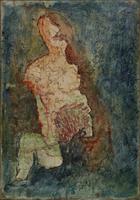
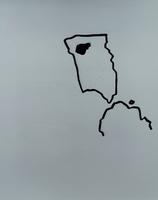
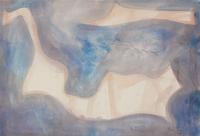
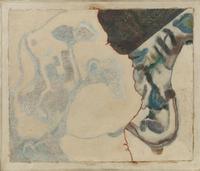
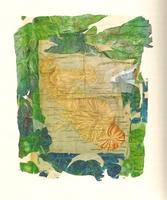
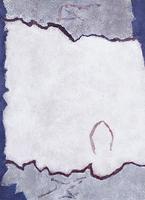
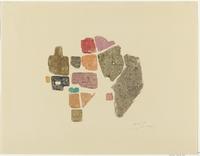
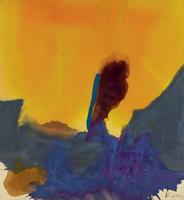
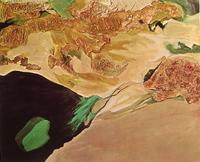
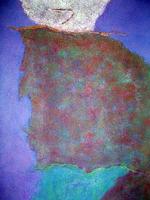
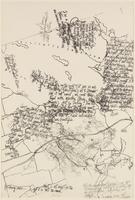
Salvador Dalí’s Abraham, pater multarem gentium (Genesis 12:1f) represents a pivotal shift within his Classic Period (1941–1989), where the artist moved beyond his earlier Surrealist iconography to embrace a hybrid of Abstract Expressionism and Symbolism within the religious painting genre. The work’s significance lies in its fusion of gestural, expressive brushwork—characteristic of Abstract Expressionism—with deeply encoded symbolic references drawn from the biblical narrative. Dalí here reimagines the patriarch Abraham at the moment of divine calling (Genesis 12:1), using abstract forms to convey spiritual transcendence rather than literal depiction. This synthesis marks a deliberate expansion of religious painting into modernist abstraction, challenging traditional figuration while retaining sacred subject matter. The painting’s place in Dalí’s Classic Period also underscores his mature interest in integrating classical composition, Catholic mysticism, and contemporary artistic movements, making it a key example of his later, spiritually charged oeuvre.