Noe qui primus plantavit vineam… (Genesis 9:20f)
Dettagli
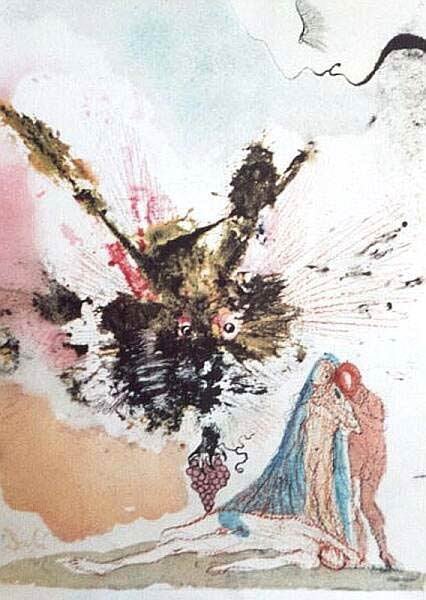
Analisi esperta di Noe qui primus plantavit vineam… (Genesis 9:20f) di Salvador Dali
Stile: Abstract Expressionism, Symbolism · Genere: religious painting
This analysis of Salvador Dalí’s "Noe qui primus plantavit vineam… (Genesis 9:20f)" is based solely on the provided data: its styles (Abstract Expressionism and Symbolism), genre (religious painting), and period (Classic Period, 1941–1989).
Expert Analysis:
The significance of this work lies in its fusion of two seemingly opposing stylistic movements—Abstract Expressionism and Symbolism—within the framework of a religious subject from Dalí’s Classic Period. By the time he painted this piece, Dalí had largely moved away from his earlier Surrealist provocations and embraced a more cerebral, historically anchored approach. Here, the biblical episode of Noah planting the first vineyard (Genesis 9:20) becomes a vehicle for exploring the tension between raw, gestural mark-making and dense, coded iconography.
-
Abstract Expressionist qualities are evident in the handling of form and space. Rather than rendering the scene with the polished, illusionistic precision of his earlier work, Dalí employs broad, energetic strokes and a seemingly spontaneous application of paint. This abstracted, expressive energy captures the primal, earth-bound act of cultivation and the intoxication that follows—a moment of human fallibility that is both chaotic and deeply physical.
-
Symbolist ambition animates the composition with layered, metaphysical meaning. The vineyard is not merely a landscape but a symbol of divine gift, human labor, and subsequent transgression (Noah’s drunkenness). Dalí uses distorted anatomy, ambiguous spatial relationships, and a palette that oscillates between the vivid and the somber to suggest the spiritual and psychological undercurrents of the story. Each element—the vine, the earth, the figure—resonates as an emblem of creation, temptation, and redemption.
-
Religious genre is reimagined through a modern lens. Unlike traditional biblical illustrations, Dalí’s painting rejects narrative clarity in favor of interpretive ambiguity. The viewer is invited not to read the story literally but to experience its symbolic weight through the artist’s visceral, almost violent mark-making.
-
Classic Period context (1941–1989) is crucial to its significance. During this phase, Dalí synthesized his technical mastery with a renewed interest in history, science, and religion. "Noe qui primus plantavit vineam…" exemplifies his late-career turn toward a “nuclear mysticism” and a dialogue with Old Masters, but filtered through twentieth-century abstraction. The work stands as a singular document of Dalí’s ability to merge Renaissance symbolic density with the expressive immediacy of Abstract Expressionism—a rare and significant hybrid that challenges both the spiritual quietude of religious art and the purely formal concerns of mid-century abstraction.
Visivamente simili
20 opere con composizione e palette affini
Iesus flagellatus (John 19:1)
Salvador Dali
Angel
Salvador Dali
Iesus a Satana tentatur (Mark 1:13)
Salvador Dali
Pietà
George Stefanescu
Cadaver in seoulchro Elisei (2 Kings 13:21)
Salvador Dali
Dante's Vision
Odilon Redon
Spiritus promptus est, caro vero infirma
Salvador Dali
Vinea electa (Isaiah 5:6)
Salvador Dali
Kleine Attacken
Bernard Schultze
Abraham, Abraham! (Genesis 22:2)
Salvador Dali
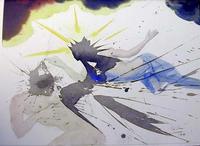
Tertia die resurrexit
Salvador Dali
Soleil agathe
Mario Prassinos
Western
Vasiliy Ryabchenko
Babits: The book of Jonah II.
Maria Bozoky
Song of Songs II
Marc Chagall
Untitled
Vasile Kazar
Nude Without Violin
Oleh Sokolov
Trulla caementarii in manu Domini (Amos 7:7)
Salvador Dali
Babits: The book of Jonah I.
Maria Bozoky
Moses with the Burning Bush
Marc Chagall